Corn Gluten Meal Industrial Applications and Global Demand Insights
Global Market Overview of Corn Gluten Meal
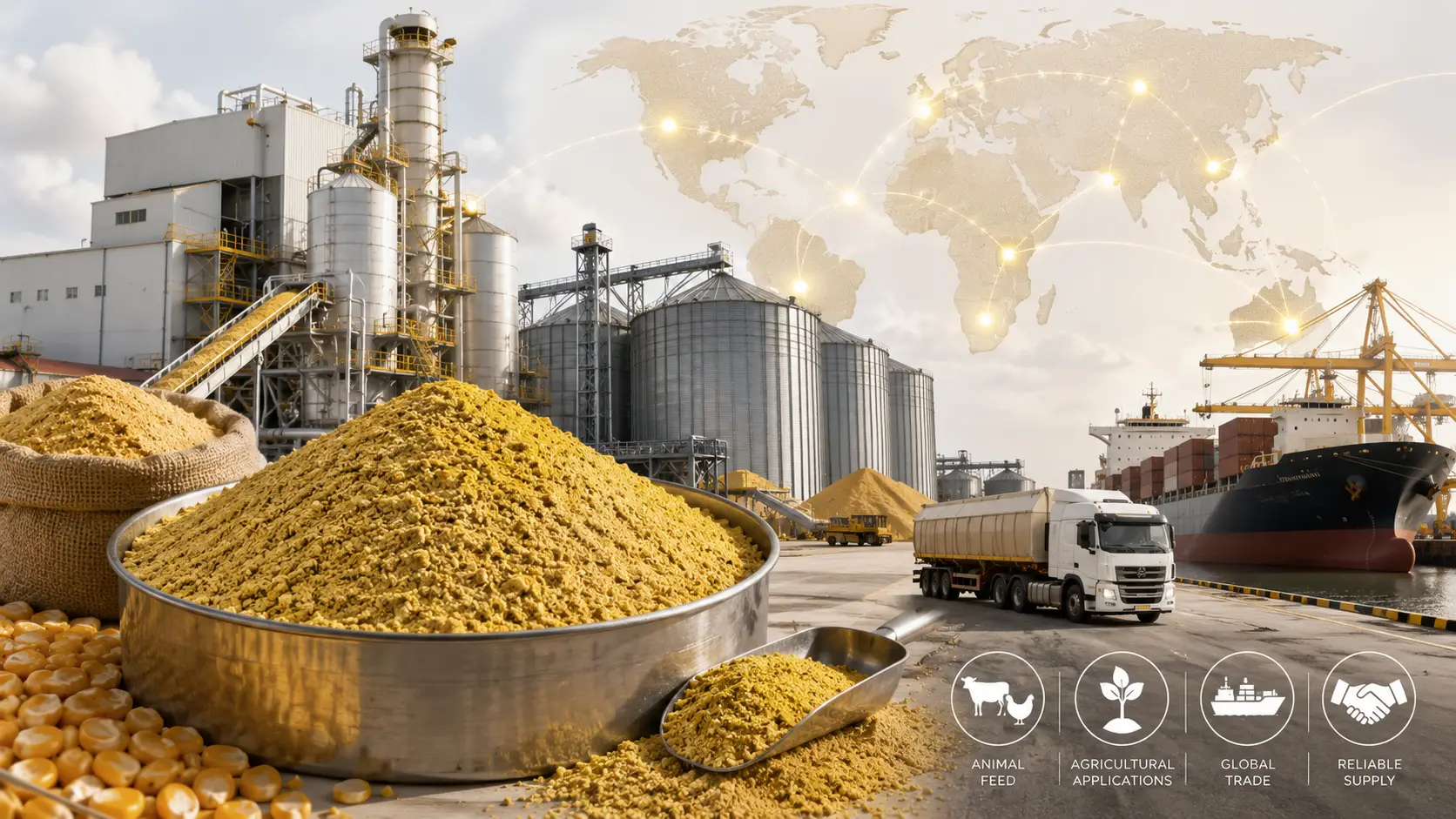
Corn gluten meal is a high-protein by-product derived from corn wet milling, widely used across feed and agricultural industries. It is primarily valued for its protein content, energy value, and functional properties in animal nutrition systems. According to the Food and Agriculture Organization (FAO), corn-based co-products continue to play a significant role in global feed supply chains due to rising demand for cost-effective protein ingredients.
Expanding Role in Global Feed Supply Chains
Corn gluten meal has become an essential ingredient in livestock and poultry feed formulations, especially in regions with strong corn processing industries. It offers a competitive protein alternative compared to soybean meal in certain feed applications, depending on formulation requirements.
Based on industry analysis from the U.S. Department of Agriculture (USDA), corn milling by-products have seen stable demand growth due to increasing global meat consumption and feed efficiency optimization trends.
The material’s consistent composition makes it attractive for large-scale feed manufacturers who require predictable nutrient profiles for formulation accuracy.
Its integration into feed supply chains reflects a broader shift toward optimizing agricultural by-products for value-added applications.
Corn Gluten Meal in Animal Feed Applications
Corn gluten meal is widely used in poultry, swine, and cattle feed due to its high protein content and digestibility. It provides essential amino acids that support growth performance in livestock production systems. According to research published in the Journal of Animal Science, corn-derived protein sources can effectively support feed conversion efficiency when properly balanced with other ingredients.
Poultry and Livestock Feed Formulation Use
In poultry nutrition, corn gluten meal is commonly used as a concentrated protein supplement that supports feather development and weight gain. Its yellow pigmentation properties also enhance yolk coloration in egg production systems.
Industry feed formulation guidelines from AllAboutFeed indicate that corn gluten meal is often incorporated as part of blended protein strategies to balance cost and nutritional performance.
For cattle and swine, it is used to improve protein density in ration formulations, particularly in intensive farming systems.
Its role in feed applications continues to expand as producers seek stable, plant-based protein sources.
Role in Aquaculture Nutrition and Protein Supply
Aquaculture is one of the fastest-growing application areas for corn gluten meal, driven by the global expansion of fish farming operations. Fish feed formulations increasingly rely on plant-based protein alternatives to reduce dependency on fish meal. According to FAO fisheries reports, sustainable aquaculture development requires diversification of protein inputs in feed systems.
Plant-Based Protein in Fish Feed Systems
Corn gluten meal is used in aquafeed formulations for species such as tilapia and carp, where moderate protein digestibility is acceptable. It contributes to cost reduction while maintaining essential nutrient balance in controlled farming environments.
Research from aquaculture nutrition studies shows that partial replacement of marine proteins with plant-derived ingredients improves supply chain sustainability.
Feed manufacturers integrate corn gluten meal with other plant proteins to achieve balanced amino acid profiles for aquatic species.
This trend supports the global shift toward more sustainable aquaculture feed production systems.
Agricultural Applications as Organic Fertilizer
Beyond animal nutrition, corn gluten meal is also used in agriculture as a natural nitrogen source and soil conditioner. It is recognized for its weed-suppressing properties when applied in controlled agricultural systems. According to the U.S. Environmental Protection Agency (EPA), corn gluten meal has been studied for its potential use in organic weed management practices.
Soil Health and Sustainable Farming Applications
Farmers apply corn gluten meal as a slow-release nitrogen fertilizer that supports soil fertility improvement. It gradually breaks down in soil, providing nutrients over time without causing rapid nutrient leaching.
Agricultural extension research highlights its role in integrated crop management systems, especially in organic farming practices.
Its dual function as both fertilizer and pre-emergent weed control agent increases its value in sustainable agriculture.
This multifunctional use strengthens its demand in eco-friendly farming systems worldwide.
Industrial Processing and Supply Chain Dynamics
Corn gluten meal is produced through wet milling processes where corn is separated into starch, oil, fiber, and protein fractions. This industrial process is concentrated in regions with large-scale corn processing infrastructure. According to market insights from industry research organizations such as Statista and grain processing reports, the global corn processing sector continues to expand with rising food and feed demand.
Manufacturing and Global Trade Flow
Production efficiency and raw corn availability significantly influence global corn gluten meal supply chains. Major exporting countries supply bulk volumes to feed manufacturers and distributors worldwide.
Processing plants ensure standardized protein content to meet industrial feed formulation requirements.
Logistics and storage conditions are critical factors in maintaining product quality during international trade.
Supply chain integration between corn processors and feed manufacturers supports stable market availability.
Buyer Intent and Global Sourcing Considerations
Corn gluten meal buyers typically include feed manufacturers, livestock integrators, aquaculture feed producers, and agricultural distributors. Procurement teams evaluate protein content, consistency, pricing stability, and supplier reliability before purchasing. Based on global commodity sourcing behavior reported by OECD-FAO agricultural outlook studies, feed ingredient buyers prioritize long-term supply stability.
Procurement Drivers and Supplier Evaluation
Buyers sourcing corn gluten meal assess nutritional specifications and compatibility with existing feed formulations. Price volatility in protein markets often drives procurement diversification strategies.
Industrial buyers compare suppliers based on production capacity, export capability, and quality assurance standards.
Market transparency and traceability are increasingly important in global B2B sourcing decisions.
Digital B2B marketplaces improve accessibility for buyers seeking verified suppliers and consistent supply chains.
Conclusion and Market Outlook for B2B Buyers
Corn gluten meal continues to gain importance as a versatile ingredient across feed, aquaculture, and agricultural sectors. Its role in supporting sustainable protein sourcing aligns with global demand for efficient agricultural by-products. According to multiple market research forecasts, demand for plant-based feed ingredients is expected to grow steadily over the coming years.
Strategic Value in Global Commodity Markets
The material’s adaptability across industries enhances its long-term commercial relevance. Feed manufacturers and agricultural producers increasingly rely on diversified protein sources to manage cost and sustainability pressures.
Corn gluten meal offers a balance between nutritional value and supply chain efficiency.
Its industrial versatility positions it as a key ingredient in future feed innovation strategies.
For B2B buyers, it represents a stable and scalable sourcing opportunity in global agricultural trade.
Sources
https://www.fao.org
https://www.usda.gov
https://www.oecd.org

Leave a Comment