Introduction to Corn Gluten Feed in Global Feed Markets
Understanding Corn Gluten Feed in Commodity Trade Context
Corn gluten feed is a widely traded co-product derived from the wet milling of corn, primarily used in animal nutrition markets. It is composed of corn bran, steep liquor, and residual components after starch and gluten extraction. According to the U.S. Grains Council, corn co-products play a critical role in stabilizing global feed supply chains by providing cost-efficient energy and fiber sources for livestock production.
In the global feed ecosystem, corn gluten feed acts as a strategic alternative to traditional feed grains, particularly when corn prices fluctuate in commodity markets. Its availability is closely tied to industrial starch and ethanol production, making it an integrated component of agricultural supply chains. Industry reports from the Food and Agriculture Organization (FAO) highlight how grain processing byproducts increasingly support feed security in emerging economies.
Demand for corn gluten feed continues to expand due to rising livestock production and intensification of dairy and beef farming systems. Feed manufacturers and traders consider it a key ingredient for balancing cost and nutritional efficiency in compound feed formulations. This positions corn gluten feed as a stable, high-volume commodity in global agricultural trade flows.
From a sourcing perspective, buyers evaluate corn gluten feed based on consistency, protein content, and regional availability. Its integration into feed production systems makes it a fundamental product in B2B procurement strategies across livestock industries.
Production Process and Supply Chain Structure
Corn gluten feed originates from the wet milling process where corn kernels are separated into starch, oil, gluten, and fiber fractions. The U.S. Environmental Protection Agency (EPA) recognizes corn wet milling as one of the most resource-efficient industrial processes in grain utilization. The remaining fiber-rich fraction is processed into corn gluten feed, forming a key co-product stream.
This production process is closely linked to large-scale starch and ethanol manufacturing facilities, particularly in North America, Europe, and parts of Asia. As industrial demand for bio-based products increases, corn milling output expands proportionally, influencing the global supply of feed co-products. The interdependency between biofuel production and animal feed markets is a defining characteristic of this supply chain.
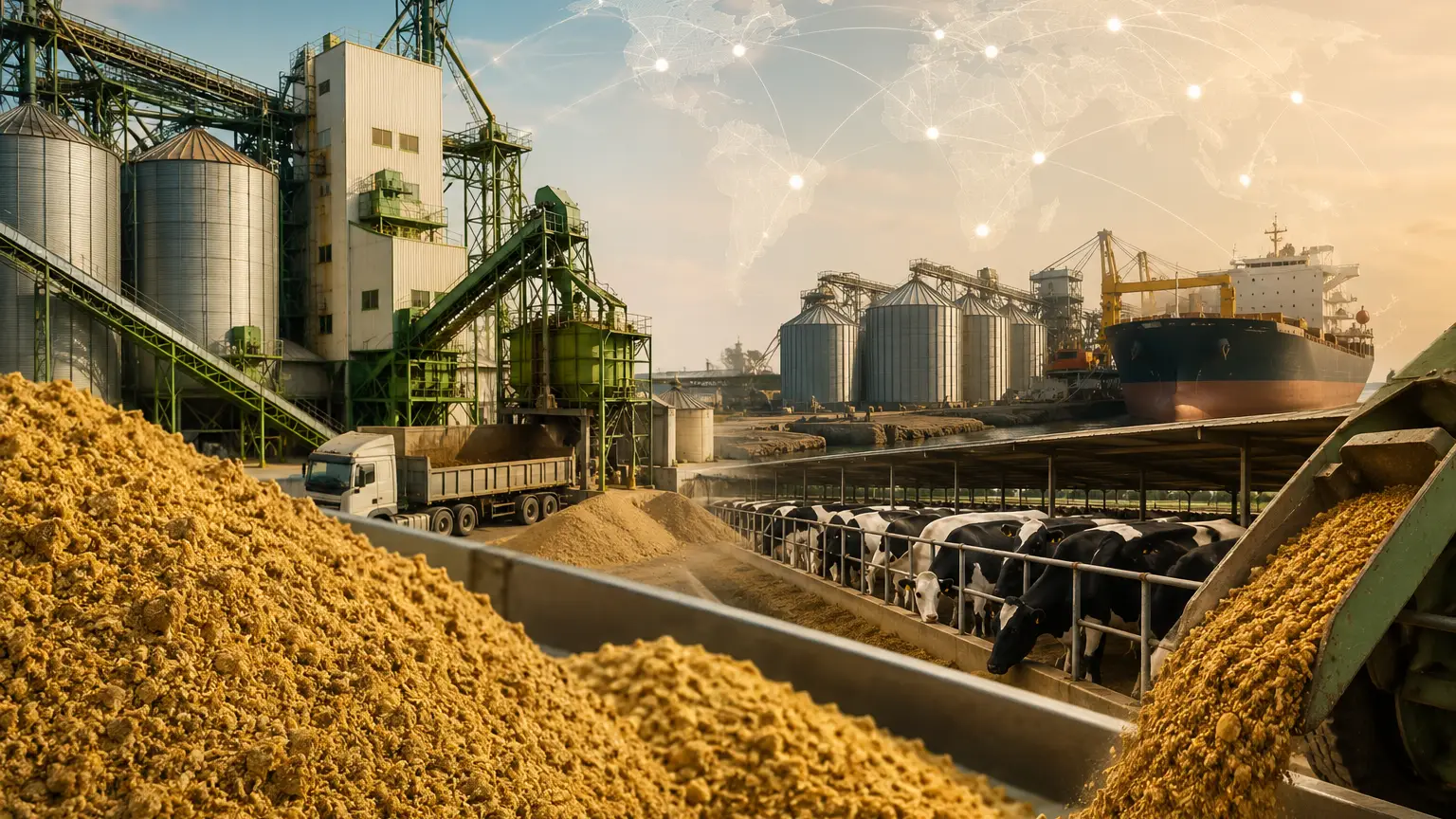
Logistics and distribution networks play a crucial role in maintaining corn gluten feed availability across regions. Bulk transport via rail, ship, and truck ensures continuous supply to feed mills and livestock producers. Supply chain stability is influenced by harvest cycles, corn yield variability, and industrial processing capacity.
For B2B buyers, understanding the upstream production structure is essential for securing long-term contracts. Procurement strategies often align with seasonal corn harvest patterns and industrial output forecasts to ensure consistent feed ingredient availability.
Nutritional Profile and Role in Feed Formulation
Corn gluten feed is primarily valued for its moderate protein content and high digestible fiber composition, making it suitable for ruminant diets. According to the National Research Council (NRC) Nutrient Requirements of Dairy Cattle, fibrous co-products like corn gluten feed contribute to rumen health and energy balance in dairy nutrition systems.
In feed formulation, it is commonly blended with other grains and protein meals to optimize cost efficiency and nutritional balance. Its fiber structure supports digestive stability in cattle, particularly in high-production dairy and beef operations. Nutritionists often use it as a partial replacement for corn grain or soybean meal depending on formulation requirements.
The consistency of nutrient composition depends on processing conditions and source variability from milling plants. This requires buyers and feed formulators to evaluate supplier specifications carefully to maintain feed performance standards. Quality control systems are essential in ensuring consistent protein and moisture levels.
As livestock production systems become more intensive, demand for reliable and cost-effective feed ingredients continues to increase. Corn gluten feed remains a strategic component in feed formulation due to its balance of affordability and nutritional utility.
Applications Across Livestock and Feed Industries
Corn gluten feed is widely used in ruminant feeding systems, particularly for dairy and beef cattle. According to research published by the American Society of Animal Science, corn-based co-products improve feed efficiency when properly balanced with forage-based diets. This makes it a staple ingredient in commercial cattle operations.
In beef production systems, it supports weight gain efficiency while maintaining feed cost control. Dairy producers use it to enhance milk yield performance when integrated into total mixed ration (TMR) systems. Its fibrous composition makes it especially suitable for balancing high-energy feed components.
Beyond cattle, corn gluten feed is also used in smaller proportions in sheep and goat diets. Its application in poultry and swine is limited due to fiber constraints, but it may still be included in controlled formulations depending on nutritional objectives.
Industrial feed manufacturers incorporate corn gluten feed into large-scale production due to its availability and cost advantages. This ensures consistent supply for livestock industries across both developed and emerging agricultural markets.
Global Market Trends and Demand Drivers
Global demand for corn gluten feed is closely linked to livestock expansion and industrial corn processing growth. The OECD-FAO Agricultural Outlook highlights increasing meat and dairy consumption as a primary driver of feed ingredient demand worldwide.
Biofuel production, particularly ethanol, significantly influences corn co-product availability. As ethanol output rises, corn gluten feed supply also increases, creating a direct linkage between energy markets and feed commodity flows. This interconnection introduces both opportunities and volatility in pricing structures.
Emerging markets in Asia-Pacific and Latin America are experiencing strong demand growth due to expanding livestock industries. Feed import dependency in these regions further strengthens global trade flows for corn-based feed ingredients.
Market volatility in grain prices also influences substitution patterns in feed formulations. Buyers increasingly diversify sourcing strategies to manage cost risks and ensure supply stability across procurement cycles.
B2B Sourcing Strategies and Supplier Evaluation
B2B sourcing of corn gluten feed requires careful evaluation of supplier reliability, production capacity, and logistics infrastructure. According to industry insights from the International Feed Industry Federation (IFIF), long-term contracts are commonly used to stabilize feed ingredient supply chains.
Buyers typically assess moisture content, protein levels, and contamination risks before finalizing procurement agreements. Supplier certification and quality assurance systems are critical in maintaining compliance with feed safety standards.
Trade logistics also play a key role in sourcing decisions, especially for bulk shipments across international markets. Port access, freight costs, and delivery timelines significantly influence supplier selection in global trade.
Digital B2B marketplaces have increasingly streamlined sourcing processes by improving price transparency and supplier accessibility. This enables procurement teams to compare multiple suppliers efficiently and optimize purchasing strategies.
Buyer Intent and Procurement Considerations
Buyers of corn gluten feed primarily include feed manufacturers, livestock integrators, traders, and agricultural distributors. Their primary intent is to secure consistent, cost-effective feed ingredients for large-scale animal nutrition operations.
Procurement teams evaluate suppliers based on price stability, supply reliability, and product quality consistency. Risk management is a key consideration due to fluctuations in agricultural commodity markets and seasonal production cycles.
Comparison between suppliers often focuses on origin, processing method, and logistics capability. Buyers also assess long-term availability to ensure uninterrupted feed production.
Corn gluten feed product pages and supplier platforms support sourcing decisions by providing technical specifications and trade insights. This helps procurement teams make data-driven purchasing decisions in competitive markets.
Conclusion: Future Outlook for Corn Gluten Feed Trade
Corn gluten feed is expected to maintain its importance in global feed markets due to sustained livestock demand and industrial corn processing growth. According to FAO projections, co-product feed ingredients will continue to play a vital role in sustainable agricultural systems.
As supply chains become more integrated, transparency and efficiency in sourcing will become increasingly important. Digital trade platforms and improved logistics infrastructure will enhance global accessibility of corn-based feed ingredients.
The future of corn gluten feed trade is closely tied to agricultural innovation, biofuel expansion, and livestock industry growth. These interconnected factors ensure continued relevance in global commodity markets.
For B2B buyers, strategic sourcing and supplier diversification will remain essential to managing cost and supply risks in an evolving global feed landscape.
Sources
https://www.fao.org
https://www.usgrainscouncil.org
https://www.ifif.org

Leave a Comment