Global Corn Gluten Feed Sourcing & Market Insights for Feed Buyers
Global Market Overview of Corn Gluten Feed
Corn gluten feed is a widely traded agro-industrial byproduct derived from corn wet milling, primarily used in animal feed formulations due to its fiber and protein content. According to the Food and Agriculture Organization (FAO), corn-based co-products play a significant role in stabilizing global feed supply chains by improving cost efficiency and nutrient balancing in livestock diets.
Role in global feed ingredient supply chains
In modern feed manufacturing systems, corn gluten feed functions as a cost-effective energy and protein supplement, particularly for ruminant diets. Industry analysis from the FAO highlights its importance in balancing feed rations when traditional grains fluctuate in price or availability.
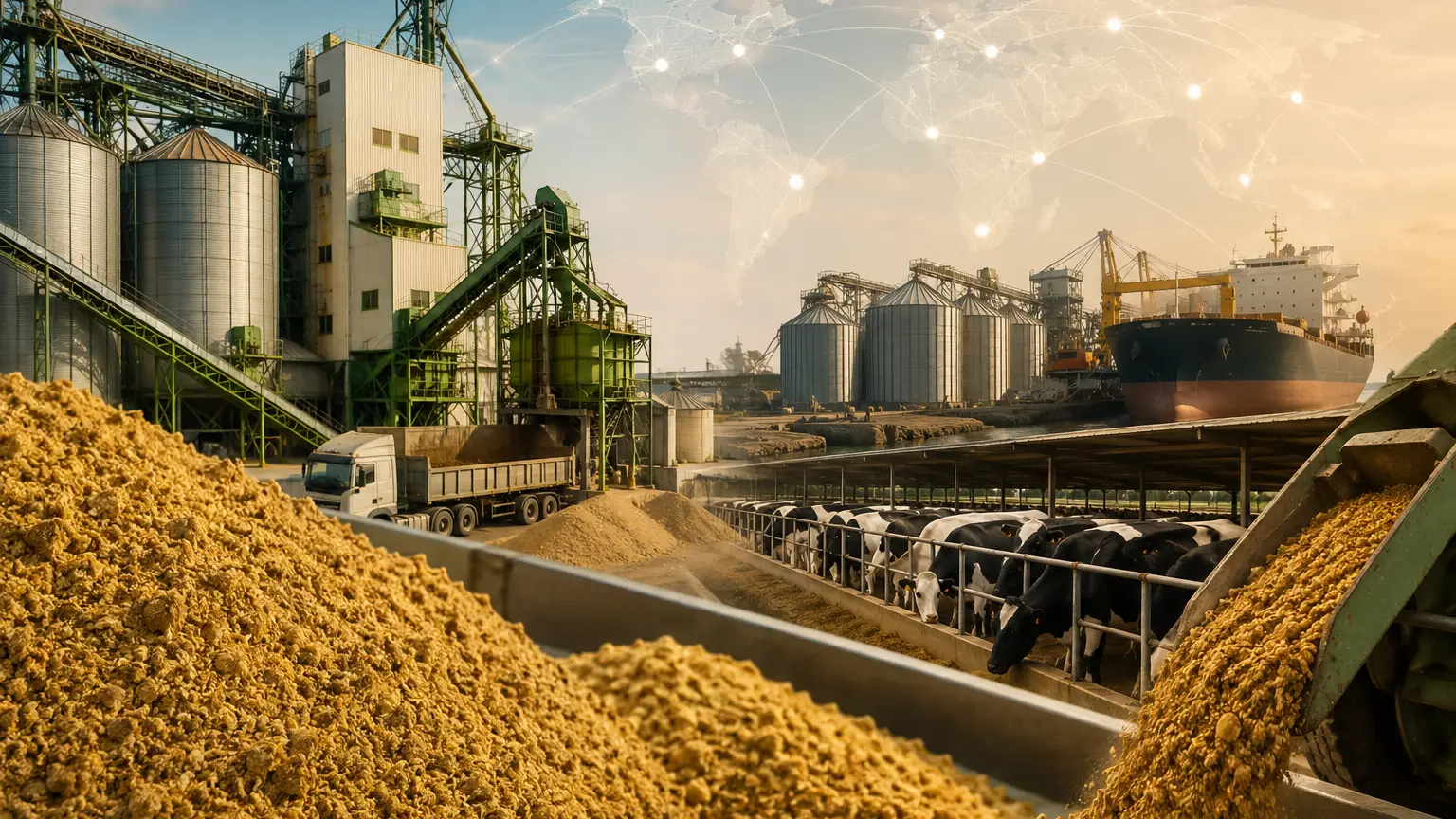
The product is commonly integrated into compound feed formulations by feed mills and integrators operating at scale. Its availability as a bulk commodity makes it suitable for international trade and long-term procurement contracts.
Market demand is closely tied to corn processing volumes in major producing countries, where wet milling industries determine downstream supply consistency.
Corn gluten feed continues to gain relevance as global feed demand increases, driven by expanding livestock production and protein consumption trends.
Production Process and Supply Chain Structure
Corn gluten feed is produced during the wet milling of corn, where starch, gluten, and fiber components are separated. The U.S. Department of Agriculture (USDA) reports that corn wet milling generates multiple co-products, including gluten feed, which is then dried and processed for feed applications.
Wet milling byproduct processing
The production process begins with steeping corn kernels in water and separating starch from fiber and protein fractions. The fibrous portion is combined with steep liquor to create corn gluten feed.
This integration of liquid and solid residues enhances its nutritional profile, making it more suitable for livestock diets compared to raw corn fiber alone.
Once processed, the material is dried to reduce moisture content and improve shelf stability for global transport.
Supply chains are heavily influenced by industrial corn processing hubs, particularly in North America and parts of Asia where wet milling facilities are concentrated.
Livestock Nutrition Applications and Feed Usage
Corn gluten feed is primarily used in ruminant nutrition, especially in cattle feed formulations, where its fiber and digestibility characteristics support rumen function. According to research insights from agricultural nutrition studies published through academic institutions and FAO-linked programs, it is a valuable substitute for more expensive feed grains.
Ruminant feed usage and performance benefits
In cattle and dairy feed systems, corn gluten feed provides a balanced source of digestible fiber and moderate protein content. This helps improve feed efficiency while reducing overall ration costs.
Feed formulators often incorporate it into total mixed rations (TMR) to maintain consistent energy delivery and rumen health.
In addition to cattle, it is sometimes used in sheep and goat feed formulations depending on regional feed availability and cost structures.
Its versatility ensures steady demand across commercial livestock operations and integrated dairy production systems.
Quality Parameters and B2B Procurement Standards
Quality standards for corn gluten feed are critical in B2B procurement, where feed mills and distributors assess protein content, fiber levels, and moisture stability. The European Feed Manufacturers’ Federation (FEFAC) emphasizes strict quality control measures for feed ingredients to ensure safety and consistency.
Moisture, protein content, and grading factors
Moisture content is a key factor in determining shelf life and transport suitability, with lower moisture preferred for export-grade material. Protein content typically influences pricing and end-use applications.
Feed buyers also evaluate fiber composition to ensure compatibility with livestock nutritional requirements.
Grading systems may vary by region, but industrial buyers generally require standardized testing and certification before purchase.
These parameters help procurement teams minimize risk and maintain feed formulation consistency across production batches.
Regional Trade Flow and Global Market Outlook
Corn gluten feed trade is concentrated in regions with large corn processing industries, particularly North America, where production volumes are significant. According to USDA global feed outlook reports, export flows are influenced by livestock demand in importing regions such as Asia and the Middle East.
North America, Asia, and emerging markets
North America remains a dominant exporter due to established corn wet milling infrastructure and high production efficiency. This ensures a stable surplus available for international markets.
Asia represents a growing consumption region, driven by increasing livestock production and feed demand expansion.
Emerging markets are increasingly adopting corn-based feed ingredients as cost-effective alternatives to traditional protein sources.
Global trade dynamics continue to evolve as feed manufacturers seek diversified sourcing strategies to manage price volatility.
Buyer Strategy and Supplier Selection in B2B Markets
Procurement strategies for corn gluten feed focus on price stability, supply reliability, and quality assurance. Industry sourcing reports indicate that feed manufacturers prioritize long-term supplier relationships to secure consistent input materials.
Cost efficiency, logistics, and supplier reliability
Buyers evaluate total landed cost, including shipping, storage, and handling efficiency, when selecting suppliers. Logistics performance plays a critical role in maintaining feed production continuity.
Supplier reliability is assessed through historical delivery performance and quality consistency across shipments.
Contract-based procurement is commonly used to mitigate market volatility and ensure predictable supply.
These factors collectively shape how B2B buyers engage in global corn gluten feed sourcing decisions.
Buyer Intent Section
Buyer intent for corn gluten feed is primarily driven by livestock feed manufacturers, agricultural traders, and integrated farming operations seeking cost-effective feed ingredients. Buyers typically include feed mills, dairy farms, poultry integrators, and commodity distributors.
In industrial usage, corn gluten feed is evaluated for its nutritional consistency, availability in bulk volumes, and price competitiveness compared to alternative feed ingredients. Procurement teams focus on protein-to-cost ratio, supply stability, and compatibility with existing feed formulations.
Buyers also compare multiple suppliers to ensure compliance with feed safety standards, export documentation, and logistical efficiency. Long-term contracts and spot purchases are both common depending on regional supply conditions and seasonal demand cycles.
Product pages and marketplace listings support sourcing decisions by providing technical specifications, origin data, and bulk pricing indicators essential for industrial procurement planning.
Sources
https://www.fao.org
https://www.usda.gov
https://www.fefac.eu

Leave a Comment