Corn Gluten Feed Applications and Global Buyer Opportunities in Animal Feed Markets
Understanding Corn Gluten Feed and Its Role in Feed Markets
What Is Corn Gluten Feed?
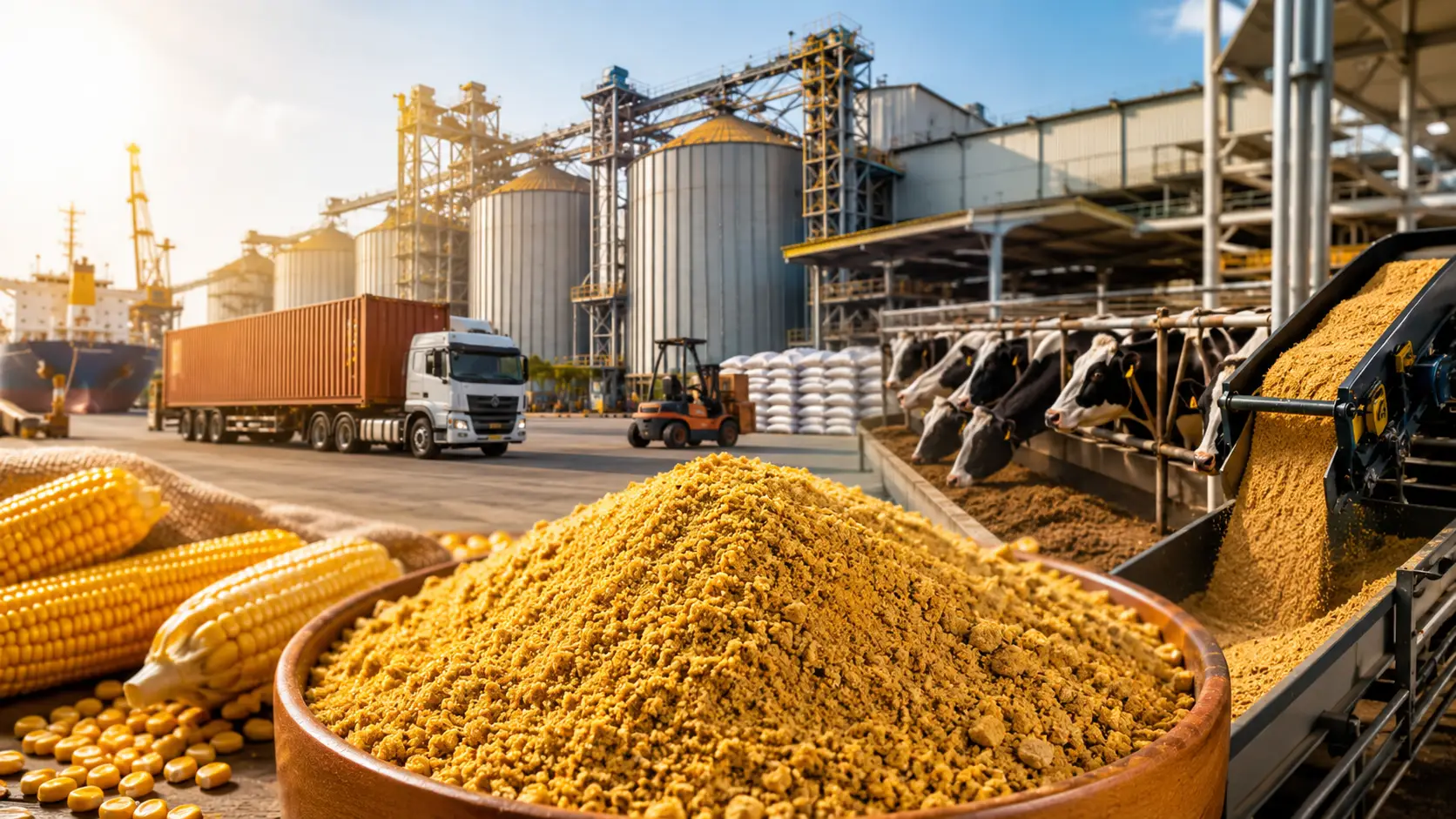
Corn gluten feed is an agricultural feed ingredient produced during corn processing, particularly during wet milling operations for starch, sweetener, and ethanol production. It contains a combination of corn bran, corn steep liquor, and other soluble components, providing a valuable source of protein, fiber, minerals, and energy for livestock nutrition.
According to technical information from the U.S. Department of Agriculture, corn processing generates several co-products that contribute significantly to agricultural feed systems by improving resource efficiency and creating additional value from grain production. Corn gluten feed has become an important component in commercial animal nutrition because it transforms processing residues into useful livestock feed resources.
Corn gluten feed typically contains moderate protein levels and digestible fiber, making it suitable for ruminant diets, especially cattle and dairy feed formulations. Its nutritional profile allows feed manufacturers to balance energy sources while reducing dependence on conventional grain ingredients.
Market demand for corn gluten feed continues to expand as livestock producers seek cost-effective feed alternatives. According to industry analysis from the Food and Agriculture Organization of the United Nations, efficient utilization of agricultural by-products plays an important role in sustainable livestock production systems.
Industrial Applications Driving Corn Gluten Feed Demand
The primary industrial application of corn gluten feed is commercial animal feed production. Feed manufacturers incorporate it into formulations for cattle, dairy animals, sheep, and other livestock because it provides nutritional value while improving formulation flexibility.
Technical research published by the National Academies of Sciences, Engineering, and Medicine highlights the importance of alternative feed ingredients in maintaining efficient livestock production, particularly when producers face changing raw material costs and supply conditions.
Corn gluten feed is widely used in ruminant nutrition because its fiber content supports digestive health while its protein contribution helps improve feed efficiency. Dairy farms and beef producers often evaluate corn gluten feed as part of balanced feeding programs designed around animal performance targets.
Beyond traditional livestock applications, demand from industrial feed producers is influenced by global trends toward sustainable agricultural practices. By utilizing corn processing co-products, manufacturers can support circular agricultural supply chains while providing competitive feed solutions.
Key Buyers and Industries Using Corn Gluten Feed
Animal feed manufacturers represent the largest commercial buyer group for corn gluten feed because they require consistent supplies of functional ingredients for livestock nutrition formulations. These companies evaluate corn gluten feed based on nutritional specifications, availability, logistics efficiency, and supplier reliability.
According to market information from the American Feed Industry Association, feed manufacturers continuously optimize ingredient sourcing strategies to maintain production efficiency while responding to changing commodity markets. Corn gluten feed provides manufacturers with an alternative ingredient option that supports cost management and formulation flexibility.
Large-scale feed producers typically purchase corn gluten feed in bulk quantities through international suppliers, traders, and agricultural commodity distributors. Procurement teams usually assess factors such as protein content, moisture level, particle consistency, packaging options, and compliance documentation before establishing supply agreements.
The increasing professionalization of animal feed production has created stronger demand for transparent sourcing channels. B2B marketplaces help connect feed manufacturers with qualified suppliers, allowing buyers to compare availability, specifications, and commercial terms more efficiently.
Livestock Producers and Agricultural Operations
Livestock producers, including dairy farms and beef cattle operations, are another important buyer segment for corn gluten feed. These users rely on feed ingredients that provide nutritional benefits while maintaining competitive production costs.
According to research from the Dairy Management Inc., dairy production systems increasingly focus on optimizing feed efficiency because feed represents one of the largest operational expenses in livestock farming. Corn gluten feed can contribute valuable fiber and protein components within balanced rations.
Agricultural distributors also purchase corn gluten feed to supply regional farming communities. These distributors act as intermediaries between international suppliers and local producers by managing storage, transportation, and customer relationships.
As global livestock production expands, buyers increasingly seek dependable ingredient suppliers capable of maintaining stable quality and delivery schedules. This trend creates opportunities for exporters, traders, and marketplace platforms specializing in agricultural feed ingredients.
Global Market Trends and Supply Chain Opportunities
The global animal feed industry is experiencing increasing interest in alternative feed ingredients due to fluctuations in grain prices, climate-related supply challenges, and the need for sustainable production methods. Corn gluten feed benefits from this trend because it represents a valuable co-product of corn processing.
According to agricultural market analysis from the International Grains Council, global feed ingredient markets are closely influenced by cereal production trends, livestock demand, and international commodity trade conditions. These factors continue shaping purchasing decisions among feed manufacturers.
Corn gluten feed supply is closely connected to corn processing industries, particularly regions with strong corn production and ethanol manufacturing sectors. Major producing areas often have advantages in availability, transportation infrastructure, and export capability.
For international buyers, understanding supply origins and production capacity is essential when selecting suppliers. Companies increasingly prioritize suppliers that can provide consistent volumes, quality documentation, and efficient international logistics support.
Regional Trade and Supply Chain Development
Regional differences in livestock production and agricultural processing create opportunities for international corn gluten feed trade. Countries with growing livestock industries often depend on imported feed ingredients to supplement domestic production.
Market participants monitor factors such as corn production levels, freight costs, currency movements, and animal feed demand when planning procurement strategies. These elements directly influence purchasing decisions for manufacturers and distributors.
Supply chain transparency has become an important factor in B2B agricultural trading. Buyers increasingly prefer platforms that provide access to verified suppliers, product information, and communication channels that simplify international sourcing.
For exporters and traders, corn gluten feed represents an opportunity to participate in expanding feed ingredient markets by connecting production regions with high-demand livestock markets.
Buyer Intent and Procurement Considerations for Corn Gluten Feed
Companies searching for corn gluten feed online usually demonstrate strong commercial purchase intent. Typical buyers include feed manufacturers, livestock nutrition companies, agricultural traders, and distributors looking for dependable raw material sources.
According to procurement practices recommended by the United Nations Industrial Development Organization, industrial buyers increasingly evaluate suppliers based on technical capability, supply reliability, documentation standards, and long-term commercial suitability.
Before purchasing, procurement teams typically compare suppliers based on product specifications, origin, production capacity, shipment terms, and quality assurance procedures. These factors help buyers reduce supply risks and maintain consistent feed production.
A professional product marketplace page supports sourcing decisions by providing buyers with structured information about applications, specifications, supplier capabilities, and commercial availability.
Why Buyers Compare Multiple Suppliers
Corn gluten feed buyers often compare multiple suppliers because pricing, availability, and logistics conditions can vary significantly between regions. Competitive sourcing allows companies to secure stable supply while managing production costs.
Feed companies may evaluate suppliers based on certifications, export experience, packaging options, and the ability to support recurring orders. Reliable communication and transparent commercial information are important factors in building long-term partnerships.
B2B platforms such as Tradeasia / Chemtradeasia / Tradechem Marketplace help simplify supplier discovery by bringing together manufacturers, traders, and industrial buyers in a single sourcing environment.
By improving access to market information and supplier networks, digital marketplaces support more efficient procurement processes for companies operating in global feed ingredient markets.
Sourcing Corn Gluten Feed Through Reliable B2B Supply Networks
Choosing a reliable corn gluten feed supplier requires buyers to evaluate more than product availability. Factors such as production consistency, export capability, technical documentation, and supply chain reliability influence supplier selection.
According to international trade principles outlined by the World Trade Organization, efficient global trade depends on transparent commercial practices, predictable supply systems, and effective communication between trading partners.
Experienced suppliers can help buyers manage international procurement challenges by providing suitable shipping options, documentation support, and consistent product quality.
For manufacturers and distributors, establishing relationships with dependable suppliers creates opportunities for long-term supply agreements and improved inventory planning.
Digital Marketplaces Supporting Global Procurement
Digital B2B marketplaces are transforming how industrial buyers identify and evaluate agricultural ingredient suppliers. Instead of relying only on traditional trading networks, companies can access broader supplier ecosystems through online platforms.
Tradeasia / Chemtradeasia / Tradechem Marketplace provides a sourcing channel where buyers can explore industrial raw materials, communicate with suppliers, and evaluate products based on business requirements.
As demand for sustainable and cost-efficient feed ingredients continues growing, online sourcing platforms provide valuable support for procurement teams seeking global supply opportunities.
The future of corn gluten feed trading will increasingly depend on reliable supply networks, transparent information exchange, and efficient connections between producers and industrial buyers.
Conclusion: Future Opportunities in Corn Gluten Feed Trading
Corn gluten feed has become an important agricultural feed ingredient because it combines nutritional value, supply chain efficiency, and sustainability benefits. Its role in livestock nutrition continues expanding as feed manufacturers and producers search for reliable alternatives to traditional feed materials.
Growing livestock production, increasing focus on agricultural resource efficiency, and demand for competitive feed solutions are expected to support continued interest in corn gluten feed markets. Buyers are increasingly looking for suppliers that can provide consistent quality, dependable logistics, and professional commercial support.
For manufacturers, distributors, and procurement teams, accessing reliable international supply networks is essential to capturing opportunities in the evolving feed ingredient market. Tradeasia / Chemtradeasia / Tradechem Marketplace supports global sourcing by connecting industrial buyers with suppliers across agricultural commodity markets.
Sources
https://www.usda.gov
https://www.fao.org
https://www.afia.org
Leave a Comment