Cocoa Powder Supply Chain Overview
Role of Cocoa Powder in the Ingredient Supply Chain
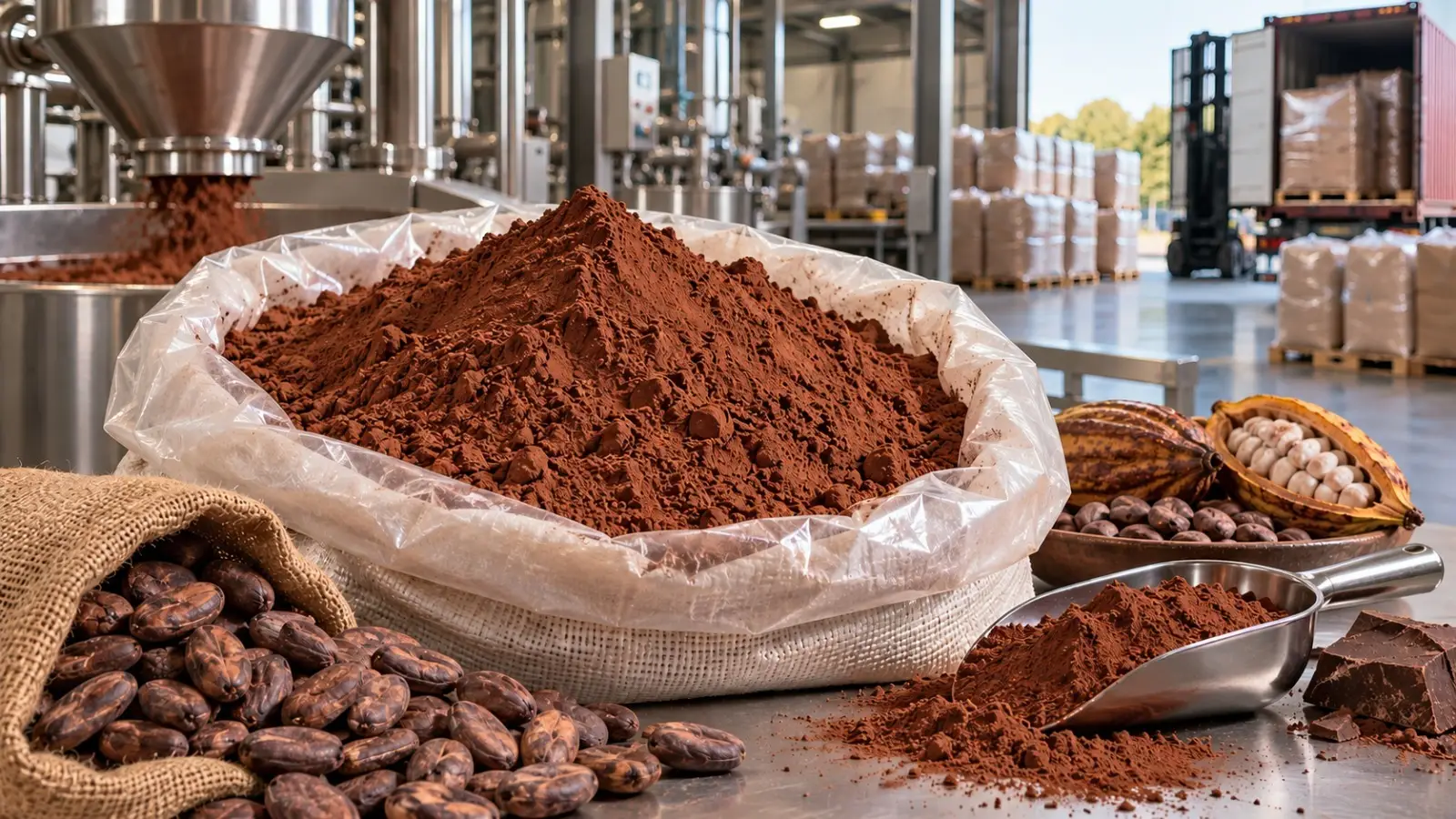
Cocoa powder is an important processed cocoa ingredient used across food manufacturing and industrial formulation. Its commercial supply chain begins with cocoa bean production and continues through bean collection, processing, cocoa solids separation, milling, quality control, packaging, warehousing, and distribution. For B2B buyers, understanding this chain is important because product consistency and supply reliability depend on several connected stages rather than on the finished powder alone.
The supply chain connects agricultural production with processors, ingredient traders, distributors, food manufacturers, and downstream users. Each participant has a defined role in moving cocoa-derived material from origin to industrial consumption. Procurement teams therefore need to consider not only product specifications but also supplier capability, processing standards, documentation, packaging formats, and logistical arrangements when establishing a dependable sourcing program.
Importance of Supply Chain Coordination
Cocoa powder procurement requires coordination between supply availability, processing capacity, inventory planning, and transportation. A disruption at an earlier stage can affect later processing and delivery schedules, making supply-chain visibility particularly relevant for manufacturers with continuous production requirements. Reliable commercial relationships can help buyers plan purchasing volumes and manage replenishment more effectively.
For international B2B trade, supply-chain coordination also involves export documentation, shipment planning, storage conditions, and destination-market requirements. Buyers working with suppliers through established ingredient trading networks can evaluate sourcing options according to their technical requirements, purchasing volumes, and delivery expectations. This creates a structured procurement process from supplier identification through final delivery.
Cocoa Bean Sourcing and Raw Material Supply
Cocoa Bean Origins and Procurement
The cocoa powder supply chain starts with cocoa beans obtained from producing regions and agricultural supply networks. Bean characteristics can vary according to origin, agricultural practices, post-harvest handling, fermentation, and drying. These factors can influence the characteristics of processed cocoa ingredients, making raw-material sourcing an important consideration for processors and downstream buyers.
For commercial procurement, consistency in raw material supply is particularly relevant. Cocoa processors need sufficient bean availability to maintain production schedules and meet customer requirements. B2B buyers, meanwhile, benefit from understanding how supplier networks manage raw-material sourcing because the stability of upstream supply can influence product availability, lead times, and purchasing planning.
Upstream Supply Chain Management
After harvesting, cocoa beans undergo post-harvest processes before entering commercial processing channels. Collection, transportation, storage, and handling connect agricultural suppliers with cocoa processors. Effective management at these stages helps preserve raw-material quality while supporting the movement of cocoa beans into processing facilities.
For international ingredient buyers, upstream traceability and supplier documentation can form part of procurement assessment. Buyers may review the supplier's ability to provide consistent specifications, appropriate documentation, predictable delivery schedules, and suitable commercial quantities. These considerations help connect agricultural supply with the requirements of modern food manufacturing operations.
Cocoa Powder Processing and Quality Control
From Cocoa Beans to Cocoa Powder
Cocoa powder is produced through a sequence of processing operations that transform cocoa beans into a powdered cocoa ingredient. Processing generally involves preparation of the beans, cocoa mass production, separation of cocoa butter from cocoa solids, and milling of the resulting cocoa solids. The processing configuration influences the characteristics of the final powder and its suitability for different formulations.
Processing facilities therefore play a central role in the supply chain. Their equipment, production controls, quality systems, and handling practices affect the consistency of material supplied to downstream customers. For procurement teams, understanding the processing stage provides useful context when evaluating suppliers and comparing cocoa powder specifications.
Quality Assurance and Product Consistency
Quality control is essential because food manufacturers generally require predictable ingredient performance across production batches. Commercial cocoa powder sourcing can involve assessment of physical characteristics, purity, microbiological quality, moisture-related parameters, packaging integrity, and other specifications relevant to the intended application. Documentation accompanying the product can also support internal quality-assurance procedures.
A dependable supply chain connects product testing with appropriate storage and transportation practices. Quality assurance should therefore be viewed as a continuous supply-chain activity rather than an inspection performed only at the end of production. Suppliers and buyers can establish clear specifications and documentation requirements before commercial transactions to support consistent procurement.
Cocoa Powder Applications Across Industries
Cocoa Powder in Food Manufacturing
Cocoa powder is widely incorporated into formulations where cocoa flavor, color, and solids are required. Food manufacturers can use it in bakery products, confectionery formulations, cocoa beverages, desserts, and other processed foods. Its role in these products makes reliable ingredient availability important for manufacturers operating scheduled production lines.
Application requirements can vary between manufacturers. A bakery producer may prioritize consistent color and flavor performance, while a beverage or confectionery manufacturer may have different technical and formulation requirements. Consequently, commercial sourcing should connect the selected cocoa powder specification with the specific manufacturing process and finished-product requirements.
Applications and Downstream Demand
Cocoa powder demand is closely connected to activity in food and beverage manufacturing. Bakeries, confectionery producers, beverage manufacturers, dessert companies, and ingredient formulators can represent different buyer segments within the downstream supply chain. Each segment may purchase different volumes and require different packaging, documentation, delivery schedules, or product specifications.
For suppliers and distributors, understanding these application segments helps create more efficient commercial sourcing channels. Rather than treating cocoa powder as a single standardized procurement category, B2B marketplaces can connect buyers with supply options based on application, volume, specification, and geographic requirements. This approach can make sourcing more relevant to industrial purchasing teams.
Storage, Packaging, and Logistics
Packaging Requirements for B2B Distribution
Packaging is an important part of cocoa powder supply-chain management because the ingredient must remain protected during storage, handling, and transportation. Commercial packaging can be selected according to shipment size, warehouse handling systems, customer requirements, and distribution channels. Appropriate packaging also supports inventory management from the supplier's facility to the buyer's production site.
For larger industrial customers, procurement teams may coordinate packaging formats with warehouse capacity and material-handling procedures. Bulk purchasing can require different logistics planning from smaller ingredient orders. Suppliers that can accommodate practical B2B packaging and documentation requirements can support smoother movement through distribution networks.
Warehousing and International Logistics
After processing and packaging, cocoa powder may move through warehouses, distribution centers, ports, freight networks, and customer facilities. Storage planning is important because inventory must remain suitable for its intended use while waiting for shipment or production. Logistics teams must also coordinate order quantities, shipment schedules, customs documentation, and destination requirements.
International supply chains introduce additional planning requirements. Ocean freight, container availability, port operations, transit times, and destination clearance can affect delivery schedules. Buyers can reduce procurement uncertainty by establishing realistic lead-time expectations and maintaining communication with suppliers throughout the order and shipment process.
Global Market and Supply Chain Considerations
Supply and Demand Dynamics
The cocoa powder market is connected to both agricultural cocoa production and downstream demand from food manufacturing. Changes in raw-material availability, processing capacity, transportation conditions, and manufacturing demand can influence commercial sourcing conditions. Because these factors operate across different parts of the supply chain, procurement teams benefit from monitoring suppliers and markets rather than relying exclusively on short-term purchasing decisions.
Market conditions can also vary by region. Availability from particular origins, local processing capabilities, import requirements, and transportation infrastructure can affect sourcing options for international buyers. A diversified supplier network can provide additional procurement flexibility when buyers need to manage changing requirements.
International B2B Trade
International cocoa powder trade involves multiple commercial participants, including producers, processors, exporters, distributors, traders, and food manufacturers. B2B marketplaces can provide a structured environment for buyers and suppliers to identify potential commercial relationships and communicate product requirements.
For international procurement teams, supplier comparison should consider more than quoted price. Product specification, minimum order quantity, packaging, documentation, production capacity, lead time, shipping options, and communication can all influence the practicality of a sourcing arrangement. A broader supply-chain view allows buyers to assess the complete commercial proposition.
Cocoa Powder Buyers and Procurement Requirements
Food Manufacturers as Core Buyers
Food manufacturers represent an important buyer group for cocoa powder because the ingredient can be incorporated into numerous finished-product categories. Bakery companies, confectionery manufacturers, beverage producers, dessert manufacturers, and other food processors may require regular supplies to maintain production schedules.
Procurement teams typically need clear technical information before placing commercial orders. Product specifications, packaging information, available quantities, documentation, delivery terms, and supplier capabilities can all form part of the purchasing process. Establishing these requirements early can help buyers identify suitable suppliers more efficiently.
Distributors and Ingredient Traders
Distributors and ingredient traders can serve as intermediaries between cocoa powder producers and downstream manufacturers. Their role may include inventory management, regional distribution, customer support, commercial coordination, and shipment planning. For buyers without direct access to processing facilities, distributors can provide an additional sourcing channel.
For suppliers, distributor relationships can expand market reach and provide access to multiple downstream customers. A B2B marketplace can support this ecosystem by connecting suppliers, traders, distributors, and manufacturers according to product and procurement requirements. This creates opportunities for more structured commercial interactions within the cocoa ingredient supply chain.
B2B Cocoa Powder Sourcing Strategies
Supplier Evaluation
Effective sourcing begins with identifying suppliers capable of meeting the buyer's technical and commercial requirements. Procurement teams can evaluate product specifications, consistency, documentation, available quantities, packaging, production capabilities, and delivery arrangements. Supplier communication is also important because specifications and order requirements should be clearly established before purchase.
Buyers can also examine the supplier's position within the broader supply chain. Understanding whether the supplier is a processor, manufacturer, distributor, or trading company can help clarify how products are sourced and delivered. This information supports more transparent commercial discussions and helps buyers align their sourcing model with their operational needs.
Building Supply Continuity
Supply continuity depends on coordinated procurement, inventory planning, logistics, and supplier relationships. Buyers with recurring cocoa powder requirements may benefit from planning purchases around production schedules and anticipated demand rather than relying exclusively on last-minute orders. Clear communication about forecast quantities can also help suppliers prepare appropriate inventory and shipping arrangements.
A B2B marketplace can support this process by providing access to commercial sourcing networks and helping buyers identify potential supply partners. For manufacturers and distributors, the objective is to establish procurement channels that connect product specifications with reliable supply, appropriate logistics, and practical commercial terms. This supply-chain approach supports more organized purchasing as cocoa powder moves from processing facilities to industrial users.
Conclusion: Building a Reliable Cocoa Powder Supply Chain
Connecting Production With Industrial Demand
The cocoa powder supply chain connects agricultural cocoa production, processing facilities, quality assurance, packaging, warehousing, logistics, distributors, and food manufacturers. Each stage contributes to the availability and consistency of the finished ingredient. Understanding these connections gives procurement teams a clearer framework for evaluating sourcing opportunities.
For B2B buyers, cocoa powder sourcing is therefore more than identifying a product and obtaining a quotation. Successful procurement requires consideration of specification, supplier capability, packaging, logistics, documentation, order volume, and supply continuity. These factors become particularly important for manufacturers that depend on consistent ingredient availability.
Supporting Efficient B2B Procurement
Trade-oriented sourcing platforms can help connect cocoa powder suppliers with manufacturers, distributors, and procurement teams seeking commercial ingredient solutions. By bringing product information and supplier networks together, B2B marketplaces can simplify the initial stages of supplier discovery and commercial evaluation.
As the cocoa ingredient supply chain continues to connect agricultural production with international food manufacturing, structured sourcing remains important for both buyers and suppliers. A transparent approach to specifications, quality, logistics, and commercial requirements can help create stronger supply relationships and support efficient movement of cocoa powder through global B2B markets.
Sources
www.fao.org
www.fda.gov
www.fao.org/fao-who-codexalimentarius
Leave a Comment