Cocoa Powder in the Global Food Ingredient Industry
Understanding Cocoa Powder as a Food Ingredient
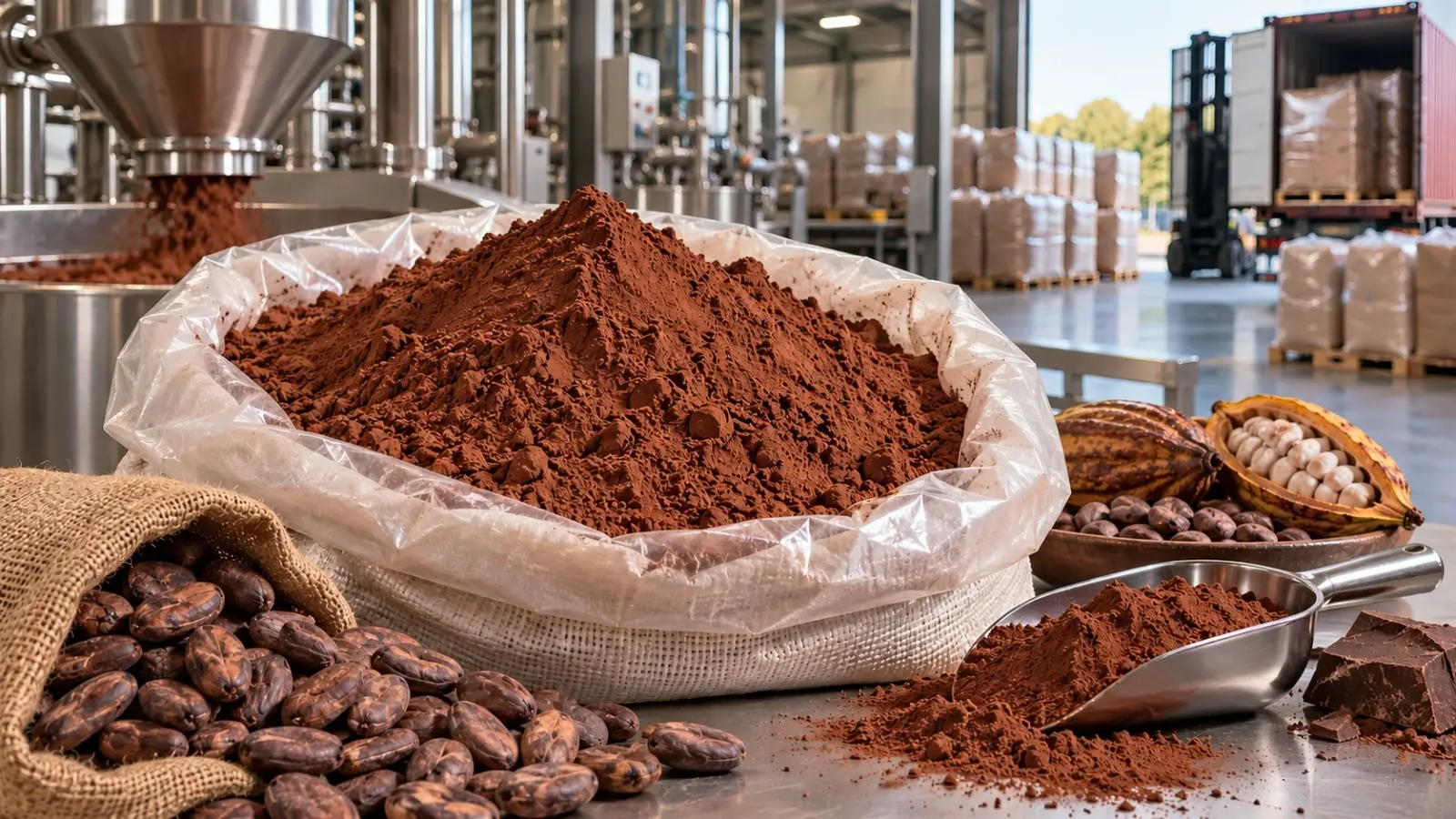
Cocoa Powder is an established ingredient used across a broad range of food manufacturing applications. Codex describes cocoa powder as a product obtained by reducing the fat content of cocoa mass or liquor through pressing, followed by processing the resulting cocoa press cake into powder. This production pathway gives manufacturers a dry cocoa ingredient that can be incorporated into formulations for chocolate, confectionery, beverages, bakery products, and other cocoa-based foods.
For B2B buyers, the commercial value of Cocoa Powder is closely connected to its ability to contribute cocoa character to standardized food formulations. Manufacturers do not generally purchase cocoa powder only as a commodity; they evaluate it according to the requirements of their finished products, production processes, formulation targets, and procurement specifications. This makes supplier selection an important part of industrial ingredient purchasing.
Cocoa Powder in Standardized Food Manufacturing
Cocoa Powder can function as a core cocoa ingredient in formulations where manufacturers require consistent raw-material performance. Codex maintains a specific standard for cocoa powders and dry mixtures of cocoa and sugars under CXS 105-1981, demonstrating the established international framework surrounding this ingredient category.
From a procurement perspective, buyers therefore need to consider more than the basic product name. Product identity, composition, physical characteristics, documentation, packaging, batch consistency, and destination-market requirements can all influence purchasing decisions. A B2B marketplace can support this process by connecting manufacturers and distributors with suppliers able to communicate product specifications clearly and consistently.
Cocoa Powder Applications in Chocolate and Confectionery
Chocolate Manufacturing Applications
Chocolate manufacturing is one of the most direct application areas for Cocoa Powder. Codex identifies cocoa powder, cocoa mass, cocoa press cake, and related cocoa materials within the cocoa-product category, while its food-category framework recognizes chocolate products made from cocoa ingredients including cocoa powder.
For chocolate manufacturers, sourcing requirements can vary according to the formulation and finished-product specification. Buyers may therefore assess cocoa powder based on factors such as fat level, sensory characteristics, processing compatibility, consistency, and documentation. These requirements become particularly important when a manufacturer is operating standardized production lines and needs dependable ingredient performance across multiple purchasing cycles.
Confectionery and Cocoa-Based Products
Beyond conventional chocolate, Cocoa Powder can be incorporated into a variety of confectionery formulations and cocoa-based preparations. Codex identifies cocoa-based spreads and fillings as a distinct food category and describes products such as chocolate fillings, chocolate-based spreads, and related cocoa formulations.
This creates opportunities for ingredient suppliers serving confectionery manufacturers, private-label producers, compound-product manufacturers, and distributors. For these buyers, sourcing is often connected to formulation requirements, production volumes, packaging formats, and the ability of suppliers to maintain dependable commercial supply. Clear technical information can help procurement teams match a cocoa powder grade with its intended application.
Cocoa Powder Applications in Bakery and Beverage Products
Bakery and Dry-Mix Applications
Cocoa Powder is widely relevant to bakery formulations where cocoa character is required in products such as cakes, biscuits, cookies, fillings, and other cocoa-containing preparations. Its dry powdered format allows it to be incorporated into dry ingredient systems and formulated alongside flour, sugar, fats, leavening systems, flavors, and other food ingredients according to the manufacturer's recipe.
For industrial bakery buyers, sourcing decisions can involve consistency of supply, suitability for the manufacturing process, particle characteristics, formulation compatibility, and documentation. Large-scale bakeries and ingredient distributors may also require predictable packaging and shipment arrangements because raw-material interruptions can affect scheduled production and finished-product availability.
Beverage and Cocoa Mix Applications
Cocoa Powder also serves as a raw material for cocoa-based beverage mixes and related preparations. Codex identifies cocoa mixes and cocoa powder products used in the manufacture of chocolate products or in the preparation of cocoa-based beverages, while its standards framework separately recognizes cocoa powders and dry cocoa-sugar mixtures.
Beverage manufacturers and dry-mix producers may purchase cocoa powder according to formulation requirements, desired cocoa characteristics, processing conditions, and finished-product specifications. Buyers producing instant mixes, powdered beverage preparations, or cocoa-containing formulations can therefore benefit from sourcing programs that provide consistent specifications and reliable replenishment rather than relying solely on spot purchasing.
Key Buyers of Cocoa Powder
Food Manufacturers and Industrial Processors
Food manufacturers represent a major B2B buyer group because Cocoa Powder can be incorporated into multiple finished-product categories. Chocolate processors, confectionery manufacturers, bakery companies, beverage producers, and manufacturers of cocoa-based mixes may each require different commercial specifications depending on their production processes and formulation requirements.
Procurement teams within these businesses typically need to evaluate supplier capability alongside product specifications. Important commercial questions can include available grades, minimum order quantities, packaging, lead times, documentation, shipping arrangements, and supply continuity. For manufacturers with recurring production schedules, the ability to establish a predictable supply relationship can be as important as the initial product quotation.
Importers, Distributors, and Ingredient Traders
Importers and distributors form another important buyer segment because they purchase Cocoa Powder for onward supply to food manufacturers and other commercial customers. Their procurement requirements can include multiple packaging options, shipment flexibility, documentation, product consistency, and the ability to serve different customer specifications across several markets.
For distributors, supplier communication is especially important because their customers may have different technical and commercial requirements. A B2B marketplace can help simplify supplier discovery by presenting product information in a format that allows buyers to compare sourcing opportunities, communicate requirements, and identify suppliers suitable for particular application categories.
Quality and Specification Considerations for Buyers
Composition and Product Characteristics
Cocoa Powder procurement should begin with a clear understanding of the required product specification. Codex materials distinguish standard cocoa powder from fat-reduced cocoa powder according to cocoa butter content, and an earlier Codex specification identifies cocoa powder and fat-reduced cocoa powder as separate product types.
This distinction matters because manufacturers may design recipes around a particular ingredient composition. Buyers should therefore define the required product characteristics before requesting quotations, especially when replacing an existing supplier or qualifying a new source. A clearly documented specification helps procurement, quality, and production teams evaluate whether a proposed material is appropriate for the intended formulation.
Documentation and Compliance
Food ingredient procurement also requires attention to applicable standards and destination-market requirements. Codex currently lists CXS 105-1981 as the Standard for Cocoa Powders and dry mixtures of cocoa and sugars, providing an international reference point for the product category.
However, commercial buyers should evaluate requirements according to the jurisdiction in which the ingredient will be imported, processed, or sold. Supplier documentation, certificates, specifications, analytical information, traceability records, and other quality documents can form part of the qualification process. Maintaining appropriate documentation can reduce uncertainty during supplier approval and subsequent purchasing.
Cocoa Powder Sourcing and B2B Procurement
Supplier Selection for Cocoa Powder
Selecting a Cocoa Powder supplier requires alignment between technical requirements and commercial supply capability. Buyers may compare suppliers according to product specifications, production or sourcing capacity, packaging options, documentation, order quantities, logistics capabilities, and responsiveness to technical inquiries.
A structured procurement process can help buyers distinguish between suppliers that can support recurring industrial requirements and those suited primarily to occasional transactions. For manufacturers, establishing clear requirements at the quotation stage can also reduce misunderstandings around product grade, packaging, shipment terms, and quality expectations.
Bulk Purchasing and Supply Planning
Bulk Cocoa Powder procurement is particularly relevant for manufacturers and distributors with recurring demand. Instead of treating every order as an isolated transaction, procurement teams can assess expected consumption, inventory requirements, production schedules, transportation lead times, and supplier capacity when developing a sourcing strategy.
B2B marketplaces can support this process by connecting buyers with suppliers across international markets and providing a commercial channel for product discovery and supplier communication. For Cocoa Powder buyers, the objective is to establish a sourcing structure that balances product suitability, availability, documentation, logistics, and overall purchasing requirements.
Market Opportunities and Supply Chain Considerations
Demand Across Multiple Food Segments
The broad application base of Cocoa Powder creates a diversified B2B demand environment. Chocolate and confectionery manufacturers represent direct users, while bakeries, beverage producers, dry-mix manufacturers, food processors, and ingredient distributors provide additional commercial demand channels. Codex's food-category framework specifically recognizes cocoa mixes and cocoa mass/cake as inputs associated with cocoa and chocolate products and identifies cocoa-based spreads and fillings as another cocoa-related category.
For suppliers, this application diversity can create opportunities to serve multiple customer segments rather than depending on a single finished-product category. For buyers, it means supplier evaluation can be tailored to the specific application, required specification, purchasing volume, and market destination instead of assuming that every cocoa powder product is interchangeable.
Supply Chain and International Trade
International Cocoa Powder sourcing involves coordination between suppliers, exporters, importers, distributors, logistics providers, and food manufacturers. Commercial planning can include product availability, order volumes, packaging, warehousing, transportation, documentation, and delivery schedules.
For international buyers, a dependable supply chain is particularly relevant when Cocoa Powder is an ongoing production input. Procurement teams can reduce operational uncertainty by establishing clear specifications and supplier expectations before purchasing. Supplier transparency regarding product documentation and commercial capabilities can also support more efficient qualification and replenishment planning.
Conclusion: Building Reliable Cocoa Powder Supply
Matching Applications With Buyer Requirements
Cocoa Powder is a versatile cocoa ingredient with applications spanning chocolate, confectionery, bakery, beverage mixes, spreads, fillings, and other cocoa-based food formulations. Its commercial relevance comes from the combination of established food-industry applications and the need for manufacturers to source ingredients that match defined formulation and quality requirements. Codex continues to maintain an international standard specifically covering cocoa powders and dry cocoa-sugar mixtures.
For buyers, the sourcing process should begin with the intended application and required specification. Chocolate manufacturers may have different requirements from bakeries, beverage producers, or distributors, making application-specific supplier qualification important. Clear communication between procurement, quality, technical, and production teams can help ensure that the selected product is aligned with the intended use.
B2B Sourcing Through Trade Marketplaces
For suppliers and buyers participating in international food-ingredient trade, a B2B marketplace can provide a practical channel for discovering commercial opportunities and communicating sourcing requirements. Cocoa Powder suppliers can present product specifications, packaging information, supply capabilities, and commercial details, while buyers can communicate their application and procurement needs.
Tradeasia / Chemtradeasia / Tradechem Marketplace can position Cocoa Powder sourcing around these practical B2B requirements: connecting food manufacturers, distributors, importers, and procurement teams with relevant suppliers while supporting clearer product discovery. For recurring industrial purchasing, the combination of application knowledge, specification control, supplier qualification, and supply planning remains central to developing a dependable Cocoa Powder procurement program.
Sources
www.fao.org
www.fda.gov
www.fao.org/fao-who-codexalimentarius
Leave a Comment