Introduction
Clove has long held a distinctive position within global commodity markets, functioning simultaneously as a spice, a food ingredient, and a critical input for pharmaceutical and industrial applications. Unlike many agricultural commodities driven primarily by food consumption, clove demand is shaped by a complex interaction between culinary traditions, health-related uses, and industrial processing requirements. As a result, the clove market exhibits unique structural characteristics that influence both price behavior and long-term supply stability.
Looking toward 2030, the global clove market is expected to remain strategically important amid shifting consumption patterns, tightening supply conditions, and evolving trade dynamics. For buyers, traders, and ingredient manufacturers, understanding the underlying drivers of demand and price movement is essential for effective procurement planning and risk management. This article provides a comprehensive outlook on the clove market through 2030, examining production trends, demand growth, pricing dynamics, and the strategic implications for market participants.
Clove as a Strategic Commodity: Product Overview and Market Significance
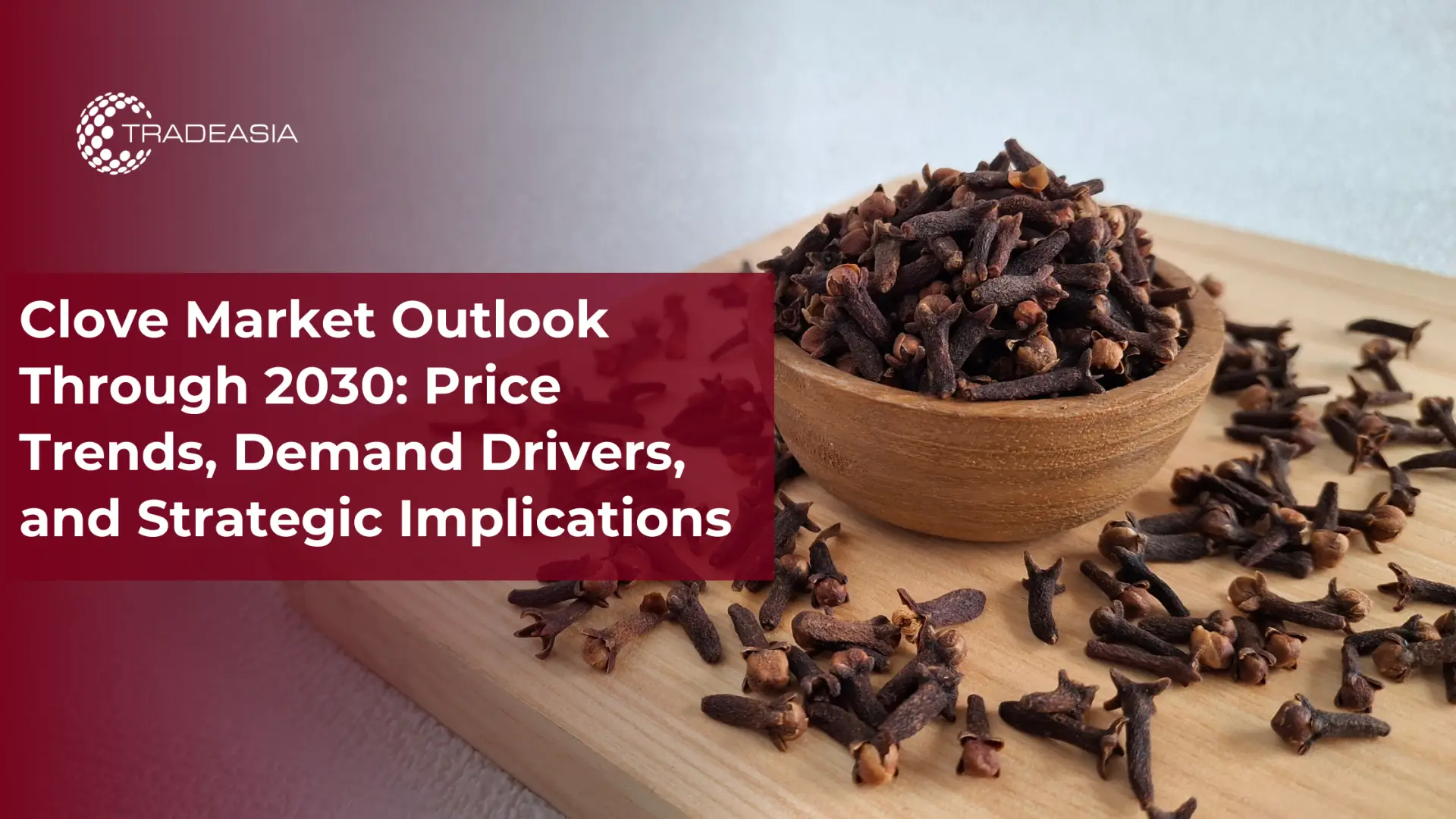
Clove is the dried flower bud of Syzygium aromaticum, valued for its intense aroma, high essential oil content, and functional properties. Its primary active compound, eugenol, underpins many of its applications, ranging from flavoring and fragrance to pharmaceutical and dental uses.
From a market perspective, clove occupies a hybrid position between agricultural spice commodities and functional natural ingredients. In the food sector, it is used in spice blends, processed foods, beverages, and bakery products. In non-food applications, clove oil and its derivatives serve as inputs for oral care products, pharmaceuticals, cosmetics, and traditional medicine. This diversified application base contributes to relatively inelastic baseline demand, even during periods of economic slowdown.
Global Supply Landscape and Production Dynamics
Global clove production remains highly concentrated, with Indonesia accounting for the majority of global output, followed by Madagascar, Tanzania, Comoros, and Sri Lanka. This geographic concentration creates inherent supply-side vulnerability, as production volumes are highly sensitive to weather conditions, crop cycles, and localized agricultural challenges.
Clove trees require several years to mature before reaching optimal productivity, limiting the speed at which supply can respond to rising demand. Furthermore, aging plantations and labor constraints in key producing regions have contributed to periodic supply tightness. Climate variability, including irregular rainfall and extreme weather events, has also increased year-to-year production volatility.
These structural constraints suggest that global clove supply is unlikely to expand rapidly through 2030, reinforcing the importance of strategic sourcing and inventory planning for downstream buyers.
Demand Drivers Across Key End-Use Industries
Demand growth for clove is supported by multiple end-use sectors, each contributing to long-term market resilience. In the food industry, rising interest in natural flavors, ethnic cuisines, and clean-label ingredients continues to support clove consumption in both traditional and modern formulations. Growth in packaged foods and beverages in emerging markets further amplifies this trend.
The pharmaceutical and personal care sectors represent an increasingly important demand driver. Eugenol extracted from clove is widely used for its antiseptic, analgesic, and antimicrobial properties, particularly in dental care applications. As healthcare access expands in developing economies and natural ingredient preferences strengthen globally, demand for clove-derived ingredients is expected to rise steadily.
Additionally, clove plays a unique role in certain regional industries—most notably in Indonesia’s kretek cigarette production—which remains a significant source of domestic demand and continues to influence global trade balances.
Price Trends and Volatility Outlook Through 2030
Clove prices have historically exhibited pronounced volatility, driven by supply disruptions, harvest variability, and speculative stockpiling during periods of shortage. Unlike annual crops, clove production cycles and long tree maturation periods exacerbate price sensitivity to short-term supply shocks.
Through 2030, prices are expected to remain structurally firm, supported by constrained supply growth and stable-to-rising demand across food and non-food sectors. While short-term price corrections may occur following strong harvests, the medium- to long-term outlook suggests upward pressure, particularly if climate-related disruptions intensify.
For buyers, this pricing environment underscores the importance of forward planning, long-term contracts, and supplier diversification to mitigate exposure to sudden price spikes.
Regional Market Developments and Trade Flows
Asia-Pacific remains the dominant consumption and production hub for clove, with Indonesia occupying a dual role as both the largest producer and consumer. Africa continues to serve as a critical export-oriented supply region, particularly for food-grade and oil-grade cloves destined for Europe, the Middle East, and Asia.
Trade flows are influenced by quality differentiation, with certain origins preferred for specific applications based on oil content, moisture levels, and aromatic profile. As quality requirements tighten—especially for food and pharmaceutical use—buyers increasingly differentiate sourcing strategies rather than relying solely on price considerations.
Strategic Implications for Buyers and Ingredient Manufacturers
The evolving clove market landscape presents several strategic implications. First, procurement strategies must account for long-term supply constraints rather than assuming commodity-like availability. Second, quality consistency and traceability are becoming more critical as regulatory and customer requirements increase, particularly for food and health-related applications.
Ingredient manufacturers incorporating clove or clove-derived products into formulations should consider long-term sourcing partnerships to ensure continuity and cost predictability. Strategic inventory management and origin diversification can further reduce exposure to supply shocks and seasonal price volatility.
Risk Factors and Market Uncertainties
Despite a broadly stable demand outlook, the clove market faces several uncertainties. Climate risk remains the most significant, with weather volatility posing ongoing threats to yield stability. Regulatory changes affecting agricultural exports, phytosanitary standards, or natural ingredient usage could also influence trade flows.
Additionally, shifts in consumer preferences—such as reduced tobacco consumption in certain markets—may gradually alter demand composition, even if total global demand remains resilient. These uncertainties reinforce the need for continuous market monitoring and adaptive procurement strategies.
Conclusion
The global clove market through 2030 is characterized by structurally constrained supply, diversified demand drivers, and persistent price volatility. Its importance extends beyond traditional spice usage, supported by growing applications in food processing, pharmaceuticals, and personal care industries. As demand continues to expand while supply growth remains limited, cloves are expected to retain their strategic value within global ingredient markets.
For manufacturers, traders, and procurement professionals, success in this market will depend on informed sourcing decisions, long-term planning, and access to reliable market intelligence. For businesses seeking consistent quality and dependable supply, Tradeasia International supports clove sourcing through established global networks and deep market expertise. Product information and market insights are available at www.foodadditivesasia.com, and procurement or specification inquiries can be directed to food@chemtradeasia.com. Partnering with an experienced supplier enables businesses to navigate price volatility, secure supply continuity, and align sourcing strategies with long-term market realities.
Leave a Comment