Citrus Pulp: Product Profile and Commercial Role
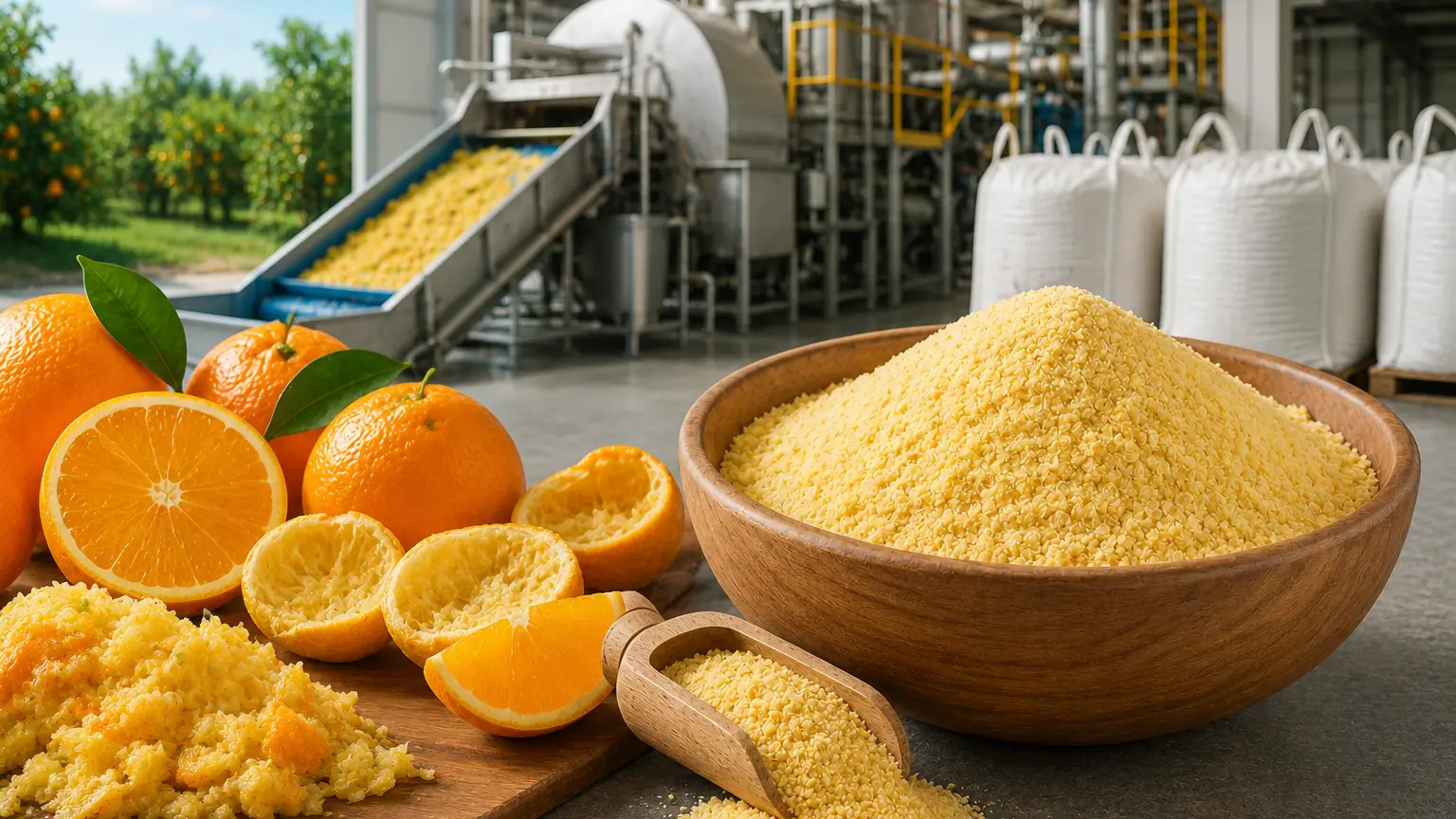
Citrus pulp is a by-product generated from the juice production of citrus fruits including oranges, tangerines, mandarins, lemons, limes, and grapefruits. The product information available from Tradeasia identifies dried citrus pulp as a concentrated feed ingredient for dairy cattle, beef cattle, and sheep, with energy and calcium among its commercially relevant nutritional characteristics. The product is listed with an origin of the United States, CAS Number 94266-47-4, and HS Code 230800.
From citrus processing by-product to feed ingredient
The commercial significance of citrus pulp comes from its conversion from a processing by-product into an ingredient for animal nutrition. FAO technical information identifies citrus pulp among agro-industrial by-products used in animal feeding and notes that processing can improve the storage and handling characteristics of high-moisture materials. This makes the product relevant not only to livestock producers but also to feed manufacturers and distributors looking for usable feed inputs.
Dried citrus pulp and commercial handling
Tradeasia's product information states that its citrus pulp is dried to reduce water content to approximately 11%, followed by pressing, drying, pelleting, and cooling. This processing route is commercially important because moisture reduction and pelletization can make a citrus-derived feed ingredient more suitable for storage, transportation, and incorporation into feed formulations. Feedipedia likewise notes that dried citrus pulp is easier to transport and manage than fresh pulp and can be stored for year-round use when properly handled.
Citrus Pulp Applications in Ruminant Feed
The principal commercial application of citrus pulp is as a ruminant feed ingredient. Tradeasia specifically positions dried citrus pulp for dairy cattle, beef cattle, and sheep, while scientific literature describes citrus by-products as sources of dietary energy used in ruminant feeding systems. This establishes a clear application-led market for buyers in livestock nutrition rather than a broad, undefined commodity market.
Citrus pulp for dairy and beef cattle
Dairy and beef operations can evaluate citrus pulp as part of feed formulations where an energy-containing citrus by-product is appropriate. A 2024 meta-analysis published in Food Chemistry: Molecular Sciences describes citrus pulp as rich in fiber, pectins, and sugars while being comparatively low in starch, and found that dietary inclusion can influence milk-production outcomes depending on inclusion level. These findings reinforce the importance of formulation-specific evaluation rather than treating citrus pulp as a universal replacement ingredient.
Citrus pulp for sheep and other ruminant systems
Sheep are another stated end-use group for Tradeasia's dried citrus pulp. More broadly, reviews of citrus by-products identify fresh pulp, dried pulp, citrus meal, fines, molasses, and other citrus-derived materials as feed resources used in ruminant systems. For B2B buyers, this creates opportunities across different livestock-feed formulations while making the intended animal category an important consideration when evaluating specifications and supply requirements.
Market Demand and Emerging Application Trends
Demand for citrus pulp is closely connected to two linked markets: citrus processing and animal feed. When citrus fruit is processed for juice, substantial by-product streams are generated, creating an economic incentive to convert suitable material into usable feed ingredients. Recent research continues to examine citrus by-products through the lens of circular economy, resource efficiency, and animal nutrition, strengthening the commercial relevance of citrus pulp beyond its traditional role as a processing residue.
Circular utilization is strengthening the application case
A 2024 review of citrus-waste valorization describes livestock feed as one of the established pathways for converting citrus residues into useful products, alongside other value-added routes. This broader valorization trend is relevant to manufacturers and distributors because it positions citrus pulp within a resource-efficiency model: citrus processing generates the raw material, while animal nutrition provides an established end-use market.
Research is refining feed-use expectations
Recent scientific work also shows why professional buyers should distinguish market interest from formulation claims. A 2025 meta-analysis in Animal Feed Science and Technology evaluated citrus pulp inclusion in dairy cow diets and found that effects on dry-matter intake, milk yield, and milk constituents can vary with dietary conditions and inclusion levels. For commercial procurement, the implication is straightforward: demand may be supported by nutritional utility, but product specifications and intended formulation remain central to purchasing decisions.
Key Citrus Pulp Buyers and Procurement Intent
The most relevant citrus pulp buyers are businesses operating within the animal-feed value chain. These include feed manufacturers, livestock-feed distributors, dairy operations, beef cattle producers, sheep-feed businesses, and procurement teams sourcing agricultural feed ingredients. The product's stated applications make ruminant nutrition the clearest commercial segment for buyers seeking a dried citrus-derived feed ingredient.
Who typically buys citrus pulp
Feed manufacturers may purchase citrus pulp as an ingredient for formulated ruminant feeds, while distributors may source it for resale into livestock-producing markets. Dairy, beef, and sheep operations can also represent direct demand when their feeding programs are designed to incorporate suitable citrus by-products. Because requirements can differ between buyers, commercial conversations should connect the product specification with the intended animal, formulation, volume, and delivery requirements.
What procurement teams evaluate
Procurement teams typically need to evaluate product form, moisture-related characteristics, consistency, documentation, logistics, and suitability for the intended feed application. Tradeasia's product page provides technical documentation options, including a technical data sheet and safety data sheet, alongside information on origin, appearance, concentration, and manufacturing process. Buyers can use the [Citrus Pulp supplier information](Citrus Pulp supplier information) as an initial reference point before requesting commercial details.
Citrus Pulp Sourcing Considerations for B2B Buyers
International sourcing of citrus pulp requires more than identifying a supplier with available stock. Because the material originates from citrus processing and is ultimately used in animal-feed applications, buyers need to align product characteristics with feed formulation requirements, logistics, documentation, and applicable market expectations. FAO guidance on agricultural by-products emphasizes the importance of considering factors such as availability, seasonality, nutritive value, processing, and location relative to livestock industries when assessing feed resources.
Product consistency and technical documentation
A reliable citrus pulp sourcing process should begin with technical information. Buyers can compare declared specifications, physical characteristics, documentation, and processing details before moving into commercial negotiations. Tradeasia identifies the product as a white to off-white solid and provides access to TDS and MSDS documentation, giving procurement teams a starting point for technical qualification.
Logistics and storage requirements
Logistics are particularly relevant for citrus-derived materials because fresh citrus pulp contains substantial moisture and is highly perishable, whereas dried pulp is better suited to transportation and storage. Feedipedia notes that drying makes citrus pulp easier to haul and manage and that dried material should be protected from moisture during storage. For international B2B purchasing, therefore, buyers should assess shipment conditions, packaging, storage environment, lead times, and destination requirements alongside the product price.
Supply Opportunities Across the Citrus Feed Value Chain
Citrus pulp presents supply opportunities at the intersection of citrus processing, animal nutrition, and international ingredient distribution. Manufacturers can monetize suitable citrus-processing by-products, traders can connect supply with livestock-feed markets, and distributors can provide regional access to an ingredient that may be difficult to source consistently in markets without major citrus-processing capacity. This value-chain role is consistent with research emphasizing the economic and sustainability potential of citrus by-product utilization.
Opportunities for manufacturers and traders
For manufacturers, the commercial opportunity is to convert an available citrus-processing stream into a standardized feed ingredient with defined handling and application characteristics. For traders and distributors, the opportunity lies in matching appropriate supply with buyers based on destination, application, documentation, and volume. A B2B marketplace can support this process by making product information more accessible before buyers initiate direct commercial discussions.
Opportunities for procurement and distribution networks
Procurement teams benefit when sourcing channels provide enough information to compare products and suppliers without adding unnecessary qualification steps. In this context, the [Citrus Pulp sourcing page](Citrus Pulp sourcing page) can serve as an entry point for buyers evaluating product information, technical documentation, and commercial inquiry options. The broader opportunity is to connect citrus by-product supply with established demand from feed manufacturers and ruminant producers through a more transparent B2B sourcing process.
Conclusion: Turning Citrus Pulp Demand into Sourcing Opportunities
Citrus pulp occupies a practical position within the feed-ingredient market because it connects citrus-processing output with established ruminant nutrition applications. Tradeasia identifies dried citrus pulp for dairy cattle, beef cattle, and sheep and describes it as an energy source that can be mixed with other feed ingredients. Scientific research also continues to evaluate its role in dairy and ruminant diets, indicating that application and inclusion conditions remain important when assessing commercial use.
Why application knowledge matters to buyers
For B2B buyers, the strongest sourcing decisions begin with the intended application. A dairy-feed manufacturer may have different formulation and quality priorities from a beef-feed distributor or sheep-feed buyer. Understanding these requirements helps procurement teams compare suitable citrus pulp suppliers based on technical fit rather than simply comparing headline prices.
Why dependable sourcing matters
The commercial value of citrus pulp depends on the ability to move an agricultural by-product into a dependable feed-ingredient supply chain. Consistent specifications, technical documentation, appropriate storage and logistics, and clear communication between suppliers and buyers can reduce sourcing uncertainty. Buyers looking to evaluate current availability and supplier information can use the [Citrus Pulp product page](Citrus Pulp product page) as a starting point for a B2B inquiry.
Sources
Leave a Comment