Citrus Pulp and Its Role in the Feed Supply Chain
What Citrus Pulp Is
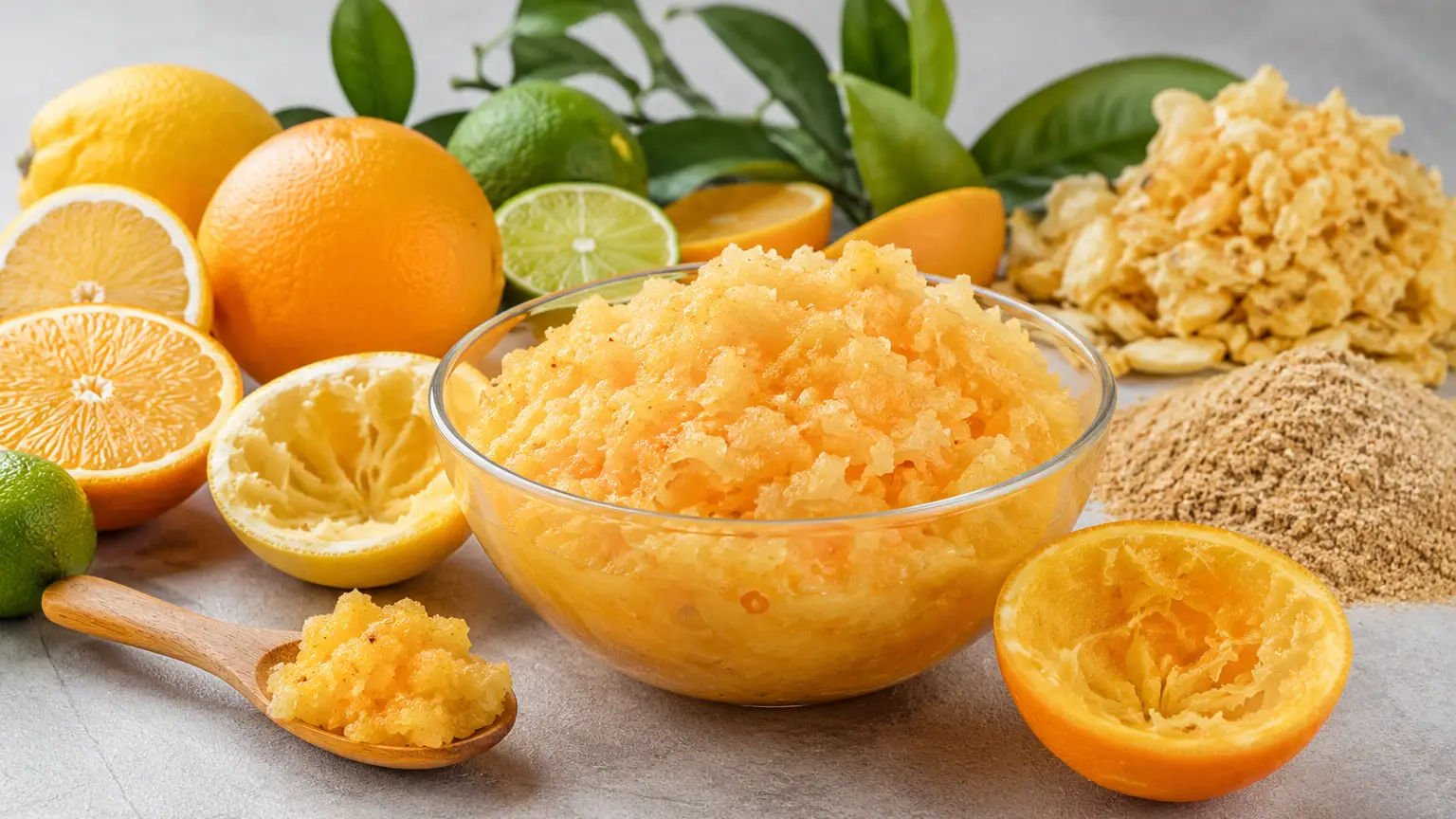
Citrus pulp is an agro-industrial by-product generated during the processing of citrus fruits, including oranges, tangerines, mandarins, lemons, limes, and grapefruits. The Tradeasia product page identifies Citrus Pulp as a by-product originating from the United States, with HS Code 230800 and a white to off-white solid appearance. Its commercial positioning is primarily connected with animal nutrition, particularly as a concentrated feed ingredient for ruminants.
From a supply-chain perspective, citrus pulp converts material generated by juice processing into a tradable feed resource. The form and processing method are particularly important because fresh citrus pulp has high moisture and is perishable, whereas dried citrus pulp is substantially easier to transport, store, handle, and distribute. Feedipedia describes dried citrus pulp as a commonly traded feed ingredient and notes that drying and pelleting improve handling characteristics and storage practicality.
The nutritional profile is one reason citrus pulp has commercial relevance in livestock-feed formulations. Tradeasia describes the product as an energy and calcium source with very low phosphorus and carotene, while technical feed references characterize citrus pulp as an energy-rich ingredient whose carbohydrates include soluble carbohydrates and digestible fibre rather than relying primarily on starch. Actual nutritional specifications can vary according to citrus source and processing conditions, making technical documentation important for procurement decisions.
Why Processing Matters to Buyers
Processing determines whether citrus pulp is suitable for local consumption or broader commercial distribution. Fresh pulp can ferment and spoil rapidly because of its moisture and soluble-sugar content, limiting its practical transport radius. By contrast, dried and often pelleted citrus pulp is more compatible with international logistics and year-round feed manufacturing because it can be stored and moved more efficiently.
For B2B buyers, this makes citrus pulp more than a simple agricultural by-product. It becomes a supply-chain product whose commercial value depends on consistency, processing, documentation, storage stability, and logistics. Buyers evaluating citrus pulp therefore need to consider both nutritional functionality and the physical characteristics required for their feed-production systems.
According to the Food and Agriculture Organization, crop and agro-industrial by-products can become useful feed resources when their quantity, seasonal availability, nutritive value, processing requirements, and proximity to livestock industries are properly assessed. This reinforces the importance of treating citrus pulp procurement as a supply-chain decision rather than simply an ingredient purchase.
Industrial Applications and End-Use Demand
Dairy Cattle Feed
Dairy nutrition is one of the most commercially relevant applications for citrus pulp. Dried citrus pulp can provide an energy source in ruminant diets and can be used as an alternative to portions of cereal-based energy ingredients. Its relatively high digestibility and carbohydrate profile have made it a subject of continuing research in dairy feeding.
Recent scientific evidence provides a more nuanced picture than a simple substitution claim. A 2024 meta-analysis found that low inclusion levels of citrus pulp could increase milk yield without affecting feed intake, while higher inclusion levels were associated with reductions in feed intake and milk yield, alongside higher milk-fat content. This indicates that formulation level and overall ration design are critical when dairy manufacturers or nutritionists evaluate citrus pulp.
A separate 2025 meta-analysis similarly evaluated citrus pulp inclusion in dairy cow diets and reported that increasing inclusion was associated with changes in dry-matter intake, milk production, milk components, and rumen volatile fatty acid profiles. For commercial buyers, these findings highlight why purchasing decisions should be connected to formulation requirements rather than based solely on the ingredient's energy value.
The commercial implication is that dairy-feed manufacturers represent a technically informed buyer group. They are likely to evaluate citrus pulp according to consistency, nutritional specifications, physical form, compatibility with existing formulations, and supplier reliability. Buyers interested in current availability can review the Citrus Pulp sourcing page for product information and inquiry options.
Beef Cattle and Sheep Feed
Citrus pulp also has established applications in beef cattle and sheep feeding. Feedipedia identifies dried citrus pulp as an energy source that can partially replace cereal energy sources in ruminant diets, while historical and recent feeding studies have examined its use in growing and finishing animals.
The application is commercially relevant because feed manufacturers can use agro-industrial by-products as part of strategies to diversify raw-material inputs. In beef production, citrus pulp can be incorporated into rations alongside forage and other concentrate ingredients, while sheep-feeding research has also investigated different inclusion levels and their effects on performance and digestibility. The precise formulation remains dependent on animal type, diet composition, and product characteristics.
Recent research into fresh citrus pulp illustrates why buyers must distinguish between product forms. A 2021 study of feedlot steers examined fresh citrus pulp at different inclusion levels and found that supplementation affected feed consumption and feed conversion without changing average daily gain in the tested conditions. Such research supports continued application evaluation but does not establish one universal inclusion rate for every production system.
For distributors and feed manufacturers, the opportunity therefore lies in matching the right citrus pulp specification with the right livestock segment. Beef and sheep operations may value an energy-containing by-product feed, while commercial compound-feed producers may prioritize standardized dried material that can be incorporated into formulated feeds with predictable handling and storage characteristics.
Market Trends Shaping Citrus Pulp Demand
Circular Economy and By-Product Valorization
One of the strongest trends supporting citrus pulp's commercial relevance is the broader movement toward circular use of food-processing residues. Citrus processing generates substantial by-products, and research increasingly examines methods for converting these materials into useful feed, food, pharmaceutical, and other industrial resources rather than treating them solely as waste.
For animal-feed markets, this creates a direct connection between citrus processing and livestock nutrition. Instead of moving from agricultural production to juice manufacturing and then waste disposal, citrus pulp can become another commercial output within the processing chain. This creates potential value for processors, traders, distributors, and feed manufacturers while also creating an alternative outlet for material generated during citrus processing.
The circular-economy trend is particularly relevant to B2B procurement because sustainability considerations increasingly sit alongside traditional requirements such as price, quality, continuity of supply, and logistics. A 2021 scientific review described citrus by-product valorization as an opportunity to recover useful compounds and create additional applications, while Feedipedia documents animal feeding as an established route for utilizing citrus-processing residues.
Feed Formulation and Ingredient Diversification
Another important trend is the continuing investigation of citrus pulp as an alternative or complementary energy ingredient in livestock diets. Scientific literature has examined its use as a cereal substitute, its digestibility, rumen fermentation characteristics, and its effects on animal performance. More recent meta-analyses indicate that outcomes depend substantially on inclusion level and the composition of the wider diet.
This makes ingredient diversification an important commercial consideration. Feed producers exposed to changes in cereal prices, availability, freight costs, or regional supply conditions may evaluate alternative feed ingredients that can perform a defined nutritional function within a formulated ration. Citrus pulp is relevant to this evaluation because its energy contribution is associated with soluble carbohydrates and digestible fibre rather than simply starch.
At the same time, demand should not be interpreted as unlimited. Citrus pulp has product-specific constraints involving moisture, storage, palatability, composition, and processing quality. The commercial market is therefore better understood as a specification-driven opportunity in which buyers seek suitable material for particular feed formulations rather than treating citrus pulp as a universal replacement for conventional ingredients.
Regional Supply and Logistics
Geography also influences citrus pulp economics. Fresh citrus pulp is difficult to move over long distances because of its moisture and perishability, while dried material is much better suited to broader distribution. Feedipedia notes that drying is generally undertaken at the processing site, reducing transport burdens and enabling dried pulp to be distributed internationally.
For international B2B trade, this distinction changes the commercial structure of the market. Processors located near major citrus-processing regions can potentially create dried, standardized material for feed markets outside the immediate production area. Traders and distributors can then connect processing supply with livestock-feed demand in other regions, subject to product specifications, regulatory requirements, freight economics, and customer requirements.
FAO guidance on agricultural by-products emphasizes the importance of evaluating seasonal availability, location, processing requirements, and the relationship between supply sources and livestock industries. For procurement teams, these factors remain relevant when assessing whether a citrus pulp supply opportunity can support continuous commercial requirements rather than only seasonal spot purchases.
Buyer Intent and Procurement Priorities
Who Buys Citrus Pulp
The main B2B buyer groups for citrus pulp are animal-feed manufacturers, dairy-feed producers, livestock nutrition businesses, agricultural distributors, commodity traders, and procurement teams sourcing feed ingredients. Dairy and beef operations can also represent end users where citrus pulp is purchased as part of a broader ration-management strategy.
These buyers have different purchasing motivations. A compound-feed manufacturer may focus on standardized specifications and repeatable physical performance, while a distributor may place greater emphasis on packaging, logistics, shelf stability, documentation, and marketability. Livestock producers and nutritionists are more likely to focus on nutritional suitability and how the ingredient fits into the overall ration.
Recent scientific work reinforces the need for technically informed purchasing. The 2025 dairy meta-analysis found that the response to citrus pulp varied with inclusion level and other dietary variables, demonstrating that buyers should connect product specifications with intended application rather than evaluating the product in isolation.
This creates a clear commercial search intent around phrases such as “citrus pulp supplier,” “dried citrus pulp for animal feed,” “citrus pulp for dairy cattle,” and “citrus pulp sourcing.” Buyers using these searches are generally closer to a procurement decision than users seeking only basic information about the ingredient.
What Procurement Teams Evaluate
Before purchasing citrus pulp, procurement teams typically need to establish the product's identity, origin, physical form, processing characteristics, nutritional specifications, documentation, packaging, availability, and shipping conditions. Tradeasia's product information identifies the listed origin as the United States, gives the CAS Number as 94266-47-4 and HS Code as 230800, and provides access to technical documentation.
Processing consistency is particularly important. The Tradeasia description states that its citrus pulp production process involves moisture reduction, lime treatment, pressing, drying, pelleting, and cooling. This type of information helps buyers understand how the material is converted from a wet processing residue into a more manageable commercial feed ingredient.
Storage and transportation should also be considered. Dried citrus pulp is easier to handle than fresh pulp, but Feedipedia notes that dried material is somewhat hygroscopic and needs to remain dry during storage. Consequently, buyers should assess warehouse conditions, packaging, transport exposure, loading procedures, and expected storage duration alongside laboratory specifications.
Supplier comparison is therefore not simply a price exercise. Buyers may compare suppliers based on consistency, technical information, origin, documentation, shipment capability, responsiveness, and the ability to support repeat procurement. A marketplace product page can shorten this evaluation process by bringing product information and an inquiry pathway together in one sourcing environment.
B2B Sourcing and Supplier Evaluation
Evaluating Product Quality
Quality evaluation should begin with the intended application. A buyer sourcing citrus pulp for a dairy-feed formulation may have different specification priorities from a distributor supplying multiple livestock markets. Nutritional composition, moisture, physical form, handling characteristics, and consistency between shipments can all influence whether the material fits a particular manufacturing process.
The importance of compositional verification is supported by research showing that citrus by-products can vary according to fruit type and processing conditions. A 2023 study indexed by FAO's AGRIS database evaluated citrus by-products from oranges, lemons, grapefruit, mandarins, limes, and pomelo and measured parameters including dry matter, crude protein, crude fibre, ash, ether extract, and mineral content.
This variation means that buyers should avoid assuming that all citrus pulp has identical nutritional characteristics. A professional procurement process should establish the relevant specification for each supply, confirm available technical documentation, and determine whether the material meets the feed manufacturer's formulation requirements.
For this reason, B2B buyers can use the Citrus Pulp supplier information as an initial commercial reference point before progressing to detailed discussions regarding pricing, customization, shipping, and technical documentation.
Comparing Suppliers and Supply Conditions
Supplier comparison is particularly important when citrus pulp is sourced across borders. The buyer must consider not only the quoted material price but also freight, packaging, handling, storage, lead time, minimum order requirements, documentation, and the practical reliability of the supply route.
Fresh and dried citrus pulp should also be treated differently during sourcing. Fresh material is generally constrained by proximity to processing facilities and short shelf life, whereas dried material is more suitable for longer-distance distribution. Feedipedia's technical information emphasizes the logistical advantage of dried citrus pulp and its established worldwide distribution.
The supplier's ability to provide clear technical information is another differentiator. Tradeasia's product listing includes product identification information, manufacturing-process details, and access to technical documents, giving prospective buyers a starting point for technical and commercial evaluation.
For distributors and procurement teams, the ideal sourcing process combines product suitability with supply reliability. A competitive supplier is therefore not simply one offering an attractive initial price; it is one capable of providing material that fits the buyer's technical requirements and commercial supply schedule.
Commercial Positioning and Supply Opportunities
Opportunities for Manufacturers and Traders
Citrus pulp occupies an interesting position between agricultural processing and industrial feed supply. Citrus processors generate the raw material, while feed manufacturers, distributors, livestock producers, and traders create downstream demand. This gives the product relevance across several stages of the B2B supply chain.
Manufacturers can view citrus pulp as a value-added outlet for citrus-processing residues, while traders and distributors can connect production regions with feed markets. Feed manufacturers, meanwhile, can evaluate the ingredient as part of feed-formulation strategies where its energy and digestible-fibre characteristics are appropriate.
The commercial opportunity is strengthened by the broader interest in circular-economy models. Scientific literature increasingly frames citrus-processing residues as resources with potential applications rather than materials with only disposal value. Animal feed remains one established pathway, while research continues to investigate additional routes for citrus by-product valorization.
For a B2B marketplace, this makes citrus pulp a useful category for connecting supply with qualified demand. The commercial objective is not to promote indiscriminate use but to make it easier for buyers to discover a relevant feed ingredient, review available product information, and initiate a sourcing discussion.
How Marketplace Positioning Supports Buyers
A marketplace such as Tradeasia, Chemtradeasia, or Tradechem Marketplace can support the sourcing journey by bringing product discovery, technical information, and commercial inquiry into a single digital pathway. This is particularly useful for procurement teams that may be comparing multiple feed ingredients or seeking suppliers across different geographic markets.
Tradeasia's Citrus Pulp listing provides product identification information, origin, HS Code, basic physical description, processing information, and access to technical documents. It also provides an inquiry mechanism for buyers seeking information on pricing, customization, and shipping.
The marketplace model can therefore support several stages of buyer intent, from informational searches such as “citrus pulp applications” to more commercial searches such as “citrus pulp supplier” or “citrus pulp sourcing.” The key value is helping procurement teams move from product discovery toward a structured supplier conversation.
For manufacturers, distributors, and procurement professionals, the Citrus Pulp product page provides a direct starting point for evaluating the listed product and initiating a commercial inquiry. The page should be considered alongside the buyer's own technical specifications, regulatory requirements, logistics assessment, and feed-formulation needs.
Conclusion: Citrus Pulp as a Strategic Feed Ingredient
Market Relevance
Citrus pulp demonstrates how an agro-industrial by-product can become a commercially relevant feed ingredient. Its established use in ruminant nutrition, combined with continuing scientific research into dairy and livestock applications, gives it relevance for feed manufacturers, distributors, traders, and livestock-production supply chains.
Recent research also shows why the market should be approached with technical discipline. Citrus pulp can provide useful energy and fibre characteristics, but animal responses vary with inclusion level and the composition of the overall diet. Consequently, commercial demand is closely connected to the ability of buyers and nutritionists to match product specifications with specific feed applications.
From a market perspective, circular-economy thinking adds another layer of relevance. Converting citrus-processing residues into feed ingredients can create additional value within the agricultural and food-processing supply chain while providing feed manufacturers with another potential source of formulation inputs.
Outlook for B2B Buyers
For procurement teams, the most important opportunity is not simply finding citrus pulp but finding the appropriate specification, supply form, origin, documentation, and commercial arrangement for the intended application. Buyers should assess quality, processing, moisture, physical form, storage requirements, logistics, and supplier consistency before committing to recurring purchases.
The continued publication of research on citrus pulp and livestock nutrition suggests that application knowledge is still developing. The 2024 and 2025 meta-analyses demonstrate growing interest in understanding how citrus pulp affects dairy performance at different inclusion levels, making evidence-based formulation and supplier evaluation increasingly important.
For manufacturers, traders, distributors, and procurement teams, the commercial takeaway is straightforward: citrus pulp should be evaluated as a specification-driven feed ingredient within the wider supply chain. Buyers seeking a starting point for product information, technical documentation, and commercial sourcing can visit the Citrus Pulp product page and use it to begin a supplier discussion based on their application and procurement requirements.
Leave a Comment