Introduction
Hydrochloric acid (HCl) remains one of the most widely used mineral acids in global industry, underpinning sectors ranging from steel pickling and PVC production to food processing and water treatment. As supply chains continue to normalize after the disruptions of 2020–2023, Q2 2026 finds buyers focused not only on price, but increasingly on reliability, compliance, and supply security. Choosing a trustworthy hydrochloric acid supplier has become a strategic decision that directly affects production continuity, cost competitiveness, and regulatory risk.
In many regions, hydrochloric acid is available both as a primary product from chlor-alkali plants and as a by-product from organic synthesis processes such as chlorinated solvents and isocyanates. This dual origin creates a complex supply landscape with fluctuating availability and quality. Buyers must navigate differences in concentration (typically 30–35% w/w), impurity profiles, logistics constraints, and local regulations. Against this backdrop, global distributors and platforms such as chemtradeasia.com, chemtradeasia.in, chemtradeasia.co.id, chemtradeasia.ae, and chemtradeasia.sg play an increasingly important role in connecting reliable producers with industrial users.
This article provides a structured guide to selecting a reliable hydrochloric acid supplier in Q2 2026. It explores current market dynamics, outlines key evaluation criteria, details product specifications and applications, and explains how a global network like Tradeasia can help mitigate risk. The goal is to equip procurement, supply chain, and technical teams with market-oriented insights to support more informed sourcing decisions for hydrochloric acid.
Global Hydrochloric Acid Market Outlook in Q2 2026
By mid-2026, the global hydrochloric acid market is estimated in the tens of millions of tonnes per year, with Asia-Pacific accounting for more than 50% of demand, driven primarily by steel, inorganic chemicals, and water treatment. According to industry analyses from 2024–2025, HCl demand has been growing at roughly 3–4% CAGR, with higher growth in emerging markets such as Southeast Asia, India, and the Middle East. Q2 2026 continues this trend, with incremental capacity additions in chlor-alkali hubs in China, India, and the Gulf Cooperation Council (GCC) countries.
On the supply side, hydrochloric acid availability is closely tied to chlorine and caustic soda production. When chlor-alkali operating rates are high, HCl is often abundant and pricing can soften; when downstream chlorine derivatives slow, hydrochloric acid availability can tighten. This cyclical pattern was evident between 2022 and 2025, with periods of regional oversupply followed by short-term shortages. In Q2 2026, the market is relatively balanced, but localized tightness can still occur in regions with limited tank storage or transportation infrastructure.
Logistics and regulatory trends also shape the market outlook. The continued implementation of stricter environmental and transport regulations in the EU, North America, and parts of Asia has increased compliance requirements for hydrochloric acid handling, packaging, and documentation. At the same time, buyers are diversifying sources to reduce geopolitical and single-supplier risk. These dynamics favor distributors and platforms with multi-region sourcing capabilities, such as the Tradeasia network operated through chemtradeasia.com and its regional portals, which can re-route supply and optimize logistics across geographies.
Key Criteria for Evaluating Hydrochloric Acid Suppliers
Selecting a hydrochloric acid supplier in Q2 2026 requires a structured evaluation that goes beyond headline price. The first dimension is product quality and consistency. Buyers should verify that the supplier can provide stable concentrations (commonly 30–33% and 35–37% w/w), low levels of critical impurities (such as iron, heavy metals, and organics), and compliance with relevant standards (for example, technical grade, food grade, or electronic grade where applicable). Certificates of Analysis (CoA) should be available for each batch, and suppliers should be prepared to support audits and technical discussions.
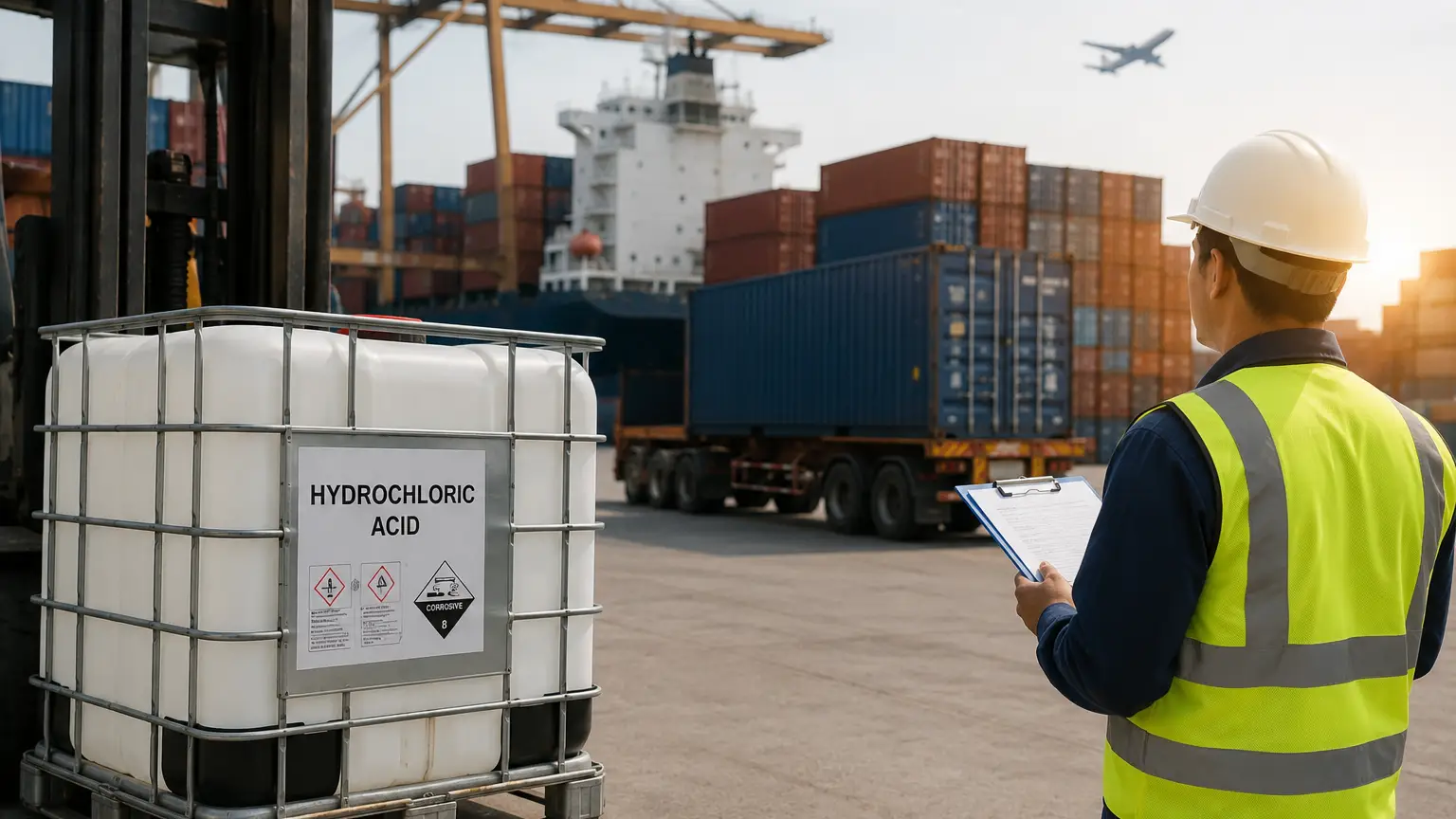
The second dimension is supply reliability and logistics capability. Hydrochloric acid is typically transported in bulk tank trucks, ISO tanks, or HDPE drums, depending on volume and destination. Robust suppliers demonstrate proven performance in on-time delivery, contingency planning, and safety in handling corrosive liquids. They maintain or access strategically located storage tanks, have relationships with reliable transporters, and can offer flexible Incoterms (FOB, CIF, DAP, etc.). Global distributors like those operating through chemtradeasia.in, chemtradeasia.co.id, and chemtradeasia.sg often differentiate themselves by coordinating cross-border shipments and consolidating volumes from multiple producers.
The third dimension is regulatory, ESG, and service support. A reliable hydrochloric acid supplier must provide complete Safety Data Sheets (SDS), transport documentation (such as UN number 1789 classification), and support for local regulatory requirements (REACH in the EU, TSCA in the US, and regional equivalents). Increasingly, buyers also evaluate environmental, social, and governance (ESG) practices, such as emissions management at production sites, waste minimization, and worker safety standards. Strong suppliers offer responsive customer service, technical support for application questions, and digital tools for order tracking and documentation—capabilities that are often integrated into platforms like chemtradeasia.com and its regional domains.
Product Specifications, Grades, and Applications of Hydrochloric Acid
Hydrochloric acid is commonly supplied as an aqueous solution of hydrogen chloride gas, with standard industrial concentrations ranging from 30% to 37% by weight. A widely traded specification is hydrochloric acid 32% w/w, which offers a balance between acidity strength and relative ease of handling. Typical technical-grade specifications include clarity (colorless to slightly yellow), specific gravity around 1.16–1.19 at 20°C, and controlled impurity levels such as iron content often below 5–10 ppm for many industrial uses. Food-grade or high-purity grades may require significantly tighter impurity limits and adherence to food or pharmaceutical regulations.
Suppliers and distributors, including those accessible via chemtradeasia.co.id, chemtradeasia.ae, and chemtradeasia.sg, usually offer multiple grades tailored to sector requirements. Technical grade is used in steel pickling, pH control, and inorganic chemical production; food-grade HCl is used in gelatin production, sugar refining, and as a processing aid in certain food and beverage applications; higher-purity grades may be utilized in electronics, pharmaceuticals, and specialty chemicals. Buyers should clearly specify required concentration, grade, and maximum impurity limits to ensure compatibility with downstream processes and equipment.
In terms of applications, hydrochloric acid’s versatility spans numerous industries. In the metals sector, it is a key pickling agent for removing rust and scale from steel before galvanizing or cold rolling. In oil and gas, HCl is used in well acidizing to enhance reservoir permeability. Water treatment plants use hydrochloric acid for pH adjustment and regeneration of ion-exchange resins. The chemical industry consumes large volumes of HCl in the production of inorganic salts (such as calcium chloride and ferric chloride) and organic intermediates. Understanding the application profile helps buyers choose the right grade and packaging—from bulk deliveries for large continuous processes to drums or IBCs for smaller or intermittent usage.
Tradeasia’s Global Hydrochloric Acid Supply Network
Tradeasia leverages a multi-origin, multi-destination model for hydrochloric acid distribution, connecting producers and end-users through its digital platforms chemtradeasia.com, chemtradeasia.in, chemtradeasia.co.id, chemtradeasia.ae, and chemtradeasia.sg. This network aggregates production from established chlor-alkali plants and integrated chemical complexes across Asia, the Middle East, and other regions, providing buyers with diversified sourcing options. By not being tied to a single producer, Tradeasia can help mitigate risks associated with plant outages, feedstock constraints, or regional transport disruptions.
From a product standpoint, Tradeasia typically offers a range of HCl concentrations (commonly 30–35% w/w) and can support both technical and higher-purity specifications depending on local availability and regulatory frameworks. The company coordinates bulk shipments via tank trucks, ISO tanks, and in some markets, rail tankers or coastal vessels, as well as smaller lots in drums or IBCs where appropriate. Through its regional entities and online interfaces, buyers can request quotations, review indicative specifications, and discuss tailored logistics solutions aligned with their consumption patterns and storage capabilities.
Service and documentation are central to Tradeasia’s value proposition. The platforms provide access to Safety Data Sheets, typical Certificates of Analysis, and basic handling guidelines. Local teams linked to chemtradeasia.in for India, chemtradeasia.co.id for Indonesia, chemtradeasia.ae for the Middle East, and chemtradeasia.sg for Southeast Asia and global coordination can assist with import procedures, regulatory queries, and order tracking. For many buyers, this combination of global reach, multi-origin flexibility, and localized support improves supply resilience and simplifies the procurement of hydrochloric acid compared with managing multiple direct producer relationships.
Conclusion
In Q2 2026, securing a reliable hydrochloric acid supplier is increasingly about risk management and strategic sourcing rather than simple spot purchasing. Market dynamics remain influenced by chlor-alkali operating rates, regional logistics constraints, and evolving regulatory requirements. Buyers who carefully evaluate product quality, supply reliability, and compliance capabilities are better positioned to maintain stable operations and control total cost of ownership. Clear specifications, robust supplier qualification, and ongoing performance monitoring are essential elements of a resilient hydrochloric acid procurement strategy.
Global distributors and platforms such as those operated under the Tradeasia network—accessible via chemtradeasia.com, chemtradeasia.in, chemtradeasia.co.id, chemtradeasia.ae, and chemtradeasia.sg—offer an integrated approach to sourcing. By aggregating supply from multiple producers, optimizing logistics, and providing localized service, they can help buyers reduce single-source dependence and navigate cross-border complexities. When combined with internal technical expertise and robust safety practices, this model can significantly enhance the security and efficiency of hydrochloric acid supply for industries worldwide.
This article is intended solely for informational and market insight purposes and does not constitute technical, safety, or professional advice. Users should independently verify all information with qualified experts, consult official documentation such as MSDS/SDS and applicable regulations, and contact our team or other competent professionals for guidance on specific applications, handling, and safety measures.
Leave a Comment