Choline Chloride 60% Corn Cob Market Trends and Sourcing Opportunities for Feed Industry Buyers
Choline Chloride 60% Corn Cob Market Overview and Industry Importance
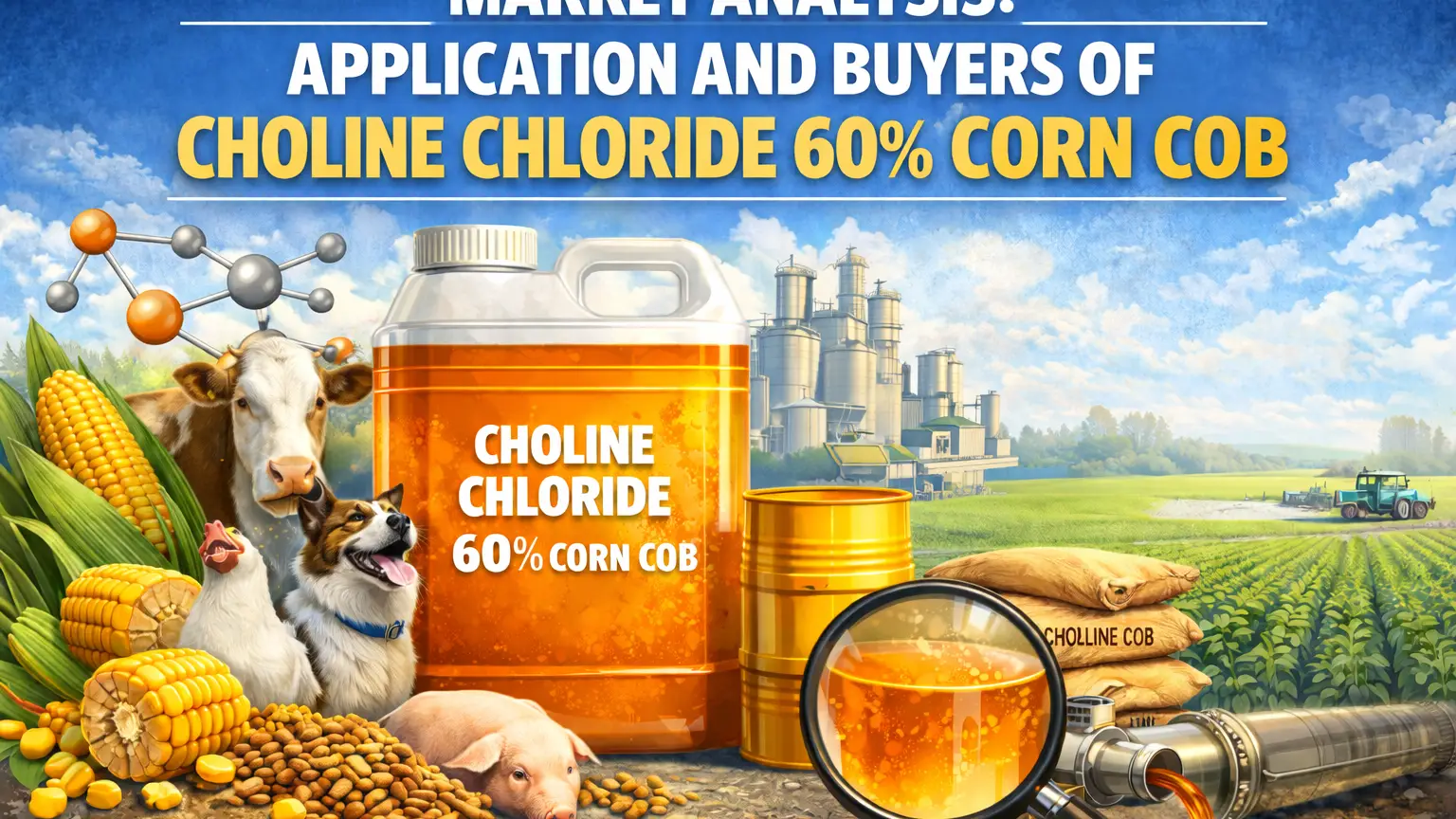
Choline chloride 60% corn cob is an important feed additive ingredient widely used in animal nutrition formulations. It is produced by combining choline chloride with a corn cob carrier, creating a stable powdered form that is suitable for feed manufacturing operations. The product is mainly valued for supporting livestock health, improving feed efficiency, and meeting nutritional requirements in commercial animal production systems.
Growing Importance of Choline Chloride in Animal Nutrition
The global expansion of poultry, swine, aquaculture, and livestock production has increased demand for functional feed ingredients that support animal growth and productivity. Choline is recognized as an essential nutrient involved in lipid metabolism, liver function, and cellular development. According to technical information from the National Research Council, choline is considered an important nutrient in animal feeding programs because of its role in maintaining normal physiological functions.
For feed manufacturers, choline chloride 60% corn cob provides a practical solution for incorporating choline into formulated feeds. The corn cob carrier improves handling characteristics, making the product suitable for mixing, storage, and transportation within industrial feed production environments.
The increasing focus on efficient animal production has encouraged feed producers to optimize formulations with scientifically recognized nutritional additives. Industry data from the Food and Agriculture Organization of the United Nations highlights the continued importance of sustainable livestock production systems and improved feed management practices worldwide.
From a B2B chemical marketplace perspective, choline chloride 60% corn cob represents a commercially relevant product category because buyers require dependable supply channels, consistent quality, and competitive sourcing options. Manufacturers, traders, and distributors increasingly evaluate suppliers based on technical capability, production reliability, and international logistics support.
Market Drivers Influencing Buyer Demand
Several factors influence the purchasing demand for choline chloride 60% corn cob, including rising meat consumption, expansion of intensive farming operations, and increasing attention toward animal nutrition efficiency. Feed producers are seeking ingredients that help optimize production performance while maintaining cost-effective formulations.
According to market analysis from agricultural industry researchers, global animal feed production continues to expand as livestock producers adopt advanced nutrition strategies. This development creates opportunities for suppliers capable of providing reliable feed-grade ingredients to international markets.
For procurement teams, market availability and supplier diversification are becoming important considerations. Buyers often compare multiple sources to evaluate pricing stability, product consistency, packaging options, and export capability.
As a result, B2B platforms connecting manufacturers, distributors, and industrial users play an important role in improving access to choline chloride 60% corn cob supply networks.
Understanding Choline Chloride 60% Corn Cob Properties and Product Role
Choline chloride 60% corn cob is a feed-grade formulation containing choline chloride as the active nutritional component and corn cob as a carrier material. The combination creates a manageable powdered product designed for industrial feed applications.
Product Composition and Functional Characteristics
Choline chloride belongs to the group of essential nutrients required by many animal species. It functions as a source of choline, which contributes to phospholipid formation, fat metabolism, and normal physiological development.
The corn cob carrier provides physical advantages by improving product flowability and allowing easier blending during feed production. This characteristic is especially valuable for large-scale feed mills where consistent ingredient distribution is necessary.
Technical references from scientific publications, including research indexed through National Center for Biotechnology Information, describe the biological importance of choline-related compounds in animal metabolism and nutrition.
For industrial buyers, understanding product characteristics helps determine whether a specific grade meets their manufacturing requirements. Feed companies typically assess concentration, physical form, stability, packaging, and supplier documentation before purchasing.
Role in Modern Feed Manufacturing
Modern feed production relies on accurate nutrient balancing to support animal performance. Choline chloride 60% corn cob is commonly incorporated into premixes, complete feeds, and nutritional supplements where controlled nutrient delivery is required.
Feed manufacturers value products that integrate smoothly into existing production systems. Powder-based carrier formulations are widely used because they allow efficient handling during automated mixing processes.
The increasing professionalization of livestock production has strengthened demand for reliable nutritional ingredients. Producers are moving toward scientifically formulated feeds rather than basic feeding methods, creating stronger opportunities for specialized ingredient suppliers.
For chemical distributors and marketplace sellers, providing detailed product information and sourcing transparency helps attract industrial buyers seeking dependable supply partners.
Industrial Applications of Choline Chloride 60% Corn Cob in Animal Nutrition
Choline chloride 60% corn cob is primarily used in animal feed industries due to its nutritional functions. Its applications extend across multiple livestock sectors where manufacturers require consistent feed additive solutions.
Poultry Feed Applications
The poultry industry represents one of the major application areas for choline chloride products. Commercial poultry producers use choline chloride in feed formulations to support healthy growth, efficient nutrient utilization, and overall bird development.
Large-scale poultry operations require carefully balanced feed programs because production efficiency directly influences profitability. Feed manufacturers therefore rely on consistent sources of nutritional additives that can be incorporated into different feed formulations.
Industry information from the American Feed Industry Association emphasizes the importance of quality ingredients and manufacturing standards within the animal feed sector.
For poultry feed producers, purchasing decisions are influenced by factors such as ingredient reliability, supplier technical support, and delivery capability.
Swine and Livestock Nutrition Applications
Choline chloride is also used in swine and other livestock feed formulations. Livestock producers incorporate nutritional additives to support metabolic functions and maintain balanced diets during different production stages.
Feed manufacturers serving agricultural markets often require ingredients available in consistent volumes. This creates demand for suppliers capable of supporting recurring industrial orders.
The expansion of commercial livestock farming has increased attention toward efficient feed conversion and optimized nutrition programs. As farms become more production-focused, reliable access to feed additives becomes increasingly important.
For B2B buyers, choline chloride 60% corn cob offers sourcing flexibility because it can be supplied through international manufacturers, distributors, and chemical marketplace networks.
Key Buyers and Procurement Trends for Choline Chloride 60% Corn Cob
The buyer landscape for choline chloride 60% corn cob is mainly driven by industries that require reliable animal nutrition ingredients for large-scale feed production. As global livestock production becomes more professionalized, procurement teams increasingly focus on ingredient quality, supply reliability, and supplier transparency.
Who Buys Choline Chloride 60% Corn Cob
The primary buyers of choline chloride 60% corn cob include animal feed manufacturers, livestock nutrition companies, agricultural ingredient distributors, premix producers, and international chemical trading companies. These organizations purchase the product in commercial quantities to support continuous feed production requirements.
Feed mills represent one of the largest buyer groups because they use choline chloride as part of complete animal feed formulations. Poultry integrators, swine producers, and livestock nutrition companies also source this ingredient through specialized suppliers to maintain consistent feed quality.
Agricultural distributors and chemical traders purchase choline chloride 60% corn cob to expand their product portfolios and serve regional customers. These intermediaries often require suppliers that can provide export documentation, stable inventory availability, and flexible logistics solutions.
The increasing globalization of agricultural supply chains has encouraged buyers to compare multiple suppliers across regions. Procurement teams now evaluate not only price but also production capability, technical support, packaging options, and long-term partnership potential.
Procurement Factors Evaluated by Buyers
Before purchasing choline chloride 60% corn cob, industrial buyers typically review several technical and commercial factors. Product concentration, carrier quality, batch consistency, packaging standards, and regulatory documentation are important evaluation criteria.
Feed manufacturers also consider supplier reliability because interruptions in ingredient availability can affect production schedules. A dependable supply chain allows manufacturers to maintain consistent feed output and meet customer demand.
According to supply chain research from organizations such as the International Feed Industry Federation, efficiency, sustainability, and supply security are increasingly important considerations within the global feed industry.
For procurement professionals, sourcing platforms provide an efficient way to compare suppliers, review product specifications, and identify potential manufacturing partners. A well-structured product page helps buyers understand technical details and make faster purchasing decisions.
Buyer Intent Behind Choline Chloride Searches
Most online searches for choline chloride 60% corn cob show strong commercial intent. Buyers are usually searching for suppliers, manufacturers, distributors, pricing references, export availability, or technical information before starting procurement discussions.
A B2B marketplace listing supports these buyer journeys by connecting product information with sourcing opportunities. Buyers can evaluate whether a supplier matches their operational requirements before requesting quotations or negotiating supply agreements.
The product page becomes more than a catalog entry; it acts as a decision-support tool for procurement teams looking for trustworthy chemical and feed ingredient partners.
Global Market Outlook and Supply Chain Opportunities for Choline Chloride
The market outlook for choline chloride 60% corn cob is closely connected to developments in animal agriculture, feed production growth, and international ingredient supply chains. As demand for animal protein continues to influence agricultural production, feed additive requirements remain strategically important.
Global Demand Growth from Animal Feed Expansion
The growth of poultry, livestock, and aquaculture industries continues to support demand for functional feed ingredients. Producers are increasingly adopting scientifically formulated diets to improve productivity, reduce waste, and enhance operational efficiency.
According to agricultural production analysis from the United States Department of Agriculture, global livestock markets continue to evolve with changing consumption patterns and production requirements.
This development creates opportunities for manufacturers and distributors of choline chloride products. Suppliers that can provide consistent quality and dependable international delivery are better positioned to serve growing industrial demand.
For marketplace participants, understanding regional demand patterns helps identify new commercial opportunities and develop stronger supply partnerships.
Supply Chain Considerations for International Buyers
International buyers of choline chloride 60% corn cob must consider several supply chain factors, including manufacturing capacity, export capability, transportation options, and inventory planning.
Feed ingredient buyers often prefer suppliers that can support long-term contracts and predictable deliveries. This is especially important for large feed manufacturers operating continuous production facilities.
The use of agricultural carriers such as corn cob also aligns with broader interest in practical, cost-efficient ingredient solutions. Suppliers with strong raw material management and processing capabilities can offer advantages in competitive markets.
A transparent supply chain approach helps buyers reduce procurement risks and improve operational planning.
Opportunities for Manufacturers and Distributors
Manufacturers, exporters, and chemical distributors can benefit from increasing demand by developing specialized supply strategies for different regional markets. Providing technical documentation, flexible packaging options, and responsive customer support can strengthen market positioning.
B2B chemical marketplaces create opportunities for suppliers to reach international buyers seeking specific feed additive products. Digital sourcing channels allow manufacturers to showcase capabilities and connect with procurement teams worldwide.
As agricultural industries continue to prioritize efficiency and nutrition optimization, choline chloride 60% corn cob remains a relevant product category for global chemical trade.
Sourcing Guide for Choline Chloride 60% Corn Cob Buyers
Selecting the right supplier is a critical step for companies purchasing choline chloride 60% corn cob. Buyers need to balance product quality, commercial terms, logistics capability, and supplier reliability when developing sourcing strategies.
Evaluating Supplier Capability and Product Quality
A reliable choline chloride supplier should demonstrate consistent manufacturing processes, quality control systems, and the ability to meet industrial volume requirements. Buyers should review product specifications, technical documents, and supply capabilities before establishing partnerships.
Quality assurance is particularly important for feed ingredients because product consistency directly affects feed formulation processes. Suppliers with documented production standards provide greater confidence for international buyers.
Technical information from feed and nutrition organizations emphasizes the importance of maintaining ingredient quality throughout the feed production chain.
For procurement teams, supplier evaluation should include both technical performance and commercial reliability.
Comparing Global Suppliers and Sourcing Options
Buyers often compare multiple suppliers to identify the best combination of quality, pricing, and service. International sourcing allows companies to access different manufacturing regions and develop alternative supply channels.
When comparing suppliers, procurement professionals typically examine production capacity, export experience, packaging solutions, lead times, and communication efficiency.
A B2B marketplace simplifies this process by allowing buyers to discover manufacturers, traders, and distributors within one sourcing environment.
For companies seeking stable supply relationships, choosing a supplier with long-term market experience can reduce operational uncertainty.
How B2B Marketplaces Support Chemical Procurement
Digital chemical marketplaces provide a structured platform for connecting buyers and suppliers. Product listings help procurement teams quickly understand applications, specifications, and sourcing availability.
For choline chloride 60% corn cob buyers, marketplace platforms support supplier discovery and quotation requests while reducing the time required for initial research.
Trade-focused platforms such as Chemtradeasia and Tradechem Marketplace enable industrial buyers to explore chemical products and connect with global suppliers.
By combining product information with supplier accessibility, B2B marketplaces support more efficient chemical procurement decisions.
Conclusion: Building Reliable Supply Strategies for Choline Chloride Buyers
Choline chloride 60% corn cob plays an important role in modern animal nutrition markets by supporting feed manufacturers and livestock producers with a practical source of essential choline. Its application across poultry, swine, and livestock industries creates consistent demand among industrial buyers.
Future Opportunities in Choline Chloride Supply
As animal feed production continues to develop globally, demand for reliable nutritional ingredients is expected to remain important. Manufacturers, distributors, and traders that provide consistent quality and efficient supply solutions can capture opportunities in expanding markets.
Procurement teams increasingly require suppliers that combine technical capability with dependable logistics. This trend creates opportunities for professional chemical suppliers that understand international B2B requirements.
Supporting Better Industrial Sourcing Decisions
For buyers, successful sourcing depends on selecting suppliers that meet technical specifications, maintain quality standards, and provide reliable service. Access to accurate product information helps companies make informed purchasing decisions.
Choline chloride 60% corn cob represents a valuable category within the global feed additive market, connecting agricultural production needs with chemical supply chain opportunities.
Through professional marketplaces, manufacturers and buyers can build stronger commercial relationships and improve access to essential industrial ingredients.
Sources
https://www.fao.org
https://ifif.org

Leave a Comment