Understanding Choline Chloride 60% Corn Cob
Choline Chloride 60% Corn Cob is a feed-grade nutritional additive supplied in a corn-cob-based form. The product page identifies China as the origin, CAS Number 67-48-1, and HS Code 23099010, while categorizing the material under other feed additives. The product is therefore positioned primarily as an ingredient for commercial animal-feed formulations rather than as a general-purpose industrial chemical. For procurement teams, this distinction is important because purchasing decisions are driven not only by chemical identity but also by feed application, formulation requirements, documentation, and supply consistency.
What the Product Is
The product information describes choline as a low-molecular organic compound generally classified within the B-complex vitamin group and commonly referred to in feed-industry terminology as vitamin B4. The product page states that choline can be synthesized in animals but is commonly required in feed as an individual nutritional component. In practical B2B terms, Choline Chloride 60% Corn Cob should therefore be viewed as a standardized feed ingredient used to provide choline within formulated animal diets.
Why the Corn Cob Carrier Matters
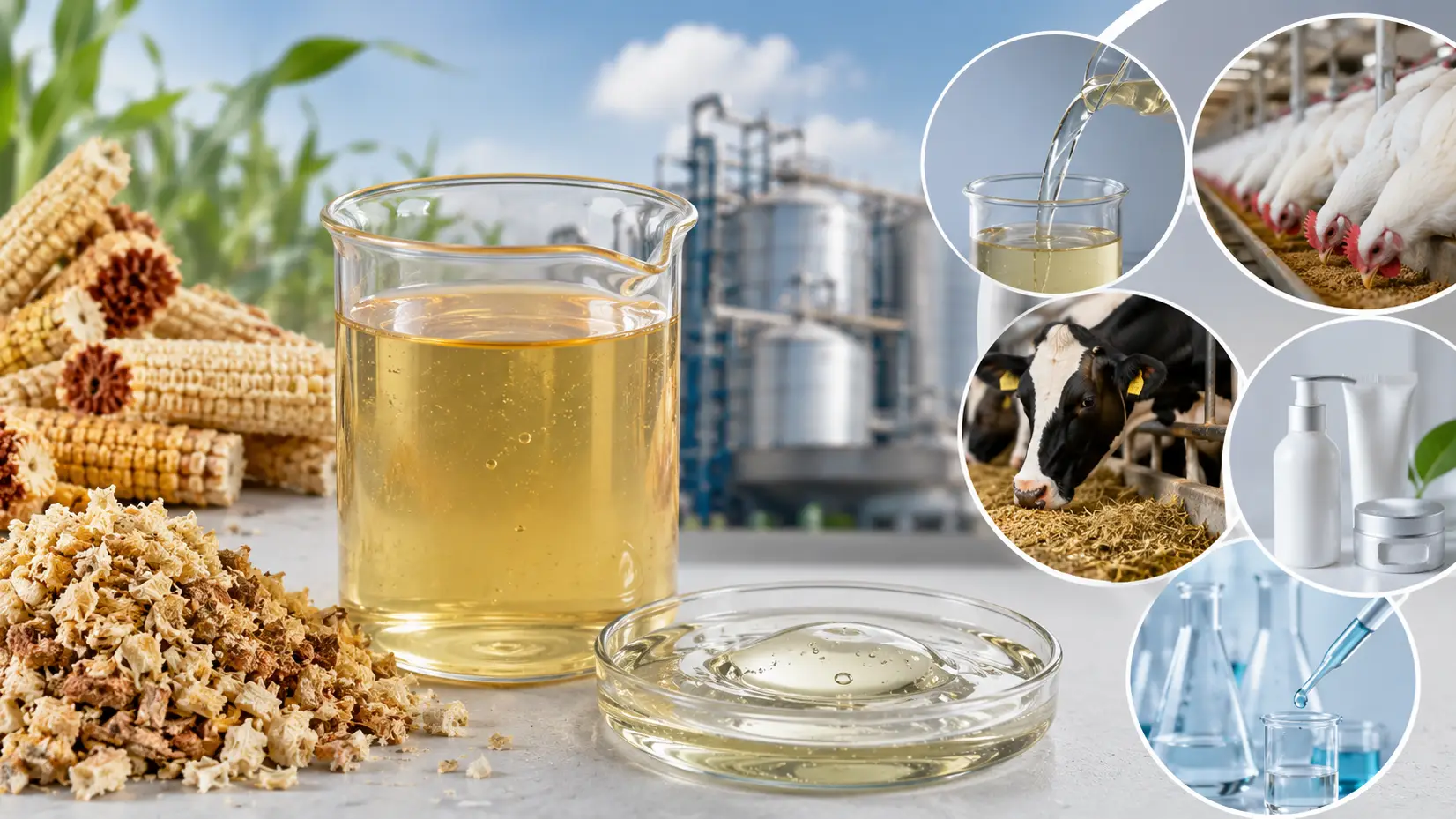
The 60% corn-cob format also creates a sourcing distinction from other Choline Chloride forms. The carrier-based format is manufactured by concentrating Choline Chloride solution and mixing it with a carrier before drying, producing a loose, crumbly material suitable for incorporation into feed formulations. This makes physical form, handling characteristics, moisture management, particle consistency, and compatibility with the buyer's premix or feed-production process relevant commercial considerations rather than secondary specifications.
For B2B buyers, the most useful starting point is consequently not simply asking for the lowest Choline Chloride price. Procurement teams should first define the intended animal species, feed formulation, required dosage range, quality documentation, shipment volume, destination-market requirements, and preferred delivery terms. The Choline Chloride 60% Corn Cob product page can serve as the commercial starting point for reviewing product information and submitting an inquiry for pricing, customization, and shipping requirements.
Industrial Applications and Feed Formulation
Choline Chloride 60% Corn Cob is principally relevant to formulated animal feeds. The Tradeasia product information provides application ranges for poultry, swine, and fish, demonstrating that the commercial use case extends across multiple animal-nutrition segments rather than being limited to one feed category. This broad application base is commercially significant because feed manufacturers can evaluate the ingredient according to species-specific formulation requirements and production volumes.
Poultry Feed Applications
The product page identifies broilers, laying hens, and turkeys as poultry applications. It lists different dosage ranges for these categories, reinforcing an important procurement principle: a feed additive should be evaluated according to the formulation in which it will be used rather than through a single universal inclusion assumption. Poultry-feed manufacturers therefore need to align the purchased ingredient with their nutrition team's formulation specifications, quality system, and applicable feed regulations.
Swine and Aquaculture Applications
The same product information identifies swine and fish as additional applications, with separate dosage ranges for each. This makes Choline Chloride 60% Corn Cob relevant to premix producers and compound-feed manufacturers serving multiple livestock and aquaculture markets. More broadly, feed economics remain a central consideration in these sectors: a peer-reviewed review in Animal Nutrition notes that feed represents more than 60% of production costs in swine and poultry, underscoring why feed manufacturers closely manage ingredient selection, formulation efficiency, and procurement economics.
The commercial opportunity therefore comes from the intersection of nutritional function and high-volume feed manufacturing. Buyers are not simply purchasing a chemical substance; they are sourcing an ingredient that needs to fit a repeatable production process. This is why application-specific information, technical documentation, batch consistency, packaging, logistics, and supplier responsiveness can become decisive factors when a feed mill or premix producer compares Choline Chloride suppliers.
Market Demand and Animal Nutrition Trends
Demand for feed ingredients is ultimately connected to the scale and composition of animal production. The OECD-FAO Agricultural Outlook reports that global production of meat, dairy products, and eggs is expected to increase over the coming decade, while global inventories of cattle, sheep, pigs, and poultry are also projected to expand. These trends provide a broader demand context for nutritional ingredients used in formulated animal diets, including products such as Choline Chloride.
Growth in Animal-Source Food Production
The OECD-FAO outlook highlights income growth and rising demand for animal-source foods in middle-income economies as important drivers of agricultural production. It also projects continued growth in livestock and poultry output. For Choline Chloride buyers, this does not mean that demand for one specific feed additive will automatically grow at the same rate; rather, it indicates a structural market environment in which commercial feed production remains important and nutritional-ingredient procurement continues to support animal-production systems.
Feed Efficiency and Procurement Discipline
Another relevant trend is the increasing importance of efficiency across feed manufacturing. Because feed is a major component of animal-production costs, manufacturers have strong incentives to optimize formulation, ingredient quality, manufacturing performance, and supply continuity. The scientific literature also shows that feed energy evaluation in pigs and poultry depends on ingredient characteristics, feed technology, and animal factors, illustrating why professional feed formulation increasingly requires controlled and technically appropriate ingredient selection.
The market outlook therefore favors a more sophisticated sourcing approach rather than purely transactional purchasing. Buyers may increasingly compare suppliers on consistency, technical specifications, documentation, logistics capability, regulatory suitability, and total delivered economics. For marketplace participants, this creates an opportunity to connect product discovery with useful application intelligence so that a search for “Choline Chloride supplier” can progress naturally toward a qualified B2B sourcing inquiry.
Key B2B Buyers and Procurement Intent
The primary commercial buyers for Choline Chloride 60% Corn Cob are organizations involved in animal-feed production and distribution. These can include compound-feed manufacturers, premix producers, integrated livestock businesses, aquaculture-feed manufacturers, feed-ingredient distributors, chemical traders, and procurement organizations supplying regional animal-nutrition markets. Each buyer may have different volume, documentation, packaging, and delivery requirements, but all need confidence that the material is appropriate for its intended feed application.
Who Buys Choline Chloride
Feed mills are especially relevant because Choline Chloride is incorporated into formulated animal diets. Premix manufacturers are another important buyer group because they combine nutritional ingredients into standardized blends subsequently used by feed manufacturers. Distributors and traders may instead prioritize packaging, origin, shipment economics, stock availability, market coverage, and resale requirements. The resulting buyer landscape makes Choline Chloride a strong fit for a B2B chemical and feed-ingredient marketplace.
What Procurement Teams Evaluate
Before buying, procurement teams typically need to establish product identity, specification, intended application, quantity, packaging, origin, delivery destination, documentation, and commercial terms. For feed additives, regulatory considerations can also be significant. EFSA explains that feed additives placed on the EU market are subject to scientific evaluation and authorization requirements, with assessments covering areas including safety, efficacy, conditions of use, and analytical methods. This illustrates why professional buyers cannot treat supplier selection as a price-only decision.
Supplier comparison is consequently driven by risk management as much as by price. A buyer may compare multiple sources to understand differences in specifications, lead times, production origin, available documentation, order quantities, logistics options, and commercial responsiveness. The Choline Chloride 60% Corn Cob sourcing page provides a direct route from product research to a commercial inquiry, allowing buyers to move from general market research toward product-specific discussions about pricing, customization, and shipping.
Supplier Evaluation and Sourcing Considerations
Sourcing Choline Chloride 60% Corn Cob requires buyers to evaluate the complete supply proposition rather than focusing only on the headline product concentration. The Tradeasia product page establishes the product identity, origin, CAS Number, HS Code, application information, and technical-document availability. These details form a useful baseline for a procurement request, while individual buyers should establish their own required specifications and destination-market compliance before placing an order.
Technical and Quality Documentation
Technical documentation is particularly relevant when the ingredient enters a controlled feed-manufacturing environment. Buyers may need documentation that enables their quality, regulatory, and formulation teams to verify identity and suitability. The Tradeasia page provides access to technical documentation and material safety information, while EFSA's feed-additive framework demonstrates the broader importance of characterization, safety, efficacy, conditions of use, and analytical considerations in regulated markets.
Logistics and Supply Continuity
Physical supply characteristics also matter. The corn-cob carrier format is manufactured through concentration, carrier mixing, and drying, so buyers should consider how the supplied form fits their handling and feed-production processes. For international procurement, this assessment should extend to packaging, moisture protection, shipping arrangements, lead time, order quantity, documentation, and continuity of supply. These factors can have a direct effect on the total procurement cost and the operational risk associated with an ingredient shortage or delayed shipment.
A qualified sourcing process should therefore compare suppliers using a consistent procurement framework. The objective is to identify a source that can satisfy technical requirements while also providing commercially workable logistics and documentation. For distributors and feed manufacturers, establishing dependable supply relationships can be particularly valuable when Choline Chloride is a recurring component of high-volume feed production.
Commercial Opportunities Across Feed Markets
Choline Chloride 60% Corn Cob has commercial relevance because its applications span several animal-feed categories. The Tradeasia product page specifically identifies poultry, swine, and fish applications, creating multiple routes to market for manufacturers, distributors, traders, and feed-ingredient procurement teams. This application breadth can help suppliers address different customer segments while enabling buyers to investigate one feed-grade ingredient across multiple production programs.
Poultry and Swine Supply Opportunities
Poultry and swine are particularly important commercial markets because they operate through large-scale feed manufacturing systems and are sensitive to feed costs. The OECD-FAO outlook anticipates continued expansion in global animal-source food production, while scientific literature emphasizes the substantial contribution of feed costs to swine and poultry production economics. These conditions make reliable access to feed ingredients commercially important even when individual commodity cycles fluctuate.
Aquaculture and Diversified Feed Demand
Aquaculture provides another application pathway identified by the product information. Fish-feed procurement has its own formulation, production, and supply-chain requirements, meaning that buyers should not automatically transfer poultry or swine specifications to aquatic-feed applications. Instead, procurement teams should work with nutrition and quality personnel to establish the appropriate product specification and inclusion strategy for the target species and finished-feed process.
For manufacturers and traders, the commercial opportunity is therefore based on serving distinct customer requirements rather than treating the market as homogeneous. A supplier able to communicate product specifications clearly, support documentation requests, manage international logistics, and respond efficiently to inquiries can become more useful to professional buyers than a source offering only a nominally competitive price.
Using a B2B Marketplace for Choline Chloride Sourcing
A B2B marketplace can shorten the distance between product discovery and procurement. Instead of researching Choline Chloride only through generic search results, buyers can begin with a dedicated product record containing product identification, application information, technical documentation, and a direct inquiry mechanism. This approach is particularly useful for procurement teams that already understand their formulation requirements and are looking for commercially viable supply options.
From Search Intent to Qualified Inquiry
Searches such as “Choline Chloride 60% Corn Cob supplier,” “Choline Chloride for poultry feed,” or “buy Choline Chloride 60% Corn Cob” indicate different stages of commercial intent. Some users are researching applications, while others may already have a defined specification and simply need quotations or shipping information. A well-structured marketplace product page can accommodate both audiences by providing enough technical context for evaluation while creating a direct route to supplier communication.
Supporting International Buyers
International buyers also benefit when product information is organized around the details needed for cross-border procurement. Tradeasia identifies the product's China origin, CAS Number 67-48-1, HS Code 23099010, application information, and technical-document availability. The product page also invites buyers to inquire about pricing, customization, and shipping, creating a practical bridge between SEO traffic and B2B purchasing activity.
For Tradeasia, Chemtradeasia, and Tradechem Marketplace, this positioning allows informational content and product discovery to reinforce one another. An article can attract buyers researching Choline Chloride applications and market conditions, while the associated product page can capture the next commercial step. The result is a buyer journey that moves from market intelligence to technical evaluation and ultimately to a sourcing inquiry without relying on aggressive promotional language.
Conclusion: Turning Application Knowledge Into Better Procurement
Choline Chloride 60% Corn Cob occupies a clear position within the animal-feed ingredient market as a feed-grade source of choline supplied in a corn-cob carrier format. Tradeasia's product information identifies applications across poultry, swine, and fish feed and provides product-specific information that can help buyers begin their technical and commercial evaluation.
What the Market Means for Buyers
The wider animal-production outlook supports continued relevance for feed ingredients. OECD-FAO analysis points to increasing production and consumption of animal-source foods over the medium term, while research on swine and poultry production highlights the importance of managing feed economics. Together, these trends reinforce the importance of reliable, technically appropriate ingredient sourcing for professional feed manufacturers.
The Next Step in B2B Sourcing
For procurement teams, the strongest approach is to evaluate Choline Chloride according to application, specification, documentation, supply continuity, logistics, and total commercial value. Buyers seeking product-specific information can use the Choline Chloride 60% Corn Cob supplier information as the next step toward an inquiry covering pricing, customization, and shipping.
Ultimately, the commercial value of Choline Chloride 60% Corn Cob is closely tied to the needs of the feed industries it serves. As animal-feed production continues to evolve, manufacturers, distributors, traders, and procurement teams benefit from sourcing channels that combine product information with market context and direct supplier access. For B2B buyers, that combination can make the sourcing process more informed, comparable, and commercially actionable.
Sources
Leave a Comment