Canola Meal Sourcing Guide: Applications, Buyers, and Global Supply Opportunities
What Is Canola Meal and Why Is It Important?
Canola meal is a high-protein co-product generated during the extraction of oil from canola seeds. It is widely used as a feed ingredient due to its balanced amino acid profile, digestibility, and cost-effectiveness compared with several alternative protein meals.
According to the Canola Council of Canada, canola meal contains valuable protein, energy, and minerals that support livestock nutrition across multiple production systems. This nutritional profile has helped establish canola meal as a globally traded feed commodity.
Role in Modern Feed Formulation
Feed manufacturers increasingly utilize canola meal as part of precision nutrition strategies designed to optimize animal performance while controlling feed costs. The ingredient can be incorporated into formulations for cattle, poultry, swine, and aquaculture species.
Technical information published by the Canola Council of Canada highlights ongoing improvements in canola genetics and processing technologies, contributing to higher feed quality and broader adoption across commercial feed sectors.
Industrial Applications of Canola Meal
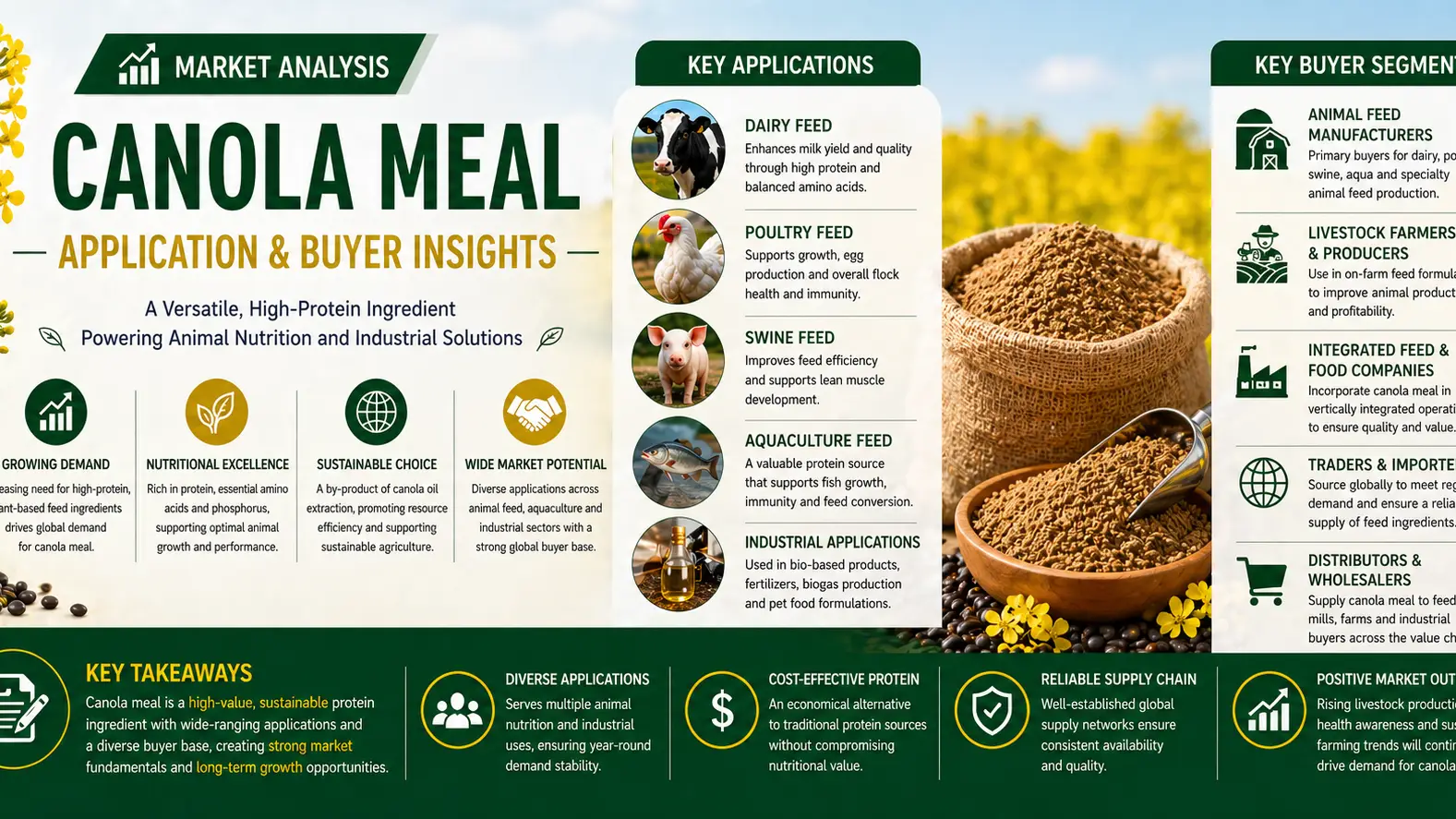
The largest application of canola meal is within the animal feed industry, where it serves as an important protein source for livestock and aquaculture production. Its nutritional value makes it suitable for use in balanced feed formulations across various species.
Industry data from the Food and Agriculture Organization (FAO) indicate that protein meals remain essential components of global feed production, particularly as demand for animal protein continues to increase in emerging and developed markets.
Applications Across Livestock and Aquaculture
Dairy cattle producers often use canola meal to support milk production and protein intake. Poultry feed manufacturers incorporate it to provide amino acids necessary for growth and performance, while swine producers use it as a complementary protein ingredient.
Research from Agriculture and Agri-Food Canada has demonstrated the versatility of canola meal in livestock and aquaculture feeding programs, supporting its growing use beyond traditional ruminant nutrition markets.
Market Trends Driving Global Demand
Global demand for canola meal is closely linked to growth in meat, dairy, poultry, and aquaculture industries. Rising feed production volumes continue to create opportunities for protein-rich feed ingredients with stable supply availability.
According to the Food and Agriculture Organization, increasing livestock productivity requirements and expanding protein consumption are key drivers supporting demand for feed ingredients such as canola meal.
Sustainability and Feed Efficiency Trends
Sustainability initiatives throughout the agricultural supply chain are influencing feed ingredient selection. Buyers increasingly evaluate products based on nutritional efficiency, resource utilization, and supply chain transparency.
Market analysis from the International Food Policy Research Institute indicates that feed efficiency and sustainable agricultural production remain significant priorities for producers and feed manufacturers worldwide.
Key Buyer Groups and Procurement Requirements
Canola meal attracts interest from a diverse range of buyers involved in animal nutrition and feed manufacturing. These buyers seek reliable access to consistent-quality protein ingredients capable of meeting production targets and nutritional specifications.
Industry reports from Agriculture and Agri-Food Canada show that commercial feed producers remain among the largest consumers of canola meal due to its established performance and widespread availability.
Major Commercial Buyers
Feed mills purchase canola meal in large volumes for inclusion in livestock and poultry feed formulations. Integrated livestock operations also source the product directly to support feed production and nutritional management programs.
Aquaculture feed manufacturers, agricultural distributors, commodity traders, and feed ingredient importers represent additional buyer groups that evaluate canola meal based on protein content, logistics reliability, quality consistency, and pricing competitiveness.
Sourcing Considerations for B2B Buyers
Successful procurement of canola meal requires evaluating both product quality and supply chain reliability. Buyers typically examine nutritional specifications, moisture levels, storage conditions, and supplier capabilities before entering supply agreements.
According to guidance from the Canola Council of Canada, consistency in nutrient composition and processing standards plays a critical role in achieving predictable feed performance.
Quality, Logistics, and Supply Assurance
Procurement teams often assess origin, export infrastructure, shipment flexibility, and supplier documentation. These factors become particularly important for buyers operating across multiple regions or maintaining long-term feed manufacturing schedules.
Industry trade data published by Agriculture and Agri-Food Canada indicate that countries with established oilseed processing industries continue to serve as major exporters supporting international canola meal demand.
Global Supply Opportunities and Trade Outlook
Canola-producing regions continue to invest in crushing capacity and export infrastructure, creating opportunities for international buyers seeking dependable protein meal supplies. Expansion in processing capacity can increase the availability of canola meal for global markets.
According to Agriculture and Agri-Food Canada, Canada remains one of the world's leading producers and exporters of canola products, supporting international feed ingredient supply chains.
Emerging Trade and Distribution Opportunities
Growing demand in Asia, the Middle East, and other livestock-producing regions is encouraging greater participation from traders, distributors, and feed ingredient suppliers. These markets often seek diversified protein meal sources to support expanding feed production.
Market observations from the FAO suggest that feed demand growth in developing economies will continue to influence international trade flows and create opportunities for global canola meal suppliers.
Buyer Intent and Supplier Evaluation Factors
Buyer intent for canola meal is largely driven by the need for reliable, cost-effective protein nutrition within animal feed production systems. Feed manufacturers, livestock producers, aquaculture companies, and distributors typically evaluate multiple sourcing options before making purchasing decisions.
Industry procurement practices emphasize balancing nutritional performance, supply reliability, logistics efficiency, and total cost of ownership when selecting feed ingredient suppliers.
How Procurement Teams Compare Suppliers
Procurement teams commonly compare suppliers based on quality consistency, production capacity, documentation support, delivery performance, and commercial flexibility. Long-term supply security often becomes a critical consideration for high-volume buyers.
A comprehensive product page helps buyers evaluate specifications, applications, packaging options, origin information, and sourcing capabilities. This information supports faster supplier qualification and more informed purchasing decisions within competitive feed ingredient markets.
Conclusion
Canola meal has become a strategically important feed ingredient within global animal nutrition markets. Its strong protein profile, broad applicability, and availability through established agricultural supply chains continue to support growing commercial demand.
As livestock, poultry, dairy, and aquaculture industries expand worldwide, canola meal offers significant opportunities for manufacturers, traders, distributors, and procurement teams seeking reliable protein solutions. Effective sourcing strategies focused on quality, logistics, and supplier reliability can help organizations maximize value while maintaining consistent feed production performance.
Sources
https://www.canolacouncil.org
https://www.agr.gc.ca
https://www.fao.org

Leave a Comment