Understanding Canola Meal and Its Role in Global Feed Supply Chains
What Is Canola Meal?
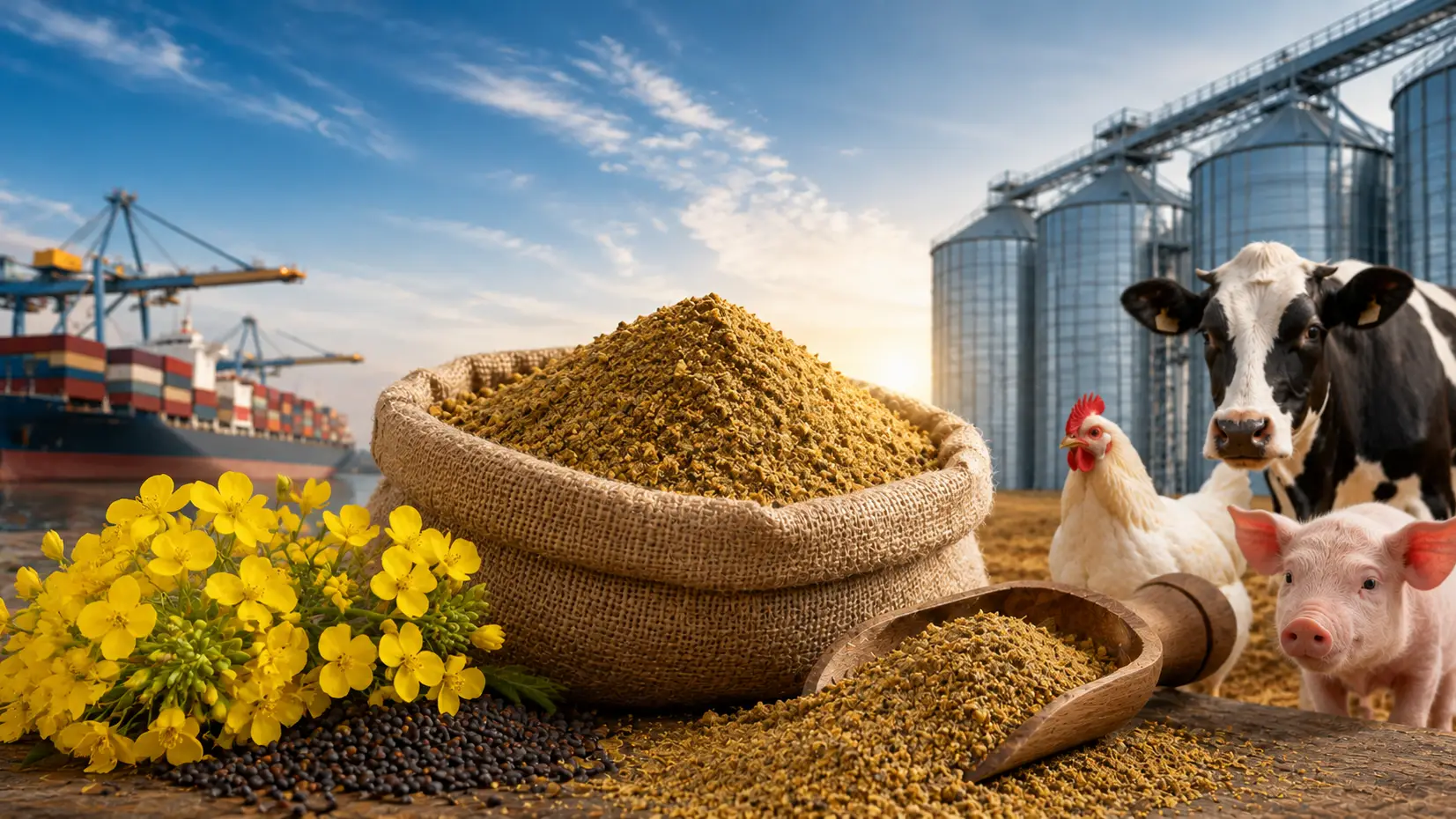
Canola meal is a protein-rich co-product generated after extracting oil from canola seeds, primarily through mechanical pressing and solvent extraction processes. It is widely used as an important feed ingredient because it provides valuable protein, amino acids, fiber, and nutrients required in animal nutrition formulations. As global demand for efficient agricultural resources increases, canola meal has become an important component of the international feed ingredient supply chain.
According to technical information from the Canadian Grain Commission, canola meal is recognized as a significant by-product of the canola crushing industry and is commonly utilized in livestock feeding programs. The ingredient’s nutritional profile makes it suitable for inclusion in balanced animal diets while supporting efficient utilization of agricultural resources.
The commercial importance of canola meal is closely connected to the expansion of global oilseed processing industries. As canola oil production increases to meet food and industrial demand, the availability of canola meal creates additional opportunities for feed manufacturers and ingredient distributors seeking alternative protein sources.
For industrial buyers evaluating supply options, reliable access to quality canola meal is essential. Companies involved in feed production, agricultural trading, and ingredient distribution increasingly require transparent supply chains that connect producers with international buyers.
Industrial Applications Driving Canola Meal Demand
Canola Meal in Livestock Feed Manufacturing
The largest application of canola meal is animal nutrition, particularly in livestock feed formulations. Feed manufacturers use canola meal as a protein ingredient in diets for cattle, dairy animals, and other farm animals where balanced nutrition is required for productivity and growth.
According to research published by the National Research Council, protein sources play an essential role in animal diet formulation because they provide amino acids required for maintenance, development, and production performance. Canola meal contributes to these nutritional requirements when properly incorporated into feed programs.
The demand for canola meal continues to grow as livestock producers and feed companies search for sustainable protein alternatives. The ingredient provides an option for reducing dependency on limited protein feed sources while supporting more diversified agricultural supply chains.
For buyers sourcing industrial quantities, understanding application requirements is important. Feed manufacturers typically evaluate nutritional specifications, consistency, logistics capabilities, and supplier reliability before establishing procurement relationships.
Poultry and Aquaculture Feed Applications
Canola meal is also used in poultry and aquaculture feed formulations due to its protein content and availability as a commercially traded agricultural ingredient. Poultry producers and aquaculture companies increasingly focus on optimizing feed efficiency while maintaining nutritional quality.
Technical studies from the Food and Agriculture Organization of the United Nations highlight the importance of sustainable feed resources in supporting global livestock and aquaculture production systems. Alternative protein ingredients such as oilseed meals contribute to improving resource efficiency within food production chains.
As poultry and aquaculture industries expand in emerging markets, demand for dependable feed ingredient suppliers continues to increase. Buyers often seek suppliers capable of supporting consistent volumes and international delivery requirements.
Tradeasia buyers searching for industrial supply options can review the Canola Meal product page to understand available sourcing information and product specifications for commercial applications.
Market Trends Influencing Canola Meal Procurement Decisions
Growing Demand for Sustainable Protein Feed Ingredients
Sustainability has become a major factor influencing purchasing decisions across the agricultural and animal nutrition industries. Feed manufacturers are increasingly evaluating ingredients based on availability, resource efficiency, and their role in supporting responsible food production.
According to market analysis from the International Feed Industry Federation, global feed production continues to evolve as manufacturers respond to changing consumer expectations, resource challenges, and the need for efficient production systems.
Canola meal benefits from this trend because it represents a valuable utilization pathway for an agricultural co-product. Instead of being treated only as a residual material from oil extraction, it functions as a commercially important protein ingredient within global feed markets.
For procurement teams, sustainability considerations are becoming part of supplier evaluation processes. Companies increasingly compare suppliers based on product quality, traceability, logistics capability, and long-term supply reliability.
Regional Growth in Feed Ingredient Trade
Regional growth in livestock production is another factor influencing canola meal demand. Countries with expanding poultry, dairy, and aquaculture industries require stable access to imported and locally available feed ingredients.
Industry data from the United States Department of Agriculture shows that global agricultural commodity markets are strongly influenced by production capacity, trade flows, and changing consumption patterns.
International buyers increasingly rely on global marketplaces and specialized suppliers to identify suitable feed ingredient sources. Digital procurement platforms help connect manufacturers, distributors, and traders across different regions.
For companies involved in international purchasing, selecting a reliable canola meal supplier can help reduce supply risks and improve continuity in feed production operations.
Key Buyers and Industries Using Canola Meal
Feed Manufacturers and Agricultural Ingredient Traders
Feed manufacturers represent one of the primary buyer groups for canola meal because they integrate protein ingredients into formulated animal nutrition products. These companies require consistent supply volumes, reliable specifications, and dependable logistics to maintain continuous production.
According to industry information from the International Feed Industry Federation, compound feed production depends on access to diverse raw materials, including protein meals derived from oilseed processing. This creates ongoing demand for commercially available ingredients that can support different livestock and animal production systems.
Agricultural commodity traders and ingredient distributors also play an important role in the canola meal supply chain. These companies purchase, store, transport, and distribute feed ingredients to regional buyers that may not have direct access to producers.
For these buyers, supplier comparison is a critical procurement activity. They evaluate factors such as production capability, export experience, documentation availability, product consistency, and the ability to fulfill recurring bulk orders.
Livestock, Poultry, and Aquaculture Industries
Livestock producers, poultry companies, and aquaculture operators influence demand for canola meal through their need for cost-effective and nutritionally suitable feed solutions. As animal production systems become more industrialized, feed efficiency and ingredient reliability have become key operational priorities.
Technical guidance from the Food and Agriculture Organization of the United Nations emphasizes the importance of efficient feed resource management in supporting global food production. Protein-rich feed ingredients contribute significantly to animal growth, productivity, and overall production performance.
Large-scale agricultural companies often work with feed manufacturers rather than directly purchasing raw ingredients. However, their production requirements ultimately affect procurement decisions throughout the feed ingredient value chain.
Understanding these buyer relationships helps suppliers and marketplaces position canola meal more effectively. A B2B platform can support connections between ingredient suppliers, distributors, and industrial users seeking dependable sourcing channels.
Sourcing Considerations for Global Canola Meal Buyers
Quality Requirements and Supplier Evaluation
Industrial buyers typically evaluate several technical and commercial factors before purchasing canola meal. Important considerations include nutritional specifications, moisture content, protein levels, storage conditions, packaging options, and compliance documentation.
According to technical resources from the Canadian Grain Commission, quality management throughout grain processing and handling is essential for maintaining consistency in agricultural products. This principle also applies to processed feed ingredients supplied to international markets.
Procurement teams generally compare multiple suppliers to identify partners capable of meeting production requirements. Beyond product specifications, buyers assess supplier communication, export experience, delivery reliability, and documentation support.
For companies entering new markets, sourcing through established B2B channels can simplify supplier discovery. Platforms that provide structured product information allow buyers to evaluate potential suppliers more efficiently.
Supply Chain Reliability and Global Trade Factors
Global agricultural supply chains are influenced by production cycles, transportation capacity, regional demand, and international trade conditions. For feed ingredient buyers, supply reliability is often as important as product availability.
Market reports from agricultural commodity organizations indicate that oilseed markets are closely connected through international trade networks. Changes in crop production, processing capacity, and demand patterns can affect ingredient availability across regions.
Reliable sourcing requires buyers to consider supplier networks, logistics planning, inventory management, and long-term procurement strategies. Companies that depend on continuous feed production need suppliers capable of supporting predictable delivery schedules.
Tradeasia’s marketplace approach supports industrial buyers by providing access to product information and supplier connections. Companies can explore the Canola Meal sourcing information as part of their evaluation process when searching for suitable supply partners.
How B2B Marketplaces Support Canola Meal Supply Opportunities
Digital Procurement for Feed Ingredient Buyers
Digital marketplaces have changed how industrial buyers discover and evaluate suppliers. Instead of relying only on traditional trading networks, procurement teams can research products, compare supplier capabilities, and identify potential partners through specialized online platforms.
According to research from industrial commerce analysts, digital procurement adoption continues to increase as companies seek greater supply chain visibility and more efficient supplier management processes. This trend is especially relevant for globally traded agricultural ingredients.
For canola meal buyers, online sourcing platforms provide a structured approach to supplier discovery. Product pages can help communicate specifications, applications, and commercial availability while reducing the initial barriers between buyers and suppliers.
The role of a B2B marketplace is not only transactional but also informational. It helps connect technical requirements from buyers with supply capabilities from manufacturers, traders, and distributors.
Supporting International Supplier Connections
International ingredient sourcing requires coordination between suppliers and buyers across different regions. A marketplace can help companies identify potential sources while improving access to market information.
For manufacturers and distributors, listing products through specialized marketplaces creates opportunities to reach industrial customers searching for specific feed ingredients. For buyers, these platforms provide a starting point for supplier evaluation and commercial discussions.
The growing importance of transparent sourcing has made supplier information, product documentation, and communication channels increasingly valuable in industrial purchasing decisions. These factors help companies reduce uncertainty during procurement.
The Canola Meal supplier information page provides a dedicated reference point for businesses exploring canola meal sourcing opportunities through a specialized feed ingredient marketplace.
Future Outlook for Canola Meal in Animal Nutrition Markets
Expanding Role of Alternative Protein Ingredients
The future demand for canola meal is closely connected to the broader movement toward diversified protein sources in animal nutrition. Feed manufacturers are continuously exploring ingredient combinations that balance nutrition, availability, and cost efficiency.
Research from agricultural science institutions indicates that oilseed meals remain important components of global feed systems because they provide valuable nutrients while utilizing agricultural processing outputs efficiently.
As livestock and aquaculture production expand globally, demand for dependable protein feed ingredients is expected to remain significant. Canola meal’s role will continue to depend on production capacity, market conditions, and adoption within different feed formulations.
For suppliers and buyers, understanding market trends helps improve purchasing strategies. Companies that monitor application growth and regional demand changes can make better sourcing decisions.
Commercial Opportunities Across Global Supply Chains
Canola meal represents a commercially relevant opportunity for manufacturers, traders, distributors, and procurement teams involved in animal nutrition markets. Its importance comes from the connection between oilseed processing, feed production, and global agricultural trade.
Industry forecasts from agricultural market organizations suggest that demand for efficient feed resources will remain an important factor shaping future food supply chains. This creates opportunities for businesses involved in ingredient sourcing and distribution.
Reliable supply partnerships will continue to influence purchasing decisions as companies prioritize consistency, quality assurance, and supply chain resilience. Suppliers that understand buyer requirements can better participate in international markets.
For organizations seeking canola meal sourcing opportunities, Tradeasia and specialized marketplace platforms provide a channel for connecting industrial buyers with relevant suppliers. The Canola Meal product page for industrial applications can support companies researching product availability and commercial applications.
Buyer Intent Section
Who Buys Canola Meal?
The main buyers of canola meal include compound feed manufacturers, livestock nutrition companies, poultry feed producers, aquaculture feed producers, agricultural commodity traders, and ingredient distributors.
These buyers typically purchase canola meal in commercial quantities and evaluate suppliers based on product quality, supply reliability, pricing competitiveness, logistics capability, and technical documentation.
What Procurement Teams Evaluate Before Buying
Procurement teams commonly review nutritional specifications, supplier reputation, export capability, production consistency, packaging requirements, and delivery options before approving a supplier.
Buyers compare multiple suppliers because feed production requires stable ingredient availability. A disruption in supply can affect manufacturing schedules, inventory planning, and customer commitments.
How Product Pages Support Sourcing Decisions
A dedicated product page helps buyers understand product applications, supplier information, and commercial opportunities before beginning direct discussions.
The canola meal listing on Feedingredients Asia provides a structured sourcing reference for companies researching feed ingredient options and evaluating potential supply relationships.
Commercial Positioning
Canola meal is commercially important because it connects the agricultural processing industry with the global animal nutrition market. Its role as a protein feed ingredient creates opportunities across livestock, poultry, aquaculture, and agricultural trading sectors.
Demand is influenced by feed production growth, sustainability considerations, and the need for diversified protein sources. Manufacturers and distributors require dependable supply partners to support ongoing market demand.
For B2B buyers, reliable sourcing is essential because feed ingredient availability directly affects production continuity. Tradeasia and Chemtradeasia marketplace platforms support industrial sourcing by helping buyers discover relevant products and connect with potential suppliers.
By providing product-focused information and marketplace visibility, canola meal sourcing platforms can help procurement teams make informed purchasing decisions in global feed ingredient markets.
Sources
- Canadian Grain Commission – Canola and grain quality information
https://www.grainscanada.gc.ca/
- Food and Agriculture Organization of the United Nations – Animal nutrition and sustainable livestock resources
https://www.fao.org/
- International Feed Industry Federation – Global feed industry information and market insights
https://ifif.org/
Leave a Comment