Introduction
Calcium phosphate, a key platform chemical used in fertilizers, animal nutrition, food, and industrial formulations, remains central to global supply chains in 2026. Market dynamics are increasingly shaped by resource constraints, energy costs, and logistics inefficiencies rather than demand alone. As downstream industries scale, stakeholders are prioritizing secure sourcing and cost stability across a structurally tight value chain.
Upstream Raw Material Sourcing and Phosphate Rock Dependency
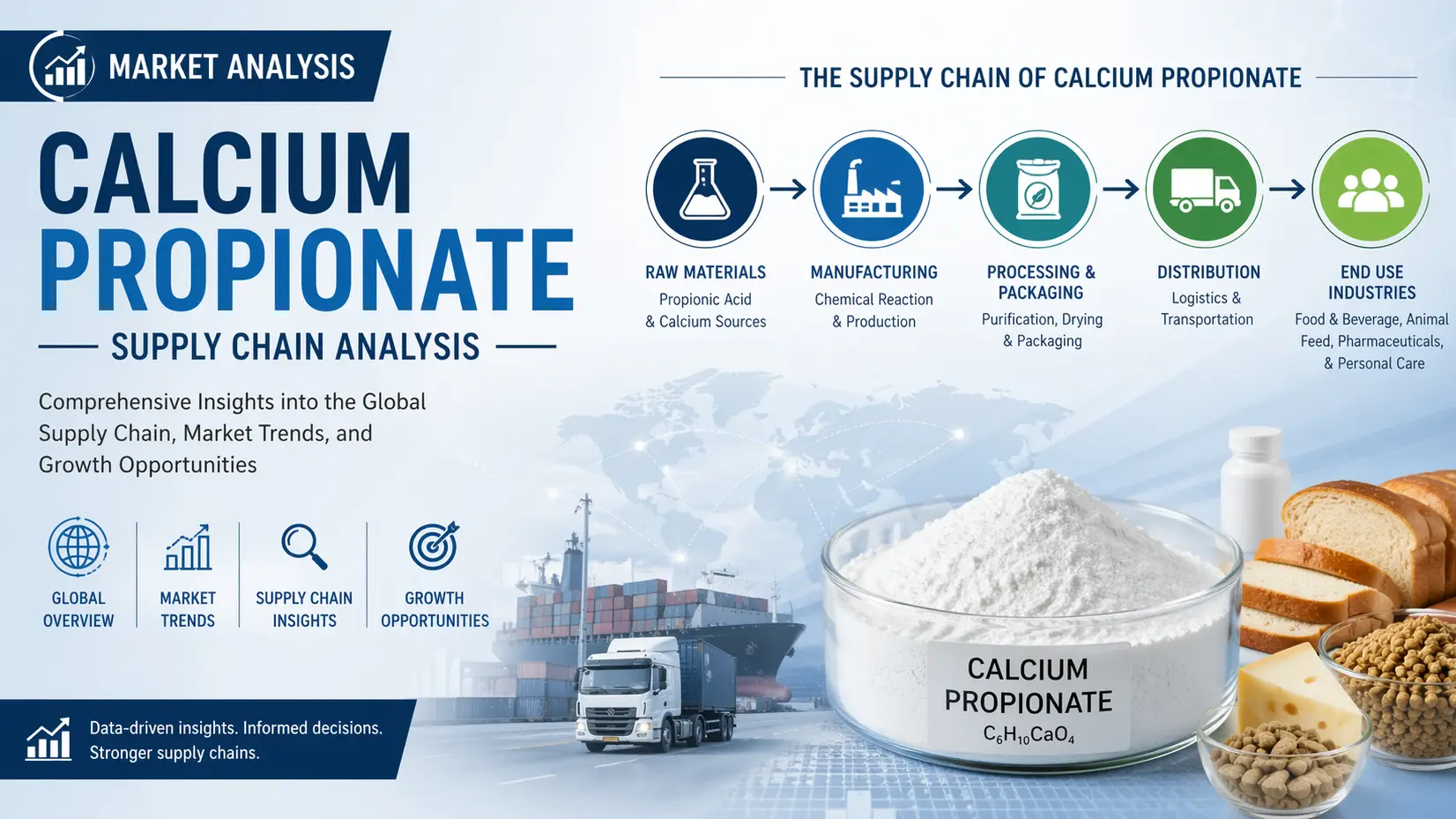
Global calcium phosphate supply is anchored in phosphate rock production, heavily concentrated in China, Morocco, and the United States. In 2026, effective output supports about 9.2 million MT of derivatives, though regulatory tightening and resource nationalism are limiting expansion. Prices have stabilized in the $950–$1,250/MT range, while the sector tracks a 5.8% CAGR, reflecting steady agricultural demand.
Manufacturing Conversion and Capacity Concentration
Conversion of phosphate rock into calcium phosphate remains energy-intensive and regionally concentrated, with Asia accounting for over half of global capacity. Annual production stands near 8.7 million MT, yet efficiency losses of 6–8% persist due to acidulation and energy volatility. Rising sulfuric acid costs continue to pressure margins, prompting investment in integrated production hubs and long-term feedstock security strategies.
Global Logistics Corridors and Trade Constraints
Logistics remain a critical constraint, with freight volatility adding $60–$110/MT to delivered costs. Asia–Europe and trans-Pacific routes face extended lead times due to port congestion and stricter customs checks on mineral derivatives. Average shipment delays of 10–15 days are prompting buyers to adopt regional stockholding and dual-sourcing strategies to mitigate supply disruption risk.
Demand Pull from Feed, Food, and Industrial Segments
Demand is dominated by the animal feed sector, representing over 60% of consumption, while food-grade and pharmaceutical applications grow steadily. Global demand supports a 5.8% CAGR, with specialty grades reaching up to $1,400/MT. Rising protein consumption and fortified food trends are reinforcing long-term stability across diversified downstream industries.
Conclusion
Calcium phosphate continues to operate as a foundational platform chemical linking agriculture, nutrition, and industrial systems. Supply chain resilience now depends on integration across sourcing, manufacturing, and logistics rather than price alone. Companies increasingly seek partners that can ensure continuity and global reach. In this context, Tradeasia International provides value through its established sourcing networks, technical support, and coordinated supply solutions, helping buyers navigate volatility while maintaining reliable access across international markets.
Sources
-
https://www.usgs.gov/centers/national-minerals-information-center/phosphate-rock-statistics-and-information
-
https://www.worldbank.org/en/research/commodity-markets
-
https://ifdc.org
Leave a Comment