Global Calcium Carbonate Feed Grade Supply Chain Trends and Procurement Insights
Introduction to Calcium Carbonate Feed Grade
Calcium carbonate feed grade is one of the most widely used mineral ingredients in the global animal nutrition industry. It serves as an essential calcium source for poultry, livestock, aquaculture, and companion animal feed formulations, helping manufacturers meet nutritional requirements while maintaining cost-effective production. As feed demand continues to expand alongside global meat, dairy, and aquaculture consumption, the availability and quality of feed-grade calcium carbonate have become increasingly important for procurement professionals.
According to the Food and Agriculture Organization (FAO), mineral supplementation remains a critical component of balanced animal nutrition, particularly in intensive livestock production systems where feed efficiency and animal health directly influence productivity. This has reinforced the strategic importance of reliable calcium carbonate suppliers capable of maintaining consistent quality and regulatory compliance.
Feed Grade Quality Standards
Unlike industrial-grade calcium carbonate, feed-grade material is manufactured under strict quality management systems to ensure appropriate purity, controlled particle size, and low concentrations of heavy metals or undesirable contaminants. Compliance with regional feed regulations is particularly important for manufacturers supplying international markets where food safety standards continue to evolve.
For global distributors and procurement teams, selecting certified suppliers reduces operational risks while supporting long-term supply continuity. As regulatory expectations become more stringent, manufacturers increasingly prioritize suppliers with robust quality assurance programs, traceability systems, and internationally recognized certifications.
Global Supply Chain Landscape
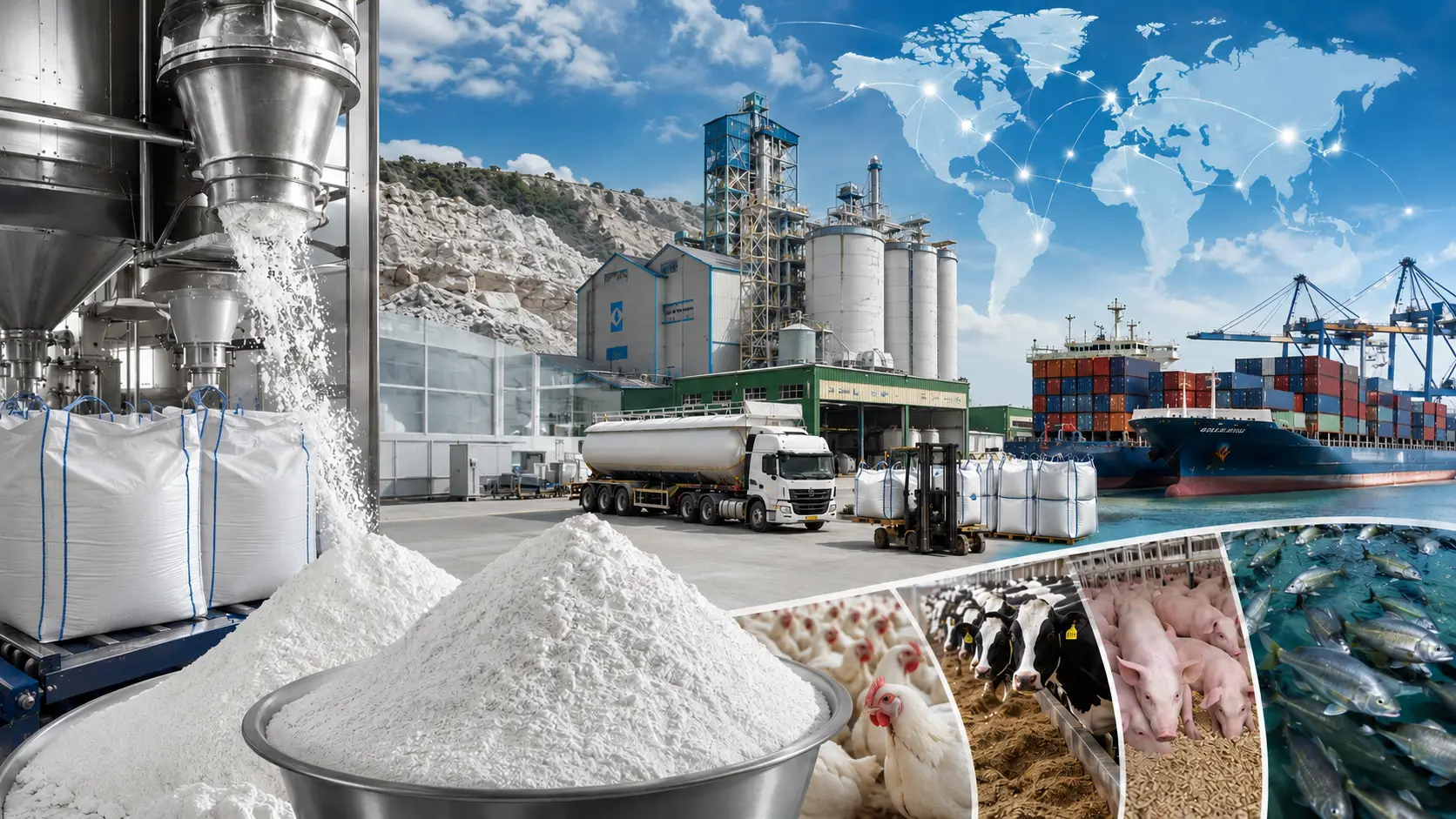
The supply chain for calcium carbonate feed grade begins with the extraction of high-purity limestone deposits, followed by crushing, grinding, purification, classification, quality testing, and distribution to feed manufacturers worldwide. Countries with abundant limestone reserves, including China, Vietnam, India, Turkey, Egypt, and several European nations, play major roles in supplying international markets through both domestic production and export activities.
According to the United States Geological Survey (USGS), calcium carbonate remains one of the world's highest-volume industrial minerals due to its extensive use across agriculture, chemicals, construction, pharmaceuticals, and animal nutrition. This diversified demand requires producers to carefully balance production capacity across multiple downstream industries while maintaining reliable feed-grade supply.
Regional Production and International Trade
Asia continues to dominate global production capacity thanks to abundant mineral resources, competitive manufacturing costs, and expanding export infrastructure. China remains a leading producer, while Vietnam and India have strengthened their positions as competitive exporters through investments in mineral processing technology and logistics networks.
Meanwhile, buyers in Europe, the Middle East, Africa, and Latin America increasingly diversify sourcing strategies to reduce dependence on a single origin. Factors such as freight costs, geopolitical developments, environmental regulations, and shipping reliability have encouraged procurement teams to establish broader supplier portfolios that improve resilience against market disruptions.
Production, Raw Material Availability, and Trade
The production of feed-grade calcium carbonate depends on access to high-purity limestone reserves and advanced mineral processing facilities capable of meeting feed safety standards. Manufacturers carefully select raw materials with consistent calcium content and minimal impurities before processing them into controlled particle sizes suitable for animal nutrition. According to technical information published by the European Feed Manufacturers' Federation (FEFAC), ingredient consistency and quality assurance are essential for maintaining feed performance and regulatory compliance throughout the supply chain.
Growing demand from the global feed industry has encouraged producers to invest in automated grinding, classification, and quality control systems. These investments improve production efficiency while helping suppliers meet the increasingly stringent specifications required by international feed manufacturers. Digital quality monitoring and laboratory testing also support product traceability, allowing exporters to demonstrate compliance with destination market requirements.
International Trade and Supply Stability
International trade plays a vital role in ensuring the continuous availability of calcium carbonate feed grade across regions with limited domestic mineral resources. Major exporting countries benefit from established mining operations, competitive processing costs, and well-developed port infrastructure, enabling efficient distribution to livestock-producing markets worldwide. Trade statistics published by the International Trade Centre (ITC) indicate that industrial minerals continue to experience stable cross-border demand, supported by expanding agricultural production and feed manufacturing.
Despite generally stable market conditions, procurement teams continue to monitor transportation costs, shipping schedules, environmental regulations, and geopolitical developments that may influence supply continuity. Diversifying sourcing locations and maintaining relationships with multiple qualified suppliers have become common strategies for reducing procurement risks while ensuring uninterrupted production.
Market Demand Across Livestock Industries
Global demand for calcium carbonate feed grade continues to grow alongside rising consumption of poultry, dairy, meat, and aquaculture products. As livestock production becomes increasingly intensive, feed manufacturers require dependable mineral ingredients that support bone development, eggshell quality, metabolic function, and overall animal performance. According to the Food and Agriculture Organization (FAO), sustained growth in animal protein consumption is driving continued investment in commercial feed production across both developed and emerging economies.
The expanding compound feed industry has also increased demand for standardized mineral ingredients that can be incorporated into modern feed formulations. Manufacturers seek products with predictable calcium levels, uniform particle size distribution, and reliable supply availability to optimize production efficiency while maintaining nutritional consistency.
Industry Growth Supporting Long-Term Demand
The poultry sector remains one of the largest consumers of feed-grade calcium carbonate due to the high calcium requirements associated with eggshell formation and skeletal health. Dairy and beef cattle producers also rely on balanced mineral supplementation to support milk production, growth performance, and reproductive health. In aquaculture, calcium supplementation contributes to healthy skeletal development in several commercially important fish species.
Market analysis published by organizations such as the Organisation for Economic Co-operation and Development (OECD) and the FAO Agricultural Outlook suggests that long-term livestock production growth, particularly in Asia, Africa, and Latin America, will continue to strengthen demand for high-quality feed ingredients. This positive outlook creates ongoing opportunities for producers, distributors, and global chemical marketplaces specializing in animal nutrition products.
Procurement Considerations for B2B Buyers
Procurement professionals evaluating calcium carbonate feed grade typically assess suppliers based on quality consistency, regulatory compliance, production capacity, logistics capabilities, and long-term supply reliability. While pricing remains an important consideration, purchasing decisions increasingly prioritize total value, including technical support, documentation, product traceability, and dependable delivery performance. According to guidance from the American Feed Industry Association (AFIA), ingredient verification and supplier qualification are fundamental components of responsible feed procurement.
International buyers also review certificates of analysis, manufacturing standards, heavy metal limits, moisture content, calcium concentration, and particle size specifications before approving suppliers. These technical factors directly influence feed formulation accuracy and product performance, making supplier transparency an essential aspect of commercial sourcing relationships.
Building Reliable Supply Partnerships
As supply chains become more interconnected, procurement teams increasingly favor suppliers capable of providing flexible logistics solutions, responsive customer service, and consistent inventory availability. Strategic sourcing agreements help manufacturers reduce supply uncertainty while improving production planning and cost management over the long term.
For global buyers seeking efficient procurement solutions, B2B chemical marketplaces such as Tradeasia International, Chemtradeasia, and Tradechem Marketplace simplify supplier discovery by connecting manufacturers, distributors, and industrial consumers through centralized sourcing platforms. These marketplaces support informed purchasing decisions by providing product information, technical documentation, and access to international supply networks, enabling procurement teams to identify suitable partners for long-term business growth.
Buyer Intent and Strategic Sourcing Decisions
Companies purchasing calcium carbonate feed grade typically include commercial feed manufacturers, livestock integrators, animal nutrition companies, feed premix producers, agricultural distributors, and import-export trading firms. These organizations require a dependable calcium source that complies with regional feed regulations while supporting consistent production quality. According to the European Feed Manufacturers' Federation (FEFAC), selecting qualified raw material suppliers is an essential component of feed safety management and long-term operational efficiency.
Beyond technical specifications, procurement teams evaluate supplier reputation, manufacturing capabilities, export experience, documentation, inventory availability, and logistics performance. Buyers often request Certificates of Analysis (COA), Safety Data Sheets (SDS), product specifications, and evidence of quality management systems before approving a supplier. These factors reduce operational risk and help ensure compliance with customer and regulatory requirements.
How B2B Marketplaces Support Procurement Decisions
Modern procurement increasingly relies on digital sourcing platforms that simplify supplier comparison and accelerate purchasing decisions. B2B marketplaces allow buyers to evaluate multiple suppliers, compare product specifications, request quotations, and communicate directly with international trading partners. This approach improves procurement efficiency while expanding access to qualified manufacturers and distributors across different regions.
For companies sourcing calcium carbonate feed grade internationally, platforms such as Tradeasia International, Chemtradeasia, and Tradechem Marketplace provide access to global supply networks serving the animal nutrition industry. By combining technical product information, commercial support, and international logistics expertise, these marketplaces help procurement teams identify reliable sourcing partners and strengthen supply chain resilience in an increasingly competitive market.
Conclusion
The global calcium carbonate feed grade market continues to benefit from expanding livestock production, increasing demand for balanced animal nutrition, and ongoing investment in commercial feed manufacturing. Reliable raw material availability, established international trade routes, and continuous improvements in quality assurance have positioned calcium carbonate as one of the most important mineral ingredients in modern feed formulations. Industry insights from organizations such as the FAO, USGS, and OECD indicate that demand is expected to remain supported by long-term growth in animal protein consumption and feed production worldwide.
As supply chains become more interconnected, procurement teams are placing greater emphasis on supplier reliability, product consistency, regulatory compliance, and logistics performance rather than focusing solely on price. Strategic sourcing practices—including supplier diversification, quality verification, and long-term partnerships—help manufacturers minimize supply disruptions while maintaining production efficiency and feed quality.
Supporting Global Feed Industry Procurement
For manufacturers, distributors, and procurement professionals, selecting an experienced sourcing partner is an important step toward ensuring stable operations and sustainable business growth. Access to consistent product quality, responsive customer support, and reliable international logistics contributes to stronger procurement outcomes and improved supply chain resilience.
As a global chemical and raw material supplier, Tradeasia International, together with Chemtradeasia and Tradechem Marketplace, supports businesses by connecting buyers with trusted producers of calcium carbonate feed grade and other industrial raw materials. Through an extensive international supplier network and commercial sourcing expertise, the company helps customers secure dependable supply solutions tailored to the evolving needs of the global animal nutrition industry.
Sources
https://www.fao.org
https://www.usgs.gov
https://www.fefac.eu
Leave a Comment