Brown Rice in the B2B Food Ingredient Market
Understanding Brown Rice
Brown Rice occupies an important position in the whole-grain food segment because it retains more of the rice grain structure than fully milled white rice. For commercial buyers, this makes it relevant not only as a staple food but also as an ingredient for products positioned around whole grains, natural formulations and differentiated nutrition profiles. Its established role in food manufacturing gives processors and distributors a broad base of potential downstream applications.
From a procurement perspective, Brown Rice should be evaluated as an agricultural food commodity rather than a conventional chemical ingredient. Origin, variety, milling specification, moisture, grain integrity, packaging and storage conditions can all influence commercial suitability. Buyers therefore need specifications that correspond directly with their intended processing or finished-food application.
Commercial Positioning
The global rice market remains highly significant for food supply chains, while market conditions can change with production, inventories, consumption and international trade. USDA's August 2026 Rice Outlook reports that U.S. 2026/27 all-rice supply was projected at 262.0 million hundredweight, while imports were forecast at a record 49.8 million hundredweight, illustrating the importance of supply and trade dynamics to procurement decisions.
For B2B buyers, this environment reinforces the value of sourcing strategies that consider both product specifications and supply continuity. A suitable Brown Rice supplier should be able to communicate origin, grade, packing options, documentation and shipment capabilities clearly, enabling manufacturers and distributors to manage purchasing requirements with greater confidence.
Key Food Applications for Brown Rice
Retail and Packaged Foods
Brown Rice is widely suited to packaged food products where manufacturers want to offer a whole-grain alternative to conventional polished rice. Food companies can use it in retail rice packs, ready-to-cook formats, meal kits and grain-based products. Its recognizable identity also makes it commercially useful for brands developing products around whole-grain positioning.
Foodservice and institutional buyers represent another important demand segment. Restaurants, catering companies and meal-preparation businesses can incorporate Brown Rice into rice bowls, side dishes, prepared meals and menu formulations. For these buyers, consistency in grain quality and dependable deliveries can be as important as the underlying commodity price.
Processed Food Formulations
Brown Rice can also enter ingredient-oriented applications after further processing. Depending on the required specification, processors may use rice in flour, meal or other grain-based formats for selected food formulations. These derivatives can support product development where manufacturers need a recognizable cereal ingredient with established food-market acceptance.
The commercial opportunity therefore extends beyond selling whole kernels. Processors may create additional value by converting Brown Rice into ingredients suitable for specific formulations, while distributors can serve multiple customer categories through differentiated grades and pack sizes. This creates a broader B2B market than retail rice alone.
Brown Rice Processing and Product Development
Milling and Preparation
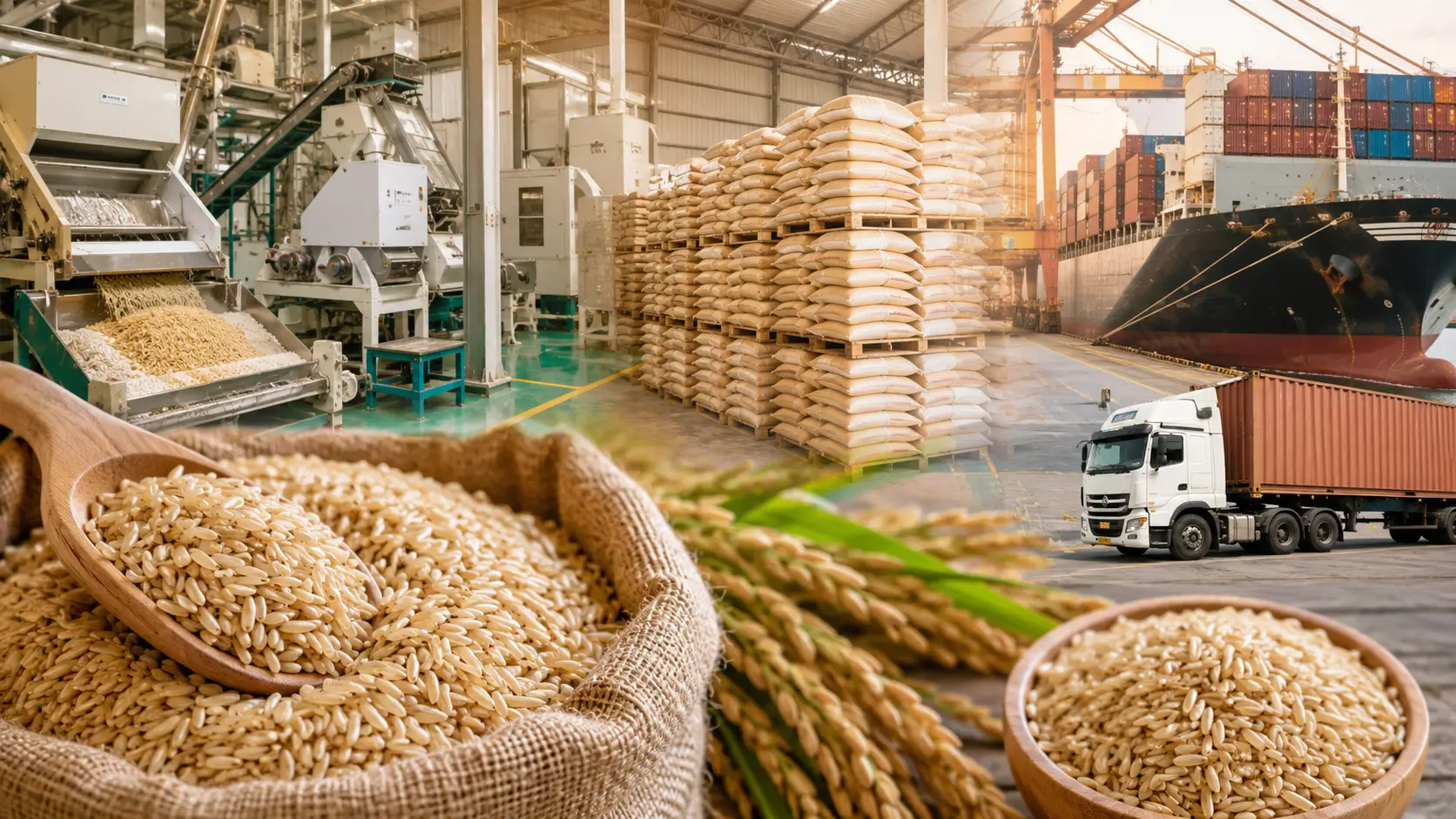
Processing requirements depend on the final application and the buyer's desired specification. Cleaning, sorting, grading, drying, milling and packaging can influence the physical characteristics and shelf stability of Brown Rice. Buyers purchasing for industrial processing should define acceptable levels for broken grains, foreign material, moisture and other relevant quality parameters before confirming supply.
For manufacturers, processing consistency is particularly important because variations in raw material can affect production efficiency and finished-product uniformity. A sourcing specification should therefore be developed around the actual manufacturing process rather than relying solely on a generic product name.
Ingredient Development
Brown Rice can be incorporated into product-development strategies where manufacturers want to differentiate formulations through grain type or whole-grain content. It may support cereals, grain mixes, prepared foods and other food concepts depending on formulation and processing requirements. The appropriate format ultimately depends on the manufacturer's equipment and target product.
Commercial buyers should also distinguish between Brown Rice intended for direct cooking and Brown Rice intended as a processing raw material. The two purchasing requirements may differ substantially in terms of grain appearance, particle size, cleanliness, packaging and tolerances, making application-specific specifications essential.
Industries and Buyers for Brown Rice
Food Manufacturers
Food manufacturers are among the most relevant buyers because they can integrate Brown Rice directly into packaged and processed products. Their procurement teams typically evaluate more than price, considering consistency, documentation, supply capacity, packaging and delivery reliability. Long-term supplier relationships can become especially valuable where Brown Rice is a recurring production input.
Rice processors and ingredient manufacturers represent another important buyer group. They may purchase larger volumes for cleaning, grading, milling or conversion into downstream ingredients. Their requirements can be more technical because the incoming raw material must perform consistently through additional processing stages.
Distributors and Wholesalers
Distributors and wholesalers can connect Brown Rice suppliers with retailers, foodservice operators and smaller manufacturers that do not purchase directly from producers. Their commercial advantage often depends on flexible packaging, inventory availability and the ability to consolidate demand from multiple customer segments.
For international buyers, trade documentation and shipment coordination become additional considerations. A B2B marketplace can help procurement teams identify suitable suppliers while comparing specifications, commercial terms and sourcing options. The objective is not simply to locate Brown Rice, but to establish a supply route aligned with the buyer's operational requirements.
Brown Rice Market and Procurement Considerations
Supply and Trade Dynamics
Rice procurement is influenced by harvest conditions, production levels, inventories, domestic consumption and international trade. USDA's current rice outlook provides continuing supply-and-demand estimates and projections, making it a useful reference for businesses monitoring broader market conditions.
Although broad rice-market statistics do not represent every Brown Rice grade or origin, they provide useful context for procurement planning. Buyers should combine market-level information with supplier quotations and product-specific availability before making purchasing decisions, particularly when planning recurring imports or larger-volume contracts.
Price and Purchasing Strategy
Brown Rice pricing can vary according to origin, variety, grade, processing level, packaging, order quantity, freight and delivery terms. Consequently, comparing suppliers solely on quoted price can produce an incomplete commercial assessment. Procurement teams should evaluate the delivered cost together with specification compliance and supply reliability.
A more robust purchasing approach establishes target specifications before requesting quotations. Buyers can then compare offers on an equivalent basis, reducing the risk of selecting a lower-priced product that requires additional processing, creates higher handling costs or fails to meet the requirements of the finished-food application.
Quality and Compliance Considerations
Product Specifications
Quality control is central to Brown Rice sourcing because agricultural commodities naturally vary between origins, harvests and production lots. Buyers should establish relevant specifications covering physical appearance, moisture, cleanliness, broken kernels, foreign matter and other parameters applicable to their intended use.
For food businesses, documentation should support traceability and regulatory review. Depending on destination and application, buyers may request certificates of analysis, origin documentation, food-safety declarations, packaging details and other commercial or regulatory records. Clear specifications help both supplier and buyer establish expectations before shipment.
Food Standards
The international regulatory framework should also be considered when Brown Rice enters food supply chains. Codex Alimentarius lists CXS 198-1995, Standard for Rice, among its standards, with the standard shown as modified in 2025. Buyers should nevertheless verify the specific requirements of the destination market and intended food application because national regulations can impose additional requirements.
For procurement teams, compliance is therefore part of supplier qualification rather than a final administrative step. Reviewing product specifications, testing documentation, labeling requirements and applicable food-safety controls before contracting can reduce downstream compliance and customs risks.
Strategic Brown Rice Sourcing for B2B Buyers
Supplier Evaluation
Selecting a Brown Rice supplier requires a balanced assessment of product quality, commercial capacity and supply-chain performance. Buyers should examine whether the supplier can consistently provide the required grade, origin, packaging and documentation while supporting the requested shipment volume and delivery schedule.
A supplier capable of handling repeat orders can also provide greater continuity than a one-off transaction. For distributors and manufacturers, this is particularly relevant when Brown Rice is incorporated into established product lines. Consistency across successive lots can simplify quality control and reduce the operational disruption associated with changing raw-material specifications.
B2B Marketplace Sourcing
Digital B2B sourcing can streamline supplier discovery by bringing product information and commercial requirements into a more structured procurement process. For Brown Rice buyers, the most useful marketplace experience is one that connects product specifications with supplier capabilities rather than treating the commodity as a generic listing.
Tradeasia International can support this sourcing approach by connecting businesses with international supply-chain opportunities across food and ingredient markets. For procurement teams evaluating Brown Rice, the focus should remain on specification matching, supplier reliability, documentation and commercially practical delivery arrangements.
Conclusion: Building Reliable Brown Rice Supply
Supporting Long-Term Procurement
Brown Rice offers a broad commercial opportunity across retail foods, foodservice, processed foods, rice processing and ingredient development. Its value to B2B buyers comes from the combination of established market demand and flexibility across different food applications. Manufacturers and distributors can therefore approach Brown Rice as both a finished food commodity and a potential processing input.
Connecting Buyers and Suppliers
Successful procurement ultimately depends on matching the right Brown Rice specification with the right supplier and application. With rice markets continuing to respond to changing production, trade and supply conditions, disciplined sourcing can help businesses manage cost, quality and continuity more effectively. Tradeasia International provides a practical platform for businesses seeking international sourcing opportunities, supplier connections and reliable trade solutions for food-related commodities.
Sources
www.fao.org/worldfoodsituation/csdb
www.ers.usda.gov
Leave a Comment