Introduction Boric Acid
Across Asia’s rapidly expanding manufacturing base, boric acid and wider industrial boron compounds have become strategic materials that quietly underpin a wide spectrum of sectors, from glass and ceramics to agriculture, electronics, and flame retardants. As Asian economies move up the value chain and invest in high-performance materials, demand for stable, high-purity boron chemicals has increased steadily, reshaping regional supply chains and procurement strategies.
Global boron consumption has historically been led by North America and Europe, but Asia’s share has risen significantly over the last two decades. Large consuming countries such as China, India, Japan, South Korea, Indonesia, Thailand, and Vietnam are driving structural demand, particularly for boric acid used in borosilicate glass, fiberglass, enamels, and specialty fertilizers. This growth is also influenced by stricter performance and safety standards in construction, automotive, and consumer goods, all of which rely on boron chemistry.
For procurement teams, distributors, and end users, understanding the product profile of boric acid, its industrial applications, and the evolving Asian supply chain is critical to managing cost, quality, and risk. Chemical trading platforms and distributors such as chemtradeasia play an important role in bridging regional producers and downstream users, providing not only product but also logistics, documentation, and market insight. This article examines the fundamentals of boric acid and industrial boron in Asia, with a focus on product characteristics, applications, trade flows, and sourcing considerations.
Boric Acid and Industrial Boron: Properties and Product Profile
Boric acid (chemical formula H3BO3, also known as orthoboric acid) is a weak inorganic acid derived from boron. In its commercial form, it typically appears as a white, crystalline powder or granules, with a relatively high melting point (around 170 °C for dehydration to metaboric acid) and good solubility in hot water. Industrial boric acid is usually produced from borate minerals such as colemanite, ulexite, and kernite, or from brines rich in boron. Major global reserves are located in Turkey, the United States, South America, and parts of Asia, with Turkey and the U.S. accounting for a large share of mined borates.
From a specification standpoint, standard industrial-grade boric acid often contains 99.0–99.9% H3BO3 with controlled levels of impurities such as sulfate, chloride, iron, and heavy metals. Common commercial forms include fine powder, granular, and crystalline grades, which are selected based on downstream processing needs. For example, fine powder boric acid is favored in ceramic frits and enamels for better dispersion, while granular grades are often used in agriculture or as raw materials for further borate processing. Specialty and high-purity grades are required for electronics, optical glass, and certain pharmaceutical intermediates, where trace metals must be tightly controlled.
Beyond boric acid itself, the industrial boron family includes products such as borax (sodium tetraborate), disodium octaborate tetrahydrate (DOT), boric oxide (B2O3), and various borate esters and organoboron compounds. These derivatives are used to tailor solubility, reactivity, and performance characteristics for specific applications. In Asia, many downstream manufacturers prefer to source both boric acid and related boron derivatives from integrated suppliers or distributors like chemtradeasia, enabling them to optimize inventory, negotiate better freight terms, and ensure consistency across product lines.
Key Industrial Applications of Boric Acid in Asia
One of the largest application segments for boric acid in Asia is the glass and ceramics industry. Boric acid is a critical component in borosilicate glass, which is known for its superior thermal and chemical resistance. This type of glass is widely used in laboratory ware, cookware, pharmaceutical packaging, and increasingly in high-tech applications such as LCD and OLED display glass. In fiberglass production, boron compounds improve fiber formation and enhance mechanical strength and durability, supporting growth in insulation materials and composite reinforcement used in construction and automotive sectors throughout Asia.
Another significant application area is agriculture. In many Asian soils, boron is a limiting micronutrient, especially in regions with intensive cropping systems or alkaline soils. Boric acid and borate-based fertilizers are used as sources of soluble boron to correct deficiencies in crops such as oil palm, rubber, tea, rice, fruits, and vegetables. Even small deviations from optimal boron levels can reduce yields, affecting food security and plantation economics. As countries like India and Indonesia work to improve crop productivity, demand for boron-containing fertilizers has seen steady growth, encouraging fertilizer blenders and distributors to secure reliable boric acid supply.
Beyond glass and agriculture, industrial boron compounds, including boric acid, play important roles in flame retardants, wood preservatives, detergents, metallurgy, and specialty chemicals. In flame-retardant formulations, borates act synergistically with other additives to reduce flammability in textiles, plastics, and building materials, aligning with increasingly stringent fire safety regulations in high-density Asian cities. In metallurgy, boric acid and borates are used as fluxing agents in non-ferrous metal processing and welding, helping to remove oxides and improve metal quality. These diverse applications create a broad and resilient demand base across Asia’s industrial landscape.
Asia’s Boron Supply Chain, Trade Flows, and Pricing Dynamics
Asia is both a major consumer and an important processor of boron minerals, but it remains structurally dependent on imports of high-grade borate ores and refined boron products from a relatively small group of global producers. Turkey, for example, is one of the world’s dominant boron suppliers and exports significant volumes of borates and boric acid to Asian markets. The United States and South American producers also ship material to Asia, where it is either consumed directly or further processed into derivatives. China, while possessing its own boron resources, still imports high-quality material to meet domestic demand for glass, ceramics, and electronics.
Supply chain resilience and logistics are critical factors in the boric acid trade. Shipping routes from Turkey, the U.S., and South America to Asia typically rely on bulk or containerized sea freight, with lead times that can range from several weeks to over a month depending on port congestion and transshipment. Seasonal demand patterns, currency fluctuations, and freight rate volatility can all influence landed costs. For instance, spikes in global container freight rates during 2020–2022 had a noticeable impact on the delivered price of boric acid in many Asian ports, prompting end users to diversify suppliers and increase safety stock levels.
Price dynamics for boric acid in Asia are shaped by raw material costs, energy prices, regulatory changes, and downstream demand. When construction activity and automotive production are strong, borosilicate glass and fiberglass demand rises, pulling more boron into these sectors and supporting prices. Conversely, slowdowns in consumer electronics or real estate can temporarily ease demand. Distributors and trading companies such as chemtradeasia monitor these trends closely, offering market insight to buyers and helping them time purchases, negotiate contract terms, and evaluate alternative grades or sources to manage cost risk while maintaining performance requirements.
Quality, Specifications, and Sourcing Considerations with chemtradeasia
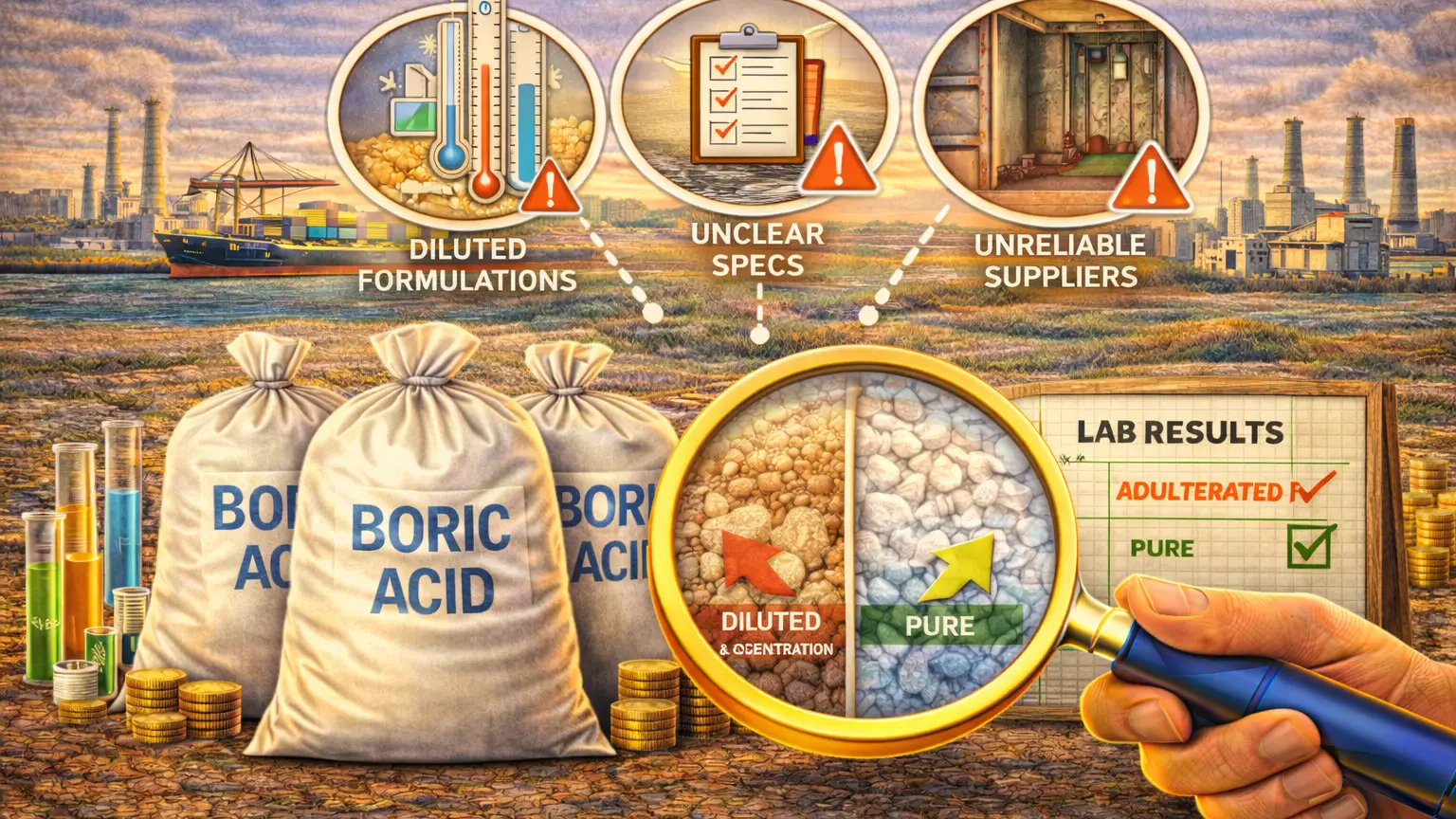
For industrial users in Asia, choosing the right boric acid supplier involves more than just unit price. Key specification parameters include boric acid content (typically expressed as % H3BO3 or equivalent % B2O3), particle size distribution, moisture content, and impurity profile (especially iron, heavy metals, and insoluble matter). Glass and ceramic manufacturers often require consistent, low-impurity grades to avoid defects, while agricultural and detergent applications may accept broader ranges. Clear technical data sheets and Material Safety Data Sheets (MSDS/SDS) are essential to ensure compatibility with existing processes and compliance with local regulations.
Regional distributors such as chemtradeasia add value by aggregating supply from multiple producers and offering a portfolio of boric acid grades tailored to different industries. This allows buyers to source standard industrial-grade material for general applications, while also accessing higher-purity or specialized grades when needed, without having to manage multiple international supplier relationships directly. In addition, experienced distributors provide support with documentation, customs clearance, and packaging options (e.g., 25 kg bags, jumbo bags, bulk) to align with plant handling systems and storage constraints.
From a risk management perspective, working with a platform like chemtradeasia can help Asian buyers diversify supply and gain better visibility into market conditions. By consolidating demand across multiple customers and regions, such distributors can often negotiate more competitive freight rates and maintain buffer stocks in strategic locations, reducing the impact of short-term disruptions. They can also assist with regulatory compliance, such as REACH-like requirements in certain jurisdictions, or local environmental and occupational safety rules, by ensuring that sourced boric acid meets the applicable standards and providing updated documentation when regulations evolve.
Conclusion
Boric acid and broader industrial boron chemistry are integral to Asia’s ongoing industrialization and technological development. From the glass used in smartphones and pharmaceutical vials to the micronutrients that sustain plantation crops, boron-based products deliver critical functional benefits that support performance, safety, and efficiency. As Asian manufacturing becomes more sophisticated and environmentally conscious, demand for reliable, high-quality boric acid and boron derivatives is likely to continue growing, with particular strength in glass, ceramics, flame retardants, and advanced materials.
In this environment, supply chain strategy and supplier selection are as important as technical product knowledge. Import dependence, freight volatility, and evolving regulatory frameworks mean that buyers must balance cost efficiency with security of supply and compliance. Distributors and trading platforms such as chemtradeasia occupy a central position in this ecosystem, connecting global boron producers with Asian end users, providing flexible sourcing options, and sharing market insights that help companies plan procurement and investment decisions more effectively. For detailed product specifications, pricing, and sourcing support for boric acid and industrial boron in Asia, please contact the Chemtradeasia team.
This article is intended solely for informational and market insight purposes and does not constitute technical, safety, engineering, or other professional advice. Users should independently verify all information with qualified experts, consult official documentation such as MSDS/SDS and relevant regulations, and, where appropriate, contact our team or other professional advisors to evaluate suitability for specific processes, products, or applications.

Leave a Comment