Introduction to Blood Meal and Industrial Value
Understanding Blood Meal as a Protein-Rich Ingredient
Blood meal is a high-protein animal by-product derived from the controlled processing of animal blood collected during slaughtering operations. It is primarily dried and processed into a fine powder used across multiple industrial sectors. According to the Food and Agriculture Organization (FAO), animal by-product meals such as blood meal play a critical role in improving protein efficiency in feed systems globally.
From a commercial perspective, blood meal is valued for its exceptionally high crude protein content, often exceeding 80%, making it one of the most concentrated protein sources available in the rendering industry. It is widely traded in bulk commodity markets where consistency and protein integrity are key procurement factors.
In B2B trade, blood meal is positioned as both a feed ingredient and an agricultural input, bridging livestock nutrition and soil enhancement industries. Its dual-purpose utility increases its demand across diverse industrial buyers.
The global relevance of blood meal continues to grow as industries seek cost-efficient, protein-dense, and circular-economy-based raw materials.
Production Process and Supply Chain Structure
Rendering Industry and Production Flow
Blood meal production is part of the broader rendering industry, which processes animal by-products into usable commercial materials. The United States Department of Agriculture (USDA) highlights rendering as a critical component of sustainable livestock processing systems that reduce waste and generate valuable co-products.
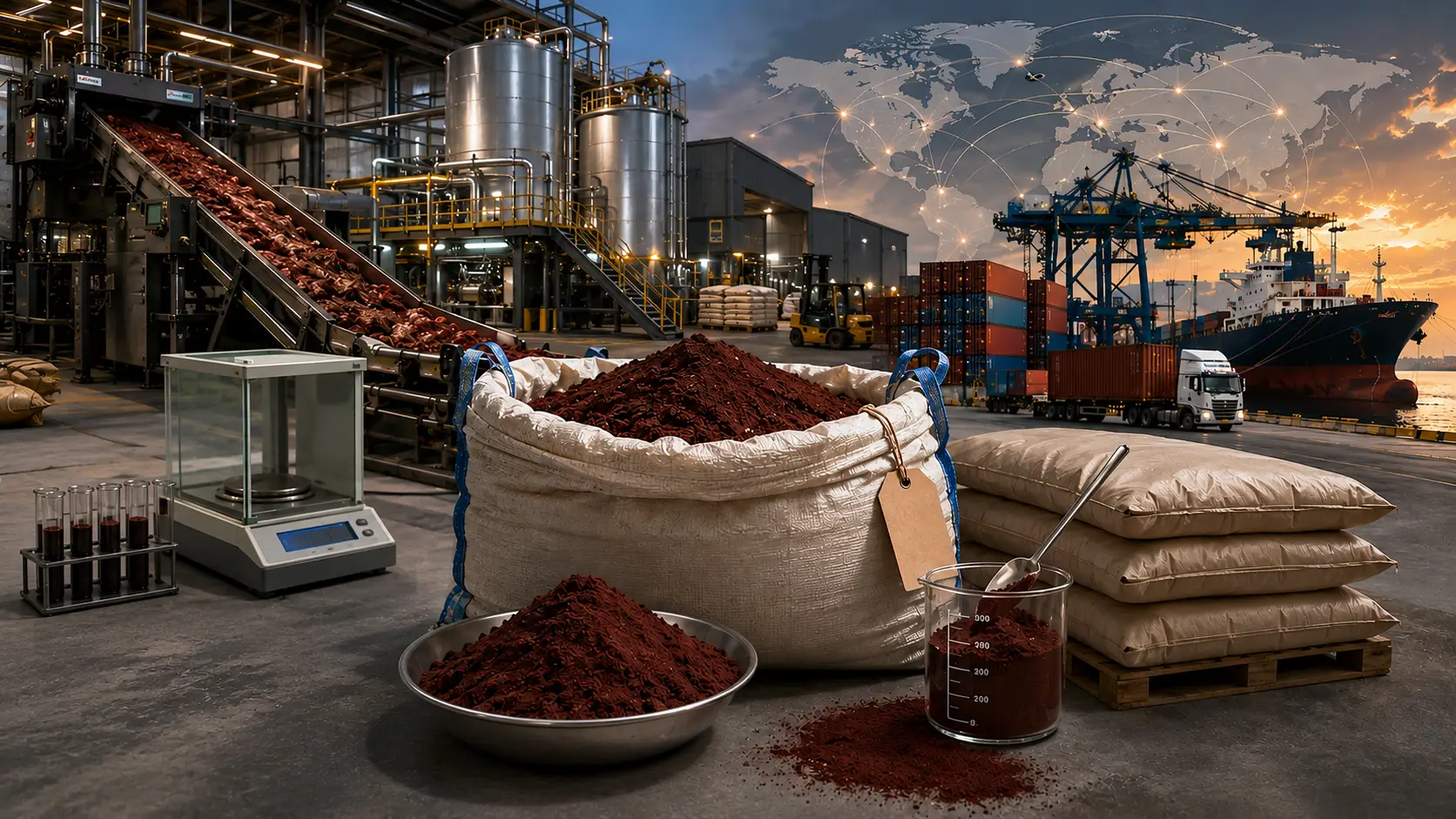
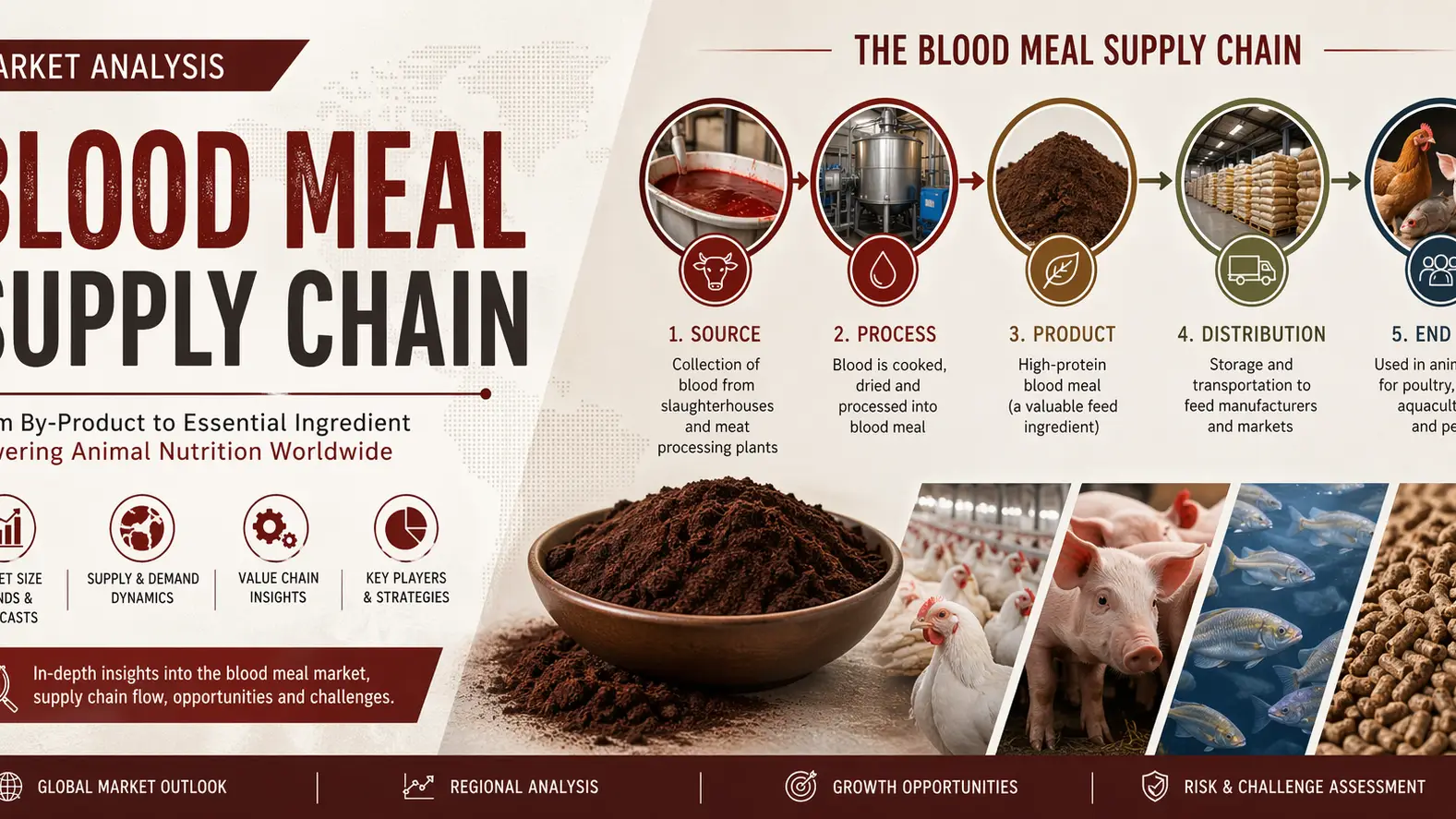
The supply chain begins at slaughterhouses, where blood is collected, sterilized, and transported to rendering facilities. It is then subjected to heat treatment and drying processes to produce stable, pathogen-reduced blood meal suitable for industrial use.
This production model ensures safety compliance and product consistency, both of which are essential for international trade and feed-grade applications.
Efficient supply chain coordination between slaughterhouses, rendering plants, and exporters is essential to maintain product quality and meet global demand.
Applications in Animal Feed and Nutritional Systems
Use in Poultry, Aquaculture, and Livestock Feed
Blood meal is widely incorporated into animal feed formulations due to its high protein and lysine content. According to the National Research Council (NRC), animal-derived protein meals contribute significantly to improving feed efficiency in monogastric animals such as poultry and swine.
In aquaculture, blood meal is used as a supplementary protein source, helping reduce dependency on fish meal while maintaining nutritional balance. It is also used in pet food manufacturing where digestible protein is required.
Feed formulators value blood meal for its amino acid profile, but it is typically blended with other protein sources to ensure balanced nutrition.
Its role in feed systems continues to expand as global protein demand increases in livestock production.
Role in Organic Fertilizer and Agricultural Inputs
Nitrogen-Rich Fertilizer Applications
Blood meal is also widely used as an organic fertilizer due to its high nitrogen content. The United States Environmental Protection Agency (EPA) recognizes organic animal by-products as effective soil amendments that improve nutrient cycling.
In agriculture, blood meal is applied to enhance soil fertility, stimulate plant growth, and support organic farming systems. It is particularly valued in horticulture and high-value crop production.
Its slow-release nitrogen profile makes it suitable for sustained nutrient delivery, reducing the need for synthetic fertilizers.
This dual agricultural role increases its commercial relevance across both conventional and organic farming markets.
Global Market Trends and Trade Dynamics
Increasing Demand from Feed and Fertilizer Industries
The global blood meal market is experiencing steady growth driven by rising demand for protein-rich feed ingredients. Market analysis from industry research institutions indicates that expanding livestock production in Asia and Latin America is a key growth driver.
Supply chain disruptions in traditional protein markets have also encouraged feed manufacturers to diversify raw material sourcing, increasing reliance on animal by-products like blood meal.
Trade flows are influenced by regulatory frameworks, feed safety standards, and availability of rendering infrastructure in exporting countries.
As sustainability becomes a core procurement requirement, blood meal is gaining importance as a circular economy commodity.
Quality Standards, Safety, and Regulatory Framework
Feed Safety and Compliance Requirements
Quality control in blood meal production is governed by strict feed safety standards. The European Food Safety Authority (EFSA) emphasizes hygienic rendering practices to prevent microbial contamination and ensure feed-grade safety.
Key quality parameters include protein content, moisture levels, ash content, and microbial stability. These factors directly influence pricing and buyer acceptance in international markets.
Exporters must comply with regional feed regulations, which often require certifications and traceability documentation.
Consistency in quality is essential for maintaining long-term supply contracts in the B2B marketplace.
B2B Buyer Intent and Procurement Considerations
Industrial Buyer Evaluation Criteria
B2B buyers of blood meal typically include feed manufacturers, fertilizer producers, agricultural distributors, and commodity traders. Their procurement decisions are driven by cost efficiency, protein content, and supply reliability.
Buyers evaluate suppliers based on consistency, regulatory compliance, and logistical capabilities. Long-term contracts are often preferred to stabilize pricing and ensure continuous supply.
Market comparisons are common, as buyers assess multiple sourcing regions to optimize cost and quality balance.
Digital marketplaces such as Tradeasia, Chemtradeasia, and Tradechem play a key role in simplifying global sourcing decisions.
Conclusion: Strategic Sourcing Outlook for Buyers
The future of blood meal sourcing is closely linked to supply chain digitization and sustainability-driven procurement strategies. Industry reports suggest increasing integration of traceable sourcing systems in animal by-product trade.
As demand grows in both feed and fertilizer sectors, suppliers with robust logistics and compliance frameworks will gain competitive advantage.
Buyers are expected to prioritize suppliers offering transparency, consistent quality, and scalable supply capacity. Blood meal will remain a strategically important commodity in global protein and nutrient supply chains.
Sources
https://www.fao.org
https://www.efsa.europa.eu
https://www.usda.gov
Leave a Comment