Blood Meal Fundamentals and Industrial Role
What Blood Meal Is
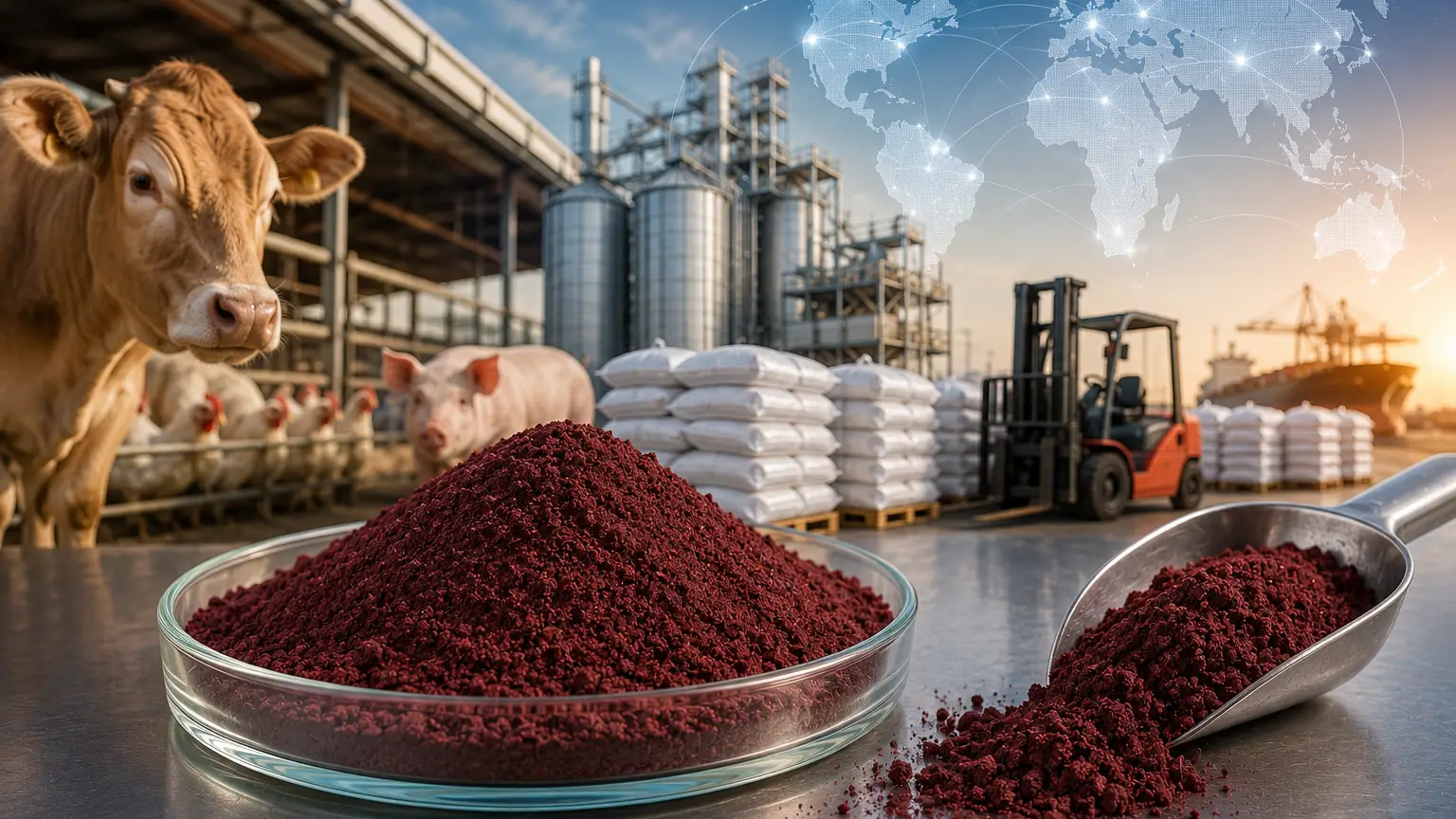
Blood Meal is a dried animal-derived powder produced from blood collected during slaughtering and subsequent processing. The Tradeasia product listing identifies the material as a dark red to brown powder with less than 10% moisture, a minimum crude protein content of 80%, maximum crude fat of 1.0%, and minimum pepsin digestibility of 80%. The listed product is available in 50 kg PP woven bags and has a stated 12-month shelf life under cool, dry, pest-free storage conditions.
From a commercial perspective, these characteristics make Blood Meal a specialized processed animal by-product rather than a commodity that can be evaluated only by price. Protein concentration, digestibility, moisture, ash, mineral content, microbiological parameters, species of origin, processing status, and regulatory documentation can all affect whether a particular lot is suitable for a buyer's intended application. The product page lists bovine/porcine origin for the spray-dried material and identifies it as processed Category 3 material.
Blood Meal also occupies two distinct application positions: it can serve as a concentrated organic nitrogen source for agricultural uses and as a high-protein ingredient where applicable animal-feed regulations permit its use. Iowa State University Extension identifies Blood Meal as a high-nitrogen organic fertilizer material, while the University of Minnesota Extension lists bloodmeal among concentrated organic nitrogen sources for crop production.
For B2B buyers, this dual positioning is commercially important because the correct procurement specification depends on the end use. An agricultural buyer may prioritize nitrogen concentration, nutrient consistency, organic-input requirements, and application characteristics, whereas a feed buyer may place greater emphasis on crude protein, amino-acid profile, digestibility, species of origin, microbiological safety, traceability, and applicable feed regulations.
Blood Meal Applications and End-Use Demand
Agricultural Fertilizer Applications
Blood Meal has a clear role in organic fertilizer and agricultural-input markets because it provides concentrated nitrogen. University extension guidance commonly places Blood Meal at approximately 10–15% nitrogen depending on the product and source; Iowa State University lists a representative 10-0-0 analysis, while the University of Florida reports ranges around 12–15% nitrogen for Blood Meal used as a crop fertility source.
The commercial opportunity therefore extends beyond individual farm use into fertilizer blending, soil amendment manufacturing, agricultural distribution, horticultural inputs, and other businesses that formulate or distribute nitrogen-containing organic products. The appropriate dosage and release profile remain application-specific, so professional buyers should evaluate the declared nutrient specification alongside crop requirements and local fertilizer rules rather than treating all Blood Meal grades as interchangeable.
Market data also supports the relevance of animal-derived materials within the broader organic fertilizer category. Grand View Research reports that animal-based fertilizers represented the largest product segment of the global organic fertilizers market in 2025, citing availability, organic nutrient content, and use across major crop categories among the factors supporting the segment.
For manufacturers and distributors, this creates a sourcing opportunity where consistency matters as much as nominal nitrogen content. A dependable Blood Meal supply can support formulation planning, packaging programs, and customer contracts, while inconsistent moisture, protein, ash, or microbiological characteristics can create downstream quality and inventory-management challenges.
Feed Ingredient Applications
Blood Meal can also be positioned as a protein ingredient for animal nutrition, but this application requires substantially more regulatory scrutiny than a general description of its protein content would suggest. The Tradeasia listing specifies a minimum 80% crude protein level and 7.0% minimum lysine, making protein and amino-acid specifications commercially relevant for qualified feed applications.
Feed suitability, however, is determined by the destination market, animal species, origin of the material, processing controls, and applicable legislation. Current EU rules, for example, contain specific conditions governing blood products derived from non-ruminants and their use in feed, while the European Commission's feed-ban summary distinguishes between authorized and non-authorized uses according to animal category and material origin.
This regulatory distinction is essential for international procurement. A buyer should not assume that a Blood Meal product approved or commercially used in one country can automatically be incorporated into feed in another. Supplier documentation should therefore establish species of origin, processing status, traceability, microbiological controls, and the regulatory basis for the intended application before commercial shipment.
For feed manufacturers and ingredient traders, Blood Meal can consequently represent a specialized protein-sourcing opportunity rather than a universally applicable feed commodity. Procurement teams need to align the product specification with formulation requirements and destination-country rules, which makes supplier transparency and documentation particularly important.
Market Trends Shaping Blood Meal Demand
Organic Nitrogen and Circular-Input Demand
One of the most relevant market trends for Blood Meal is the continued interest in organic nutrient sources and the productive use of animal-derived processing by-products. The broader organic fertilizer market remains commercially significant, and Grand View Research identifies animal-based fertilizers as the leading product segment in its 2025 market assessment.
Blood Meal fits this environment because it converts an animal-processing by-product into a standardized material with agricultural value. Its concentrated nitrogen content gives fertilizer manufacturers and agricultural-input distributors a recognizable functional proposition, particularly where buyers are looking for organic or animal-derived nitrogen sources rather than exclusively synthetic nutrient inputs.
Application efficiency is nevertheless becoming increasingly important. University of Florida guidance notes that organic fertilizers should be selected according to nutrient content, soil conditions, crop requirements, and nutrient-release characteristics. This means commercial demand is not simply a question of whether Blood Meal contains nitrogen; buyers increasingly need predictable specifications that allow them to formulate or apply the material accurately.
This trend favors suppliers capable of providing consistent technical documentation rather than relying solely on a generic product name. For B2B marketplaces, presenting specification, origin, packaging, certification, and compliance information together can reduce information gaps between producers, traders, distributors, and industrial buyers.
Regulatory and Quality-Specification Trends
Regulatory compliance is another defining factor in Blood Meal procurement, particularly when the product enters animal-feed supply chains. The European Union maintains detailed rules concerning processed animal proteins and blood products, including requirements linked to non-ruminant origin and controls designed to prevent cross-contamination.
The importance of quality control is also visible in the listed Blood Meal specification. Tradeasia provides microbiological parameters including total plate count, yeast and mould, E. coli, coliforms, and Salmonella, alongside heavy-metal and dioxin/PCB compliance statements. These details give professional buyers a stronger starting point for supplier qualification than a product name alone.
For international traders, another emerging priority is documentation alignment. Buyers may need certificates, technical data sheets, safety documentation, origin declarations, halal documentation where applicable, and evidence of the manufacturing or processing standard used. The Tradeasia listing identifies ISO/HACCP availability and states that halal certification is available on request, illustrating the type of information that can influence supplier comparison.
The result is a market in which reliable Blood Meal demand is closely linked to application-specific compliance. Suppliers that can communicate technical specifications clearly and buyers that define their destination-market requirements before purchase are better positioned to avoid mismatched lots, regulatory delays, and unnecessary qualification cycles.
Blood Meal Buyer Intent and Procurement Priorities
Who Buys Blood Meal
The principal B2B buyer groups include organic fertilizer manufacturers, agricultural-input distributors, fertilizer blenders, horticultural suppliers, animal-feed manufacturers where permitted, feed-ingredient traders, importers, wholesalers, and procurement teams sourcing animal-derived protein or nitrogen materials. The strongest buyer profile depends on the intended end use and the regulations applicable to the destination market.
Agricultural buyers generally approach Blood Meal as a concentrated organic nitrogen source, while qualified feed-industry buyers may assess it as a protein ingredient. These two purchasing journeys have different technical priorities, so a supplier or marketplace needs to make the intended application clear rather than presenting Blood Meal as a one-size-fits-all product.
For buyers, comparing suppliers is primarily a risk-management exercise. Price matters, but so do protein and nutrient consistency, moisture, microbiological results, species of origin, packaging, shelf life, documentation, certifications, production controls, and shipment reliability. The Tradeasia listing provides several of these data points, including 80% minimum crude protein, less than 10% moisture, 50 kg packaging, and ISO/HACCP status.
The product page can therefore function as a commercial qualification starting point for buyers that need to move from generic Blood Meal research toward supplier evaluation. Buyers looking for Blood Meal supplier information can use the listed technical and commercial information to determine whether the material warrants a quotation, sample request, technical review, or further compliance discussion.
What Procurement Teams Evaluate
A procurement team evaluating Blood Meal should first define the application and destination market. That decision establishes which specifications and regulatory requirements are relevant, particularly because feed applications can be subject to species-specific restrictions and requirements for processed animal proteins or blood products.
The next consideration is specification consistency. Protein, moisture, fat, ash, calcium, phosphorus, digestibility, lysine, microbiological parameters, and physical characteristics can all be relevant depending on the application. For fertilizer buyers, nitrogen concentration and nutrient-release behavior may be central; for feed buyers, protein quality, digestibility, amino-acid content, safety, and regulatory status may carry greater weight.
Logistics also influence the total commercial value of a Blood Meal supply agreement. The product listing specifies 50 kg PP woven bags and a 12-month shelf life, with cool, dry, pest-free storage recommended. Buyers importing material should additionally assess shipping configuration, warehouse conditions, documentation, lead times, minimum order requirements, and the supplier's ability to maintain consistent supply over repeated purchase cycles.
Ultimately, buyers compare suppliers because the cost of an unsuitable shipment can exceed the apparent price difference between offers. A B2B marketplace can add value by connecting the purchasing requirement with technical specifications, supplier information, documentation, and application context, helping procurement teams narrow the field before entering detailed commercial negotiations.
Blood Meal Sourcing and Supplier Qualification
Building a Commercial Specification
Effective Blood Meal sourcing starts with a written purchase specification. Rather than requesting simply “Blood Meal,” procurement teams should identify the intended application, required protein or nitrogen level, acceptable moisture and ash ranges, species of origin, microbiological requirements, packaging format, certification needs, destination country, and any applicable feed or fertilizer regulations.
The Tradeasia specification provides a useful example of the level of detail that can support commercial evaluation: minimum 80% crude protein, maximum 1.0% crude fat, maximum 4.5% ash, approximately 0.50 g/cm³ bulk density, minimum 7.0% lysine, and stated microbiological and contaminant controls. Such parameters make supplier-to-supplier comparisons more meaningful than comparing product names alone.
For buyers sourcing Blood Meal for agricultural use, the specification should also distinguish between material intended for direct fertilizer use and material intended as an ingredient in a formulated fertilizer. Extension guidance emphasizes that organic fertilizers should be selected according to nutrient requirements and release characteristics, reinforcing the need to connect the product specification with the actual application.
For feed-related procurement, the qualification process should be more restrictive. Buyers need to verify species of origin, processing controls, traceability, applicable approvals, and destination-market rules before considering a commercial lot. European rules illustrate why this step matters: permitted uses can depend on whether blood products originate from non-ruminants and which animal category will receive the feed.
Evaluating Supply Reliability
A competitive Blood Meal supplier should be evaluated on more than a quoted unit price. Buyers should consider production consistency, technical documentation, packaging capabilities, quality-control systems, shipment readiness, communication, and the supplier's ability to support recurring procurement. These factors become increasingly important when Blood Meal is incorporated into a manufacturing process or distributed under an established product specification.
Quality documentation is particularly valuable because Blood Meal is an animal-derived material. The listed product includes microbiological limits and contaminant compliance information, as well as a TSE/BSE compliance declaration and species-of-origin statement. These documents can help buyers establish whether a supplier's product aligns with their internal quality and regulatory requirements.
Storage and logistics should also be included in supplier evaluation. Because the product is supplied as a dry powder and has a stated 12-month shelf life, maintaining appropriate warehouse conditions is part of preserving commercial quality. The product page recommends cool, dry, pest-free storage, while the 50 kg PP woven bag format provides a defined baseline for handling and distribution planning.
For procurement teams seeking a repeatable supply relationship, the best approach is to qualify the supplier against the complete purchasing requirement rather than selecting purely on headline price. A marketplace such as Tradeasia can support this process by presenting product information and supplier-facing commercial pathways in one place, helping buyers progress from Blood Meal research toward an informed sourcing conversation.
Commercial Positioning and B2B Supply Opportunities
Where the Commercial Opportunity Lies
Blood Meal matters commercially because one standardized animal-derived material can participate in multiple industrial supply chains, particularly organic fertilizer and qualified animal-feed applications. Demand is therefore influenced by both agricultural nutrient requirements and the needs of specialized ingredient buyers, with the applicable regulatory environment determining which opportunities are commercially accessible.
The fertilizer opportunity is especially relevant where buyers seek concentrated organic nitrogen sources. Industry analysis from Grand View Research identifies animal-based fertilizers as the largest product segment within its 2025 organic fertilizer market assessment, while university extension resources consistently identify Blood Meal as a concentrated nitrogen source.
The feed opportunity requires a more targeted approach. Blood Meal's high protein and lysine specifications can make it commercially relevant to qualified feed-ingredient buyers, but regulations vary by species and jurisdiction. For international B2B trade, this makes application screening and compliance verification central to the commercial proposition rather than secondary administrative tasks.
For manufacturers, traders, distributors, and procurement teams, reliable sourcing can consequently provide value beyond simple product availability. Consistent specifications, clear documentation, predictable packaging, and dependable logistics can reduce qualification time and support longer-term purchasing relationships.
Tradeasia Marketplace Positioning
A B2B marketplace can serve as an entry point between product discovery and supplier engagement by giving buyers access to technical information before they initiate a commercial inquiry. For Blood Meal, that information can include physical characteristics, nutritional specifications, microbiological parameters, packaging, certifications, origin, and regulatory declarations.
Tradeasia's Blood Meal listing identifies the product as originating from the United States and provides a CAS number, HS code, 50 kg packaging format, feed-grade status, technical specifications, and quality-control information. These details can help procurement teams determine whether the product merits further technical and commercial evaluation.
Buyers seeking to compare supply options can use the Blood Meal product page as a starting point for reviewing available product information and progressing toward pricing, customization, shipping, or other commercial discussions. This is particularly useful for procurement teams that need to establish technical fit before requesting a quotation.
In practical terms, the strongest commercial positioning for Blood Meal is not based on making broad claims about demand or suitability. It is based on matching the right specification to the right application, verifying regulatory eligibility, and establishing a reliable supply relationship. For fertilizer manufacturers, agricultural distributors, qualified feed buyers, traders, and procurement teams, that combination makes Blood Meal a relevant B2B sourcing category where technical transparency and supplier reliability can directly support purchasing decisions.
Sources
- Iowa State University Extension — Selecting and Using Organic Fertilizers
Iowa State University Extension source — Supports Blood Meal's role as a concentrated nitrogen source in organic fertilizer applications.
- University of Minnesota Extension — Soil Health and Nutrient Management in High Tunnels
University of Minnesota Extension source — Supports information on Blood Meal as a concentrated organic nitrogen input and application considerations.
- European Union / EUR-Lex — Current rules concerning blood products and processed animal proteins
EUR-Lex regulatory source — Supports the discussion of species-specific feed restrictions, non-ruminant blood products, and regulatory qualification.
Leave a Comment