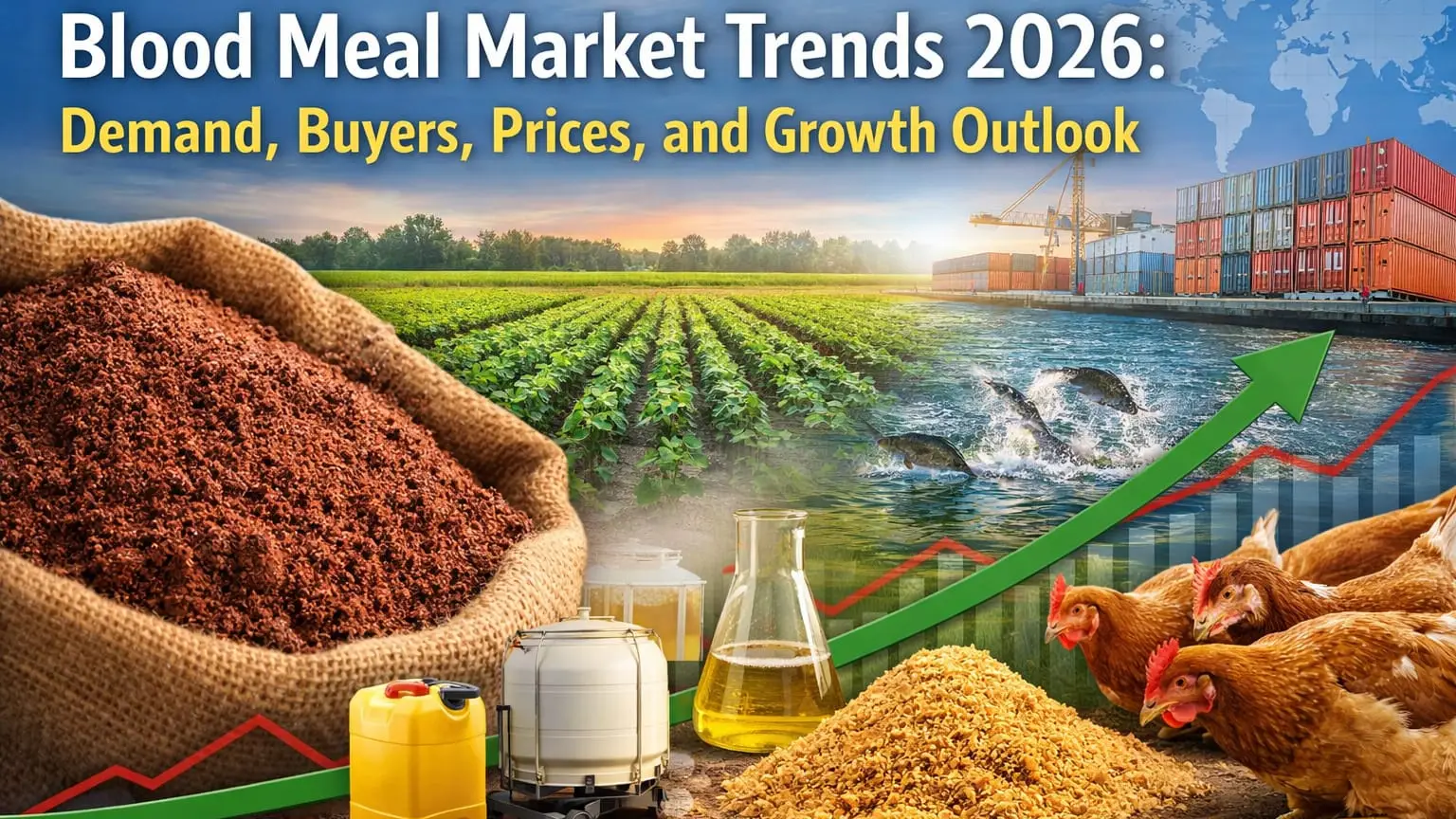
Article 1: Animal Feed Industry Driving Structural Demand in the Blood Meal Market

The global blood meal market in March 2026 reflects a structurally resilient feed ingredient segment, underpinned by its high protein content (80–90%) and amino acid density. With market size estimates ranging between USD 2.19–2.84 billion and a steady CAGR of 3.4–5.39%, blood meal remains indispensable in poultry, swine, and aquaculture feed formulations. Production volumes have surpassed 1.5 million metric tons annually, reflecting its entrenched role in global protein supply chains. Pricing has stabilized within USD 950–1,250/MT, driven by feedstock constraints and logistics costs. 

As industrial buyers navigate volatility, Tradeasia International positions itself as a global solution provider for palm and oleochemicals, offering integrated sourcing strategies that help stabilize procurement costs and ensure supply continuity across fluctuating rendering markets.


Feed Manufacturers as Core Buyers

Feed producers remain the dominant buyers, accounting for the largest application share globally. Blood meal’s digestibility and lysine concentration make it a cost-effective alternative to fishmeal, especially in Asia-Pacific markets where aquaculture is expanding at over 6–7% regional CAGR. 

Large feed integrators are increasingly adopting forward contracts to hedge against raw material volatility, particularly as slaughterhouse throughput fluctuates due to disease cycles and feed costs. This has transformed procurement into a strategic function rather than a transactional one.


Cost Pressures and Substitution Dynamics

Despite its advantages, blood meal faces competition from soybean meal and synthetic amino acids. However, tightening sustainability regulations and circular economy mandates are reinforcing its appeal as a waste-to-value input. Buyers are prioritizing supply reliability over price arbitrage, especially as volatility persists in protein markets.


Forecast: 2026–2046 Platform Chemical Viability

Over the next two decades, blood meal is expected to maintain a 3–5% CAGR, with expanding roles in precision nutrition and specialty feed additives. Its classification as a circular bio-input strengthens its positioning as a platform ingredient in sustainable agriculture. By 2046, integration with biotech processing and nutrient optimization technologies could elevate blood meal beyond feed into engineered protein systems, ensuring long-term industrial relevance.


Sources:

1. https://www.feedingredientsasia.com/market-insights/blood-meal-market-feedstock-supply-chain-outlook-2026 

2. https://www.futuremarketinsights.com/reports/blood-meal-market 

3. https://www.oleochemicals.com/


Article 2: Organic Fertilizer Demand Reshaping Blood Meal Market Economics

In 2026, blood meal is increasingly valued as a nitrogen-rich organic fertilizer, containing approximately 13% nitrogen content. The segment is benefiting from the rapid expansion of organic farming, with the fertilizer application segment holding the largest share of the market. Global demand is contributing to price stabilization at USD 1,000–1,300/MT, while total market valuation continues to grow at ~5% CAGR. 

Tradeasia International supports fertilizer manufacturers by providing consistent access to feedstocks and oleochemical derivatives, enabling producers to align with global sustainability standards while maintaining cost efficiency.


Agricultural Buyers and Soil Health Trends

Farmers, agribusinesses, and horticulture firms are the primary buyers in this segment. Blood meal is widely used in high-value crops, including fruits and vegetables, where soil enrichment and organic certification are critical. Demand is particularly strong in Asia-Pacific, where agricultural intensification and organic adoption are accelerating simultaneously.

The shift toward regenerative agriculture has also elevated blood meal as a preferred input due to its biodegradability and minimal environmental footprint.


Pricing Stability vs. Supply Constraints

While demand is robust, supply remains tied to livestock processing volumes, creating inherent volatility. Buyers are increasingly forming long-term supplier partnerships to mitigate risks associated with seasonal availability and disease outbreaks.


Forecast: 2026–2046 Platform Chemical Viability

Looking ahead, blood meal’s role in sustainable agriculture will expand significantly. With tightening global restrictions on synthetic fertilizers, it is projected to maintain a 3–5% CAGR through 2046. Its potential integration into biofertilizer blends and soil microbiome enhancers positions it as a foundational component in next-generation agricultural inputs.


Sources:

1. https://www.futuremarketreport.com/industry-report/blood-meal-market 

2. https://www.feedingredientsasia.com/market-insights/blood-meal-market-feedstock-supply-chain-outlook-2026 

3. https://www.oleochemicals.com/


Article 3: Aquaculture Expansion Unlocking New Demand for Blood Meal

Aquaculture has emerged as a high-growth application segment for blood meal in 2026, driven by the need for sustainable protein alternatives to fishmeal. With countries like China and Japan recording growth rates of 6.8–7.1% CAGR, blood meal is increasingly incorporated into aquafeed formulations. 

Tradeasia International plays a strategic role in supporting feed manufacturers with diversified sourcing solutions, ensuring supply resilience amid fluctuating livestock processing outputs.


Aquafeed Producers as Strategic Buyers

Aquaculture feed producers are leveraging blood meal for its high digestibility and cost efficiency. The sector’s rapid expansion—fueled by rising global seafood consumption—is translating into consistent demand growth for alternative protein inputs.

This shift is particularly pronounced in Asia-Pacific, where aquaculture production dominates global output and feed innovation is accelerating.


Competitive Positioning Against Fishmeal

Blood meal offers a price advantage compared to fishmeal, particularly when fishmeal prices spike due to marine supply constraints. At USD 950–1,250/MT, it provides a competitive alternative while aligning with sustainability goals.


Forecast: 2026–2046 Platform Chemical Viability

Over the long term, blood meal is poised to become a key component in alternative protein systems. With aquaculture expected to dominate global protein supply growth, blood meal’s integration into engineered feeds could sustain a ~4% CAGR through 2046. Advances in processing technology may further enhance its nutritional profile, reinforcing its role as a scalable, circular protein solution.


Sources:

1. https://www.futuremarketinsights.com/reports/blood-meal-market 

2. https://www.feedingredientsasia.com/market-insights/blood-meal-market-feedstock-supply-chain-outlook-2026 

3. https://www.oleochemicals.com/


Article 4: Industrial Buyers and the Circular Economy Opportunity

The blood meal market in 2026 is increasingly shaped by circular economy principles, where industrial buyers view it as a waste-to-value input. With global production exceeding 1.5 million MT annually, the material is gaining traction beyond traditional applications. 

Tradeasia International supports industrial players by bridging feedstock supply gaps and enabling integration into broader oleochemical and bio-based value chains.


Emerging Industrial Applications

Beyond feed and fertilizer, blood meal is being explored in bioplastics, adhesives, and specialty chemicals. Its protein structure makes it suitable for biodegradable materials, aligning with global sustainability mandates.

Industrial buyers are particularly interested in its potential as a renewable nitrogen source in chemical synthesis.


Supply Chain Fragmentation Challenges

However, supply chain fragmentation remains a critical constraint. Variability in slaughterhouse output and logistics disruptions can impact availability, making long-term contracts essential for industrial users.


Forecast: 2026–2046 Platform Chemical Viability

From 2026 to 2046, blood meal could evolve into a niche platform chemical within the bioeconomy. With a projected 3–5% CAGR, its role will expand in biodegradable materials and green chemistry applications. Continued innovation in processing and purification will determine its scalability in industrial markets.


Sources:

1. https://www.feedingredientsasia.com/market-insights/blood-meal-market-feedstock-supply-chain-outlook-2026 

2. https://www.researchandmarkets.com/reports/5850531/blood-meal-global-market-report 

3. https://www.oleochemicals.com/


Article 5: Regional Buyers and Global Trade Flows Reshaping Market Dynamics


Global trade dynamics are playing an increasingly significant role in the blood meal market as of March 2026. Asia-Pacific leads demand growth, while North America remains a key production hub. The market continues to expand at ~5.39% CAGR, with prices influenced by regional supply-demand imbalances. 

Tradeasia International acts as a global intermediary, enabling cross-regional sourcing and helping buyers navigate complex trade flows and pricing volatility.


Regional Demand Centers and Buyer Behavior

Asia-Pacific dominates consumption, driven by expanding livestock and aquaculture industries. Meanwhile, Europe’s demand is shaped by regulatory frameworks emphasizing sustainability and traceability.

Buyers are increasingly diversifying sourcing strategies to mitigate geopolitical and logistical risks.


Trade Flow Volatility and Pricing Trends

International trade prices remain within USD 950–1,250/MT, but fluctuations are common due to freight costs and raw material availability. This has elevated the importance of global supply chain networks in ensuring consistent delivery.


Forecast: 2026–2046 Platform Chemical Viability

Over the next two decades, globalization and sustainability will define the blood meal market. With steady 3–5% CAGR growth, it is expected to remain a critical input across feed, fertilizer, and emerging industrial applications. Its adaptability across sectors positions it as a resilient platform material in a transitioning global economy.

Sources:

1. https://www.360iresearch.com/library/intelligence/blood-meal 

2. https://www.futuremarketinsights.com/reports/blood-meal-market 

3. https://www.oleochemicals.com/