Understanding Beet Pulp in Global Feed Markets
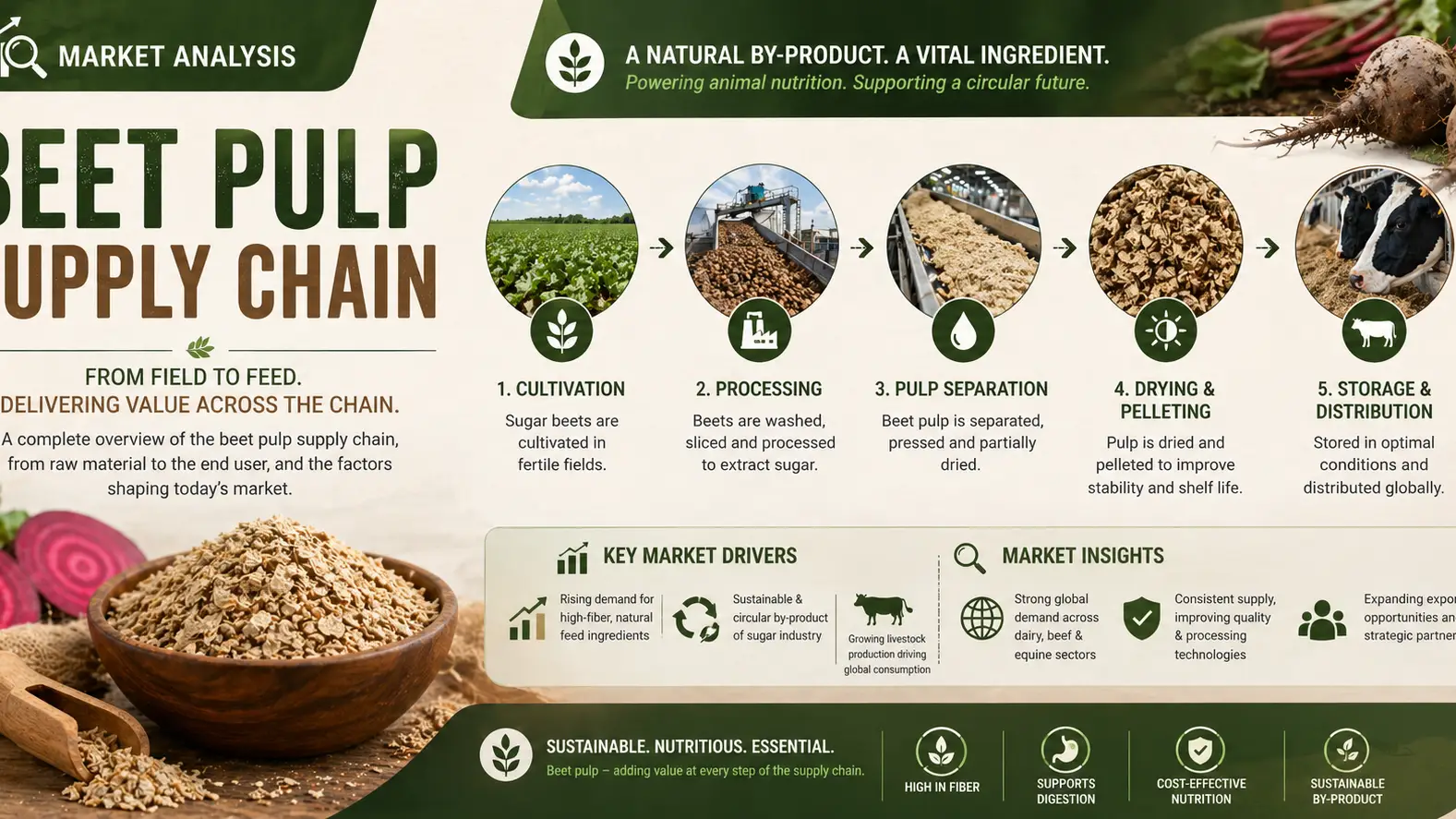
Beet pulp is a fibrous byproduct generated during sugar extraction from sugar beets. After the sugar content is removed, the remaining pulp is processed into dried, pelleted, or shredded forms for commercial use, primarily in animal nutrition markets.
Role of Beet Pulp in Animal Feed
The product is widely valued for its digestible fiber content and energy contribution in livestock diets. It is commonly incorporated into feed formulations for cattle, horses, sheep, goats, and other ruminants seeking balanced nutritional performance.
According to technical information published by the Food and Agriculture Organization (FAO), agricultural byproducts play an increasingly important role in improving feed efficiency and supporting sustainable livestock production systems.
As feed manufacturers continue seeking cost-effective alternatives to traditional feed ingredients, beet pulp remains an attractive option because of its availability, storage stability, and compatibility with various feed formulations.
Supply Chain Structure and Production Sources
The beet pulp supply chain begins with sugar beet cultivation and processing. Major sugar-producing regions generate substantial volumes of beet pulp as a secondary product, creating opportunities for commercial feed ingredient markets.
From Sugar Processing to Feed Ingredient Distribution
Once extracted from sugar production facilities, beet pulp undergoes drying, pelleting, and packaging processes before entering domestic and international distribution channels. Quality management during these stages significantly affects product consistency and market value.
According to industry information from the International Sugar Organization, sugar beet processing remains concentrated in Europe, North America, and parts of Asia, creating regional supply hubs for downstream feed markets.
The efficiency of logistics, storage infrastructure, and export capabilities influences supplier competitiveness. Procurement teams often evaluate these factors when selecting long-term sourcing partners for feed ingredient requirements.
Market Trends Driving Beet Pulp Demand
Global livestock production continues to expand as protein consumption rises across emerging and developed economies. This trend is supporting demand for alternative feed ingredients that offer nutritional value and cost advantages.
Sustainability and Feed Efficiency Trends
Feed manufacturers increasingly prioritize ingredients that contribute to sustainable production goals. Beet pulp aligns with circular economy principles because it transforms an agricultural processing byproduct into a valuable feed resource.
Market analysis published by the Organisation for Economic Co-operation and Development and FAO highlights ongoing growth in global livestock production and feed demand, particularly in developing markets where efficient feed solutions are increasingly important.
As environmental and economic pressures influence feed formulation strategies, beet pulp continues gaining attention among nutrition specialists and commercial feed producers seeking reliable fiber sources.
Buyer Intent and Procurement Considerations
Understanding buyer intent is essential for suppliers and distributors operating in the beet pulp market. Demand originates primarily from organizations involved in animal nutrition, feed manufacturing, livestock production, and agricultural trading.
What Procurement Teams Evaluate
Typical buyers include feed mills, livestock integrators, dairy producers, equine nutrition companies, feed ingredient distributors, and agricultural commodity traders. These organizations require consistent product quality and dependable supply availability.
According to feed industry guidance from the American Feed Industry Association, procurement teams often assess nutritional specifications, moisture levels, fiber composition, packaging options, logistics reliability, and supplier certifications before purchasing feed ingredients.
Buyers frequently compare suppliers to secure competitive pricing, stable inventories, export capabilities, and technical support. Product pages within B2B marketplaces help procurement professionals evaluate suppliers efficiently while reducing sourcing risks.
Global Trade Opportunities and Regional Outlook
International trade continues to create growth opportunities for beet pulp suppliers, exporters, and distributors. Regions with strong sugar beet industries often serve as major production and export centers.
Regional Supply and Demand Dynamics
Europe remains one of the largest beet pulp-producing regions due to its extensive sugar beet cultivation and processing infrastructure. North America also maintains significant production capacity supporting domestic and export markets.
According to data and market observations from the United States Department of Agriculture, livestock sectors worldwide continue seeking efficient feed ingredients capable of supporting productivity and profitability objectives.
Emerging livestock markets in Asia, the Middle East, and Africa are expected to contribute to future demand growth as feed manufacturers diversify sourcing strategies and seek dependable imported feed materials.
Strategic Sourcing Through B2B Marketplaces
Digital procurement platforms are transforming how feed ingredient buyers identify suppliers and manage sourcing activities. B2B marketplaces provide greater transparency and access to international supply networks.
Advantages of Marketplace-Based Procurement
Suppliers can showcase product specifications, logistics capabilities, export experience, and commercial availability through centralized sourcing platforms. Buyers benefit from improved supplier discovery and streamlined procurement workflows.
Industry research from organizations such as the World Trade Organization indicates that digital trade solutions are helping businesses improve supply chain visibility and cross-border procurement efficiency.
For beet pulp buyers, sourcing through established B2B marketplaces can reduce supplier search costs, support vendor comparison processes, and improve access to global supply opportunities across multiple regions.
Conclusion
Beet pulp remains an important feed ingredient within the global livestock nutrition industry due to its digestible fiber content, sustainability advantages, and broad application across animal feed markets.
Future Outlook for Buyers and Suppliers
As livestock production expands and feed manufacturers seek efficient ingredient alternatives, demand for beet pulp is expected to remain resilient. Strong supply chains and reliable sourcing strategies will become increasingly important for market participants.
According to insights from FAO, USDA, and international feed industry organizations, feed demand growth will continue supporting opportunities for agricultural byproducts that contribute to efficient livestock production systems.
For manufacturers, distributors, traders, and procurement teams, understanding beet pulp supply dynamics can help improve sourcing decisions and strengthen long-term commercial partnerships within the global feed ingredient market.
Sources
https://www.www.fao.org
https://www.www.usda.gov
https://www.www.isosugar.org

Leave a Comment