Understanding Beet Pulp and Product Characteristics
Beet pulp is a fibrous co-product generated after sugar extraction from sugar beet processing. Rather than being considered waste material, it has evolved into an important feed ingredient for industrial animal nutrition systems.
The product is commonly available as dried beet pulp, pelletized beet pulp, and molassed beet pulp depending on buyer requirements and feed formulation needs.
Product Composition and Functional Properties
Technical information from sugar processing industries indicates that beet pulp contains digestible fiber with moderate energy content and strong palatability characteristics for livestock feed formulations.
The material provides nutritional functionality while supporting circular agricultural practices through the utilization of processing byproducts. According to feed industry research, digestible fiber ingredients increasingly support balanced nutrition strategies in commercial livestock production.
Industrial Applications Driving Beet Pulp Demand
Beet pulp demand continues to increase because of its broad use across multiple feed applications and emerging bio-based industries.
Commercial users increasingly seek ingredients that provide cost efficiency and nutritional performance simultaneously.
Applications Across Feed Industries
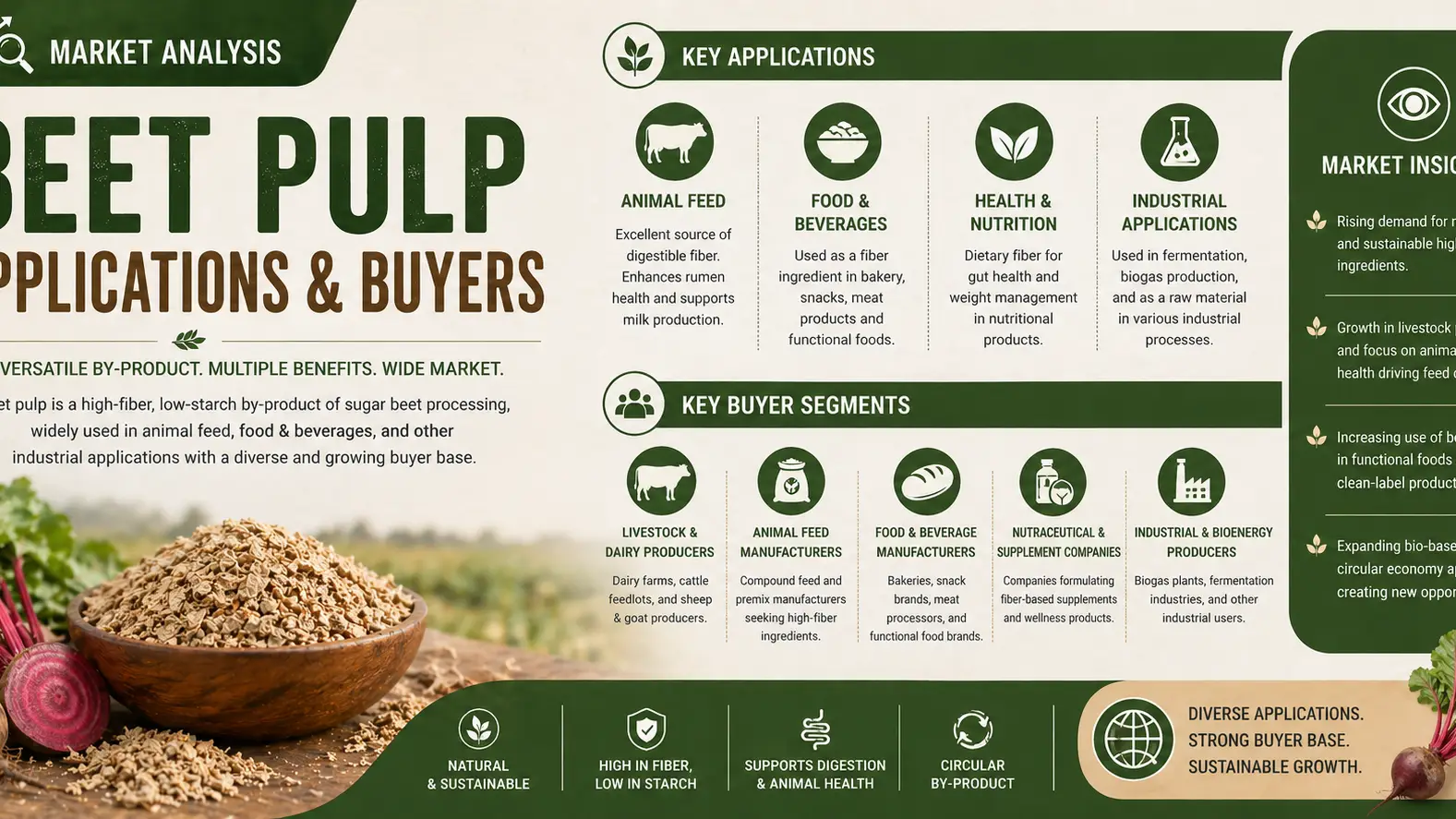
Dairy cattle feed manufacturers frequently use beet pulp because of its digestible fiber profile and energy contribution within balanced rations.
Equine feed manufacturers, cattle nutrition companies, and compound feed producers also integrate beet pulp into formulations. Market studies suggest that animal feed remains the dominant application segment for global beet pulp consumption.
Pet food manufacturers are also evaluating beet pulp as a functional fiber source supporting digestive health.
Emerging applications within biogas and bio-based industrial systems further diversify commercial opportunities for suppliers and distributors.
Global Market Trends and Industry Outlook
The global beet pulp market is transitioning from a traditional agricultural byproduct segment toward a more structured feed ingredient market.
Increasing livestock production and demand for sustainable feed alternatives continue to influence purchasing behavior.
Growth Drivers in International Markets
Market analysis published within recent industry studies indicates that demand growth is being supported by expansion in dairy and livestock industries.
Growth in feed formulation technologies also allows nutrition teams to optimize ingredient use across production systems.
Regions including Europe, North America, and Asia-Pacific remain important production and consumption centers.
Industry forecasts suggest continuing growth as feed buyers prioritize reliable and cost-efficient nutritional ingredients.
Buyer Intent and Procurement Considerations
Commercial purchasing decisions for beet pulp involve more than pricing considerations alone.
Procurement teams evaluate nutritional consistency, handling characteristics, logistics capabilities, and long-term supply stability.
How Buyers Evaluate Beet Pulp Suppliers
Typical buyers include feed manufacturers, livestock producers, agricultural distributors, pet food manufacturers, and nutrition companies.
Buyers compare suppliers based on moisture content, pellet quality, packaging options, shipment reliability, and quality assurance documentation.
Large-scale buyers also assess storage characteristics because stable products can reduce operational costs.
B2B product pages support sourcing decisions by providing specifications, application guidance, and supply availability information.
Supply Chain and Sourcing Intelligence
Beet pulp supply chains are directly linked to sugar beet production activities and agricultural cycles.
As a result, production variability and regional harvest conditions influence availability.
Procurement Risks and Supply Planning
Industry analysis indicates that climate patterns, freight costs, and energy pricing increasingly affect market dynamics.
Supply disruptions during poor harvest periods can create price fluctuations across importing regions.
Procurement teams therefore increasingly seek diversified sourcing strategies.
Global distributors and trading platforms help buyers improve supply continuity and reduce operational risk.
Future Opportunities for Beet Pulp Markets
Sustainability initiatives are creating additional commercial opportunities for beet pulp markets worldwide.
Circular economy strategies increasingly encourage industries to maximize value from agricultural processing streams.
Emerging Commercial Potential
Feed innovation technologies are supporting more precise nutritional formulations using fiber-rich ingredients.
Manufacturers continue exploring expanded uses within specialized feed products and bio-based applications.
Digital agriculture and data-driven feed systems may further increase demand for optimized ingredients.
The long-term outlook suggests increasing strategic importance for beet pulp within global agricultural value chains.
Conclusion
Beet pulp has evolved beyond its historical role as a sugar processing byproduct and now serves as an important commercial ingredient within animal nutrition and agricultural industries.
For B2B buyers, sourcing decisions increasingly depend on supply reliability, quality consistency, and market intelligence. As livestock demand and sustainability initiatives continue developing, beet pulp is expected to remain a strategic product for manufacturers, distributors, and procurement teams worldwide.
Sources
https://www.fao.org
https://www.usda.gov
https://www.oecd.org/agriculture

Leave a Comment