Introduction to Beet Pulp in the Global Feed Industry
Understanding Beet Pulp as a High-Value Feed Ingredient
Beet pulp is a fibrous co-product obtained during sugar extraction from sugar beets. After sugar removal, the remaining pulp is dried or pelleted to create a highly digestible feed ingredient widely used in livestock nutrition. Its balance of fermentable fiber and energy makes it an attractive ingredient for feed formulations targeting dairy cattle, beef cattle, horses, sheep, goats, and other ruminants.
As livestock producers continue to seek cost-effective feed ingredients with consistent nutritional quality, beet pulp has gained recognition as a dependable alternative to traditional forage supplements. The product offers excellent palatability while contributing beneficial fiber that supports rumen health and digestive efficiency.
Growing Importance in Sustainable Feed Formulations
The increasing adoption of circular economy practices within agriculture has further elevated the value of beet pulp. Instead of treating sugar beet residue as waste, processors convert it into a commercially valuable feed ingredient that contributes to resource efficiency and sustainability throughout the agricultural supply chain.
According to the Food and Agriculture Organization (FAO), improving the utilization of agricultural co-products supports sustainable livestock production while reducing waste generation across food systems. Similarly, technical guidance from the United States Department of Agriculture (USDA) recognizes beet pulp as an established feed ingredient with nutritional benefits for multiple livestock species.
Global Beet Pulp Supply Chain and Market Dynamics
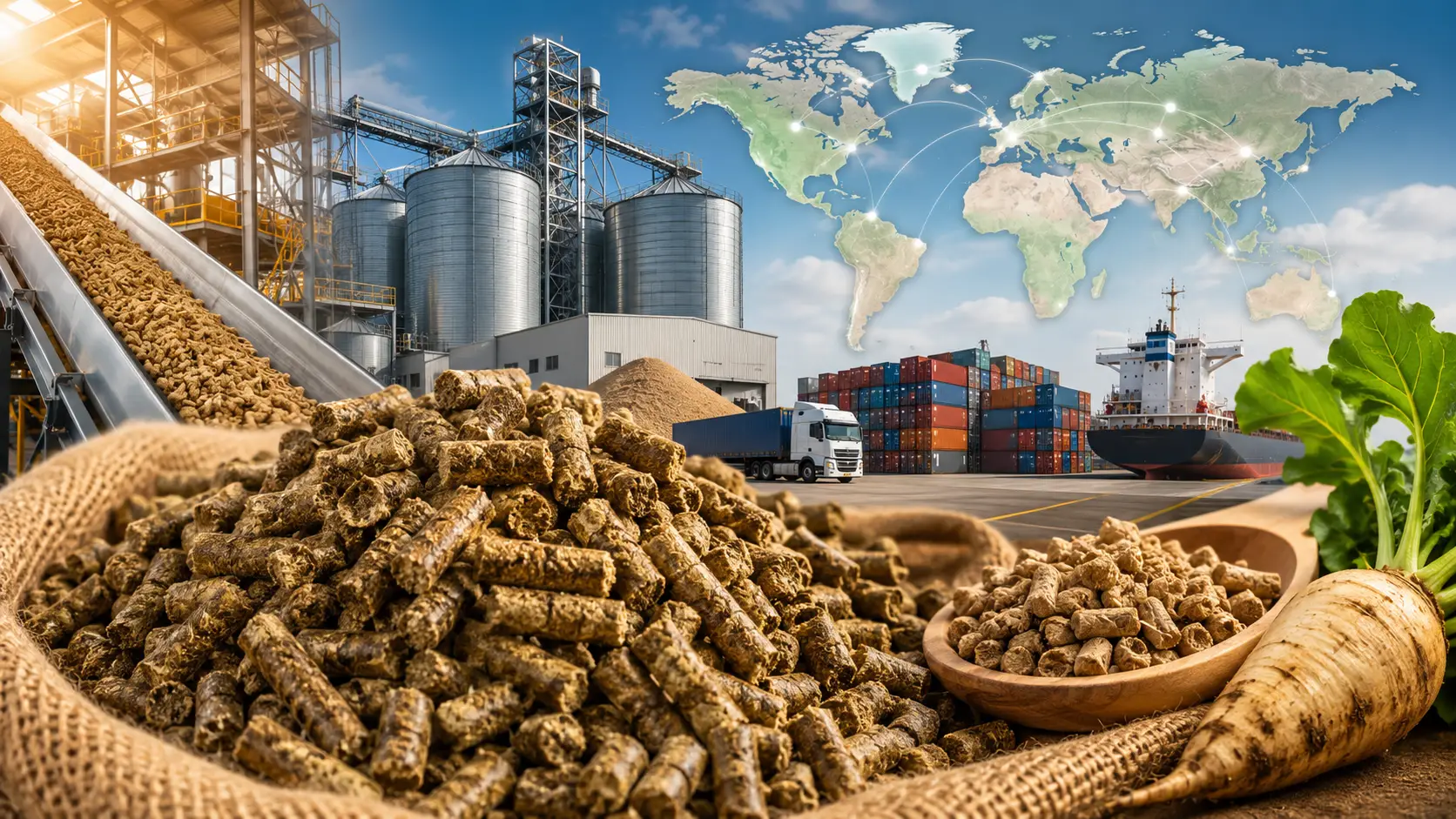
The global beet pulp supply chain is closely linked to sugar beet cultivation and sugar processing industries. Major production regions include the European Union, the United States, Russia, Turkey, Egypt, and several parts of Asia where sugar beet farming supports large-scale processing operations. Production volumes fluctuate according to seasonal harvests, weather conditions, and sugar market performance.
International trade has expanded as feed manufacturers diversify sourcing strategies to improve supply security and manage raw material costs. Pelletized and dried beet pulp products are particularly attractive for export because they offer longer shelf life, improved transportation efficiency, and easier storage compared with fresh pulp.
Supply Chain Challenges and Procurement Strategies
Global procurement teams increasingly evaluate supplier reliability, product consistency, logistics capabilities, and quality certifications when selecting beet pulp suppliers. Supply chain disruptions, transportation costs, climate variability, and fluctuations in sugar production can influence availability and pricing throughout the year.
According to the International Sugar Organization (ISO) and market assessments published by organizations such as OECD-FAO Agricultural Outlook, global agricultural commodity markets continue to experience evolving supply-demand dynamics. These developments encourage feed manufacturers and distributors to establish diversified sourcing partnerships and maintain strategic inventories to ensure continuous production.
Industrial Applications Across Animal Nutrition
Beet pulp is valued across the animal nutrition industry for its highly digestible fiber, moderate energy content, and versatility in feed formulations. It is commonly incorporated into compound feeds for dairy cattle, beef cattle, sheep, goats, horses, and other ruminants, where it helps improve digestive performance while supporting efficient nutrient utilization. Its ability to complement forage-based diets makes it an important ingredient for nutritionists seeking balanced rations.
Beyond ruminant nutrition, beet pulp is also used in selected specialty feeds where controlled fiber levels are desirable. Pelleted beet pulp offers excellent handling characteristics, reducing dust generation and improving feed manufacturing efficiency. These characteristics make it suitable for commercial feed mills producing consistent, large-scale formulations.
Supporting Sustainable Livestock Production
The growing emphasis on sustainable agriculture has increased interest in agricultural co-products that maximize resource efficiency. Beet pulp exemplifies this trend by transforming a sugar processing by-product into a valuable nutritional ingredient, contributing to circular economy initiatives while reducing waste within the food production chain.
According to the Food and Agriculture Organization (FAO), improving feed resource utilization is an important strategy for increasing livestock productivity while enhancing sustainability. Technical guidance from the National Research Council (NRC) also recognizes digestible fiber sources such as beet pulp as valuable components in balanced livestock diets, particularly for ruminant feeding programs.
Factors Influencing International Beet Pulp Trade
The international beet pulp market is influenced by several interconnected factors, including sugar beet harvest volumes, global sugar production, transportation costs, feed grain prices, and seasonal livestock demand. Since beet pulp production depends directly on sugar manufacturing, fluctuations in sugar output can significantly affect product availability in export markets.
Demand also responds to changing feed economics. When conventional feed ingredients such as corn or soybean meal experience price volatility, nutritionists often evaluate alternative fiber ingredients like beet pulp to optimize formulation costs while maintaining nutritional performance. This flexibility supports continued demand across diverse livestock sectors.
Quality Standards and Supply Chain Reliability
Commercial buyers increasingly prioritize consistent product quality, moisture control, pellet durability, and reliable logistics when selecting beet pulp suppliers. Procurement teams frequently request certificates of analysis, traceability documentation, and compliance with international feed safety standards before approving suppliers for long-term purchasing agreements.
According to the OECD-FAO Agricultural Outlook, global agricultural commodity trade continues to evolve as supply chains adapt to changing production patterns, environmental conditions, and international demand. Industry guidance from feed safety organizations also emphasizes quality assurance, traceability, and supplier transparency as essential factors supporting stable international feed ingredient trade.
Buyer Intent and Procurement Considerations
Beet pulp is typically purchased by commercial feed manufacturers, livestock nutrition companies, agricultural distributors, feed ingredient traders, dairy cooperatives, equine feed producers, and integrated livestock operations. These organizations require a dependable supply of consistent-quality ingredients to support uninterrupted feed production and maintain nutritional standards across their product portfolios.
Procurement teams assess several factors before selecting a supplier, including product specifications, nutritional consistency, moisture content, pellet quality, packaging options, production capacity, export experience, and compliance with feed safety regulations. Buyers also consider supplier responsiveness, logistics capabilities, and the ability to provide supporting documentation such as Certificates of Analysis (COA), Safety Data Sheets (SDS), and quality certifications.
Why Buyers Compare Suppliers Before Purchasing
Because beet pulp is traded internationally, sourcing decisions extend beyond price alone. Buyers compare multiple suppliers to minimize supply risks, improve delivery reliability, secure competitive contracts, and ensure continuity during seasonal fluctuations in sugar beet production. Long-term partnerships with experienced exporters can also reduce procurement complexity and improve inventory planning.
A comprehensive product page on a B2B marketplace helps buyers make informed purchasing decisions by presenting detailed product specifications, available grades, packaging formats, origin information, technical documentation, and inquiry options. This transparency shortens the procurement cycle while enabling manufacturers, distributors, and procurement professionals to identify suppliers that best align with their operational and commercial requirements. According to the International Feed Industry Federation (IFIF), supplier transparency and quality assurance remain essential elements of modern feed ingredient sourcing.
Conclusion
Beet pulp continues to strengthen its position as a valuable feed ingredient within the global livestock industry. Its nutritional benefits, digestible fiber content, and contribution to sustainable agricultural practices make it an attractive option for feed manufacturers seeking efficient and cost-effective formulations. As international demand for quality feed ingredients grows, reliable sourcing and resilient supply chains become increasingly important for maintaining production continuity and meeting customer expectations.
Organizations that develop diversified sourcing strategies, work with qualified suppliers, and prioritize product quality are better positioned to manage market volatility and evolving procurement requirements. According to the FAO and the OECD-FAO Agricultural Outlook, sustainable feed resources and resilient agricultural supply chains will continue to play a critical role in supporting future livestock production and global food security.
Tradeasia as Your Global Sourcing Partner
For businesses seeking dependable beet pulp sourcing solutions, Tradeasia International provides access to an extensive global supplier network and comprehensive supply chain support. Through the Tradeasia, Chemtradeasia, and Tradechem Marketplace platforms, buyers can connect with experienced suppliers, compare sourcing options, and streamline procurement for high-quality feed ingredients. By emphasizing quality, reliability, and international trade expertise, Tradeasia helps manufacturers, distributors, and procurement teams build efficient and resilient supply chains for the evolving animal nutrition market.
Buyer Intent and Procurement Considerations
Beet pulp is typically purchased by commercial feed manufacturers, livestock nutrition companies, agricultural distributors, feed ingredient traders, dairy cooperatives, equine feed producers, and integrated livestock operations. These organizations require a dependable supply of consistent-quality ingredients to support uninterrupted feed production and maintain nutritional standards across their product portfolios.
Procurement teams assess several factors before selecting a supplier, including product specifications, nutritional consistency, moisture content, pellet quality, packaging options, production capacity, export experience, and compliance with feed safety regulations. Buyers also consider supplier responsiveness, logistics capabilities, and the ability to provide supporting documentation such as Certificates of Analysis (COA), Safety Data Sheets (SDS), and quality certifications.
Why Buyers Compare Suppliers Before Purchasing
Because beet pulp is traded internationally, sourcing decisions extend beyond price alone. Buyers compare multiple suppliers to minimize supply risks, improve delivery reliability, secure competitive contracts, and ensure continuity during seasonal fluctuations in sugar beet production. Long-term partnerships with experienced exporters can also reduce procurement complexity and improve inventory planning.
A comprehensive product page on a B2B marketplace helps buyers make informed purchasing decisions by presenting detailed product specifications, available grades, packaging formats, origin information, technical documentation, and inquiry options. This transparency shortens the procurement cycle while enabling manufacturers, distributors, and procurement professionals to identify suppliers that best align with their operational and commercial requirements. According to the International Feed Industry Federation (IFIF), supplier transparency and quality assurance remain essential elements of modern feed ingredient sourcing.
Conclusion
Beet pulp continues to strengthen its position as a valuable feed ingredient within the global livestock industry. Its nutritional benefits, digestible fiber content, and contribution to sustainable agricultural practices make it an attractive option for feed manufacturers seeking efficient and cost-effective formulations. As international demand for quality feed ingredients grows, reliable sourcing and resilient supply chains become increasingly important for maintaining production continuity and meeting customer expectations.
Organizations that develop diversified sourcing strategies, work with qualified suppliers, and prioritize product quality are better positioned to manage market volatility and evolving procurement requirements. According to the FAO and the OECD-FAO Agricultural Outlook, sustainable feed resources and resilient agricultural supply chains will continue to play a critical role in supporting future livestock production and global food security.
Tradeasia as Your Global Sourcing Partner
For businesses seeking dependable beet pulp sourcing solutions, Tradeasia International provides access to an extensive global supplier network and comprehensive supply chain support. Through the Tradeasia, Chemtradeasia, and Tradechem Marketplace platforms, buyers can connect with experienced suppliers, compare sourcing options, and streamline procurement for high-quality feed ingredients. By emphasizing quality, reliability, and international trade expertise, Tradeasia helps manufacturers, distributors, and procurement teams build efficient and resilient supply chains for the evolving animal nutrition market.
Sources
https://www.fao.org
Leave a Comment