The global livestock industry continues to seek cost-effective and nutritionally valuable feed ingredients that improve production efficiency while reducing food waste. Among the alternative ingredients gaining commercial attention, Bakery Meal has become an increasingly important component in modern feed formulations because it offers a valuable source of digestible carbohydrates, fats, and energy. As sustainability becomes a strategic priority throughout agricultural supply chains, bakery by-products are finding wider acceptance as practical feed ingredients.
Growing pressure to improve feed conversion ratios while managing ingredient costs has encouraged nutritionists and procurement professionals to diversify raw material sourcing. Bakery Meal contributes to circular economy initiatives by converting surplus bakery products into usable feed ingredients, helping manufacturers reduce waste while maintaining nutritional performance. According to the Food and Agriculture Organization (FAO), reducing food loss and encouraging by-product utilization are essential strategies for building more sustainable food systems.
For manufacturers, distributors, and procurement teams, Bakery Meal represents more than an alternative energy source. It provides opportunities to stabilize feed costs during periods of grain price volatility while supporting sustainability objectives increasingly demanded by customers and regulators. This commercial relevance has expanded its role in feed production across poultry, swine, cattle, aquaculture, and specialty livestock sectors.
Organizations seeking dependable supply often evaluate ingredient quality, processing consistency, nutritional specifications, logistics capability, and supplier reliability before purchasing. Buyers interested in product specifications and commercial availability can review the Bakery Meal product page for sourcing information and product details.
Introduction to Bakery Meal in Modern Animal Nutrition
A Sustainable Alternative Feed Ingredient
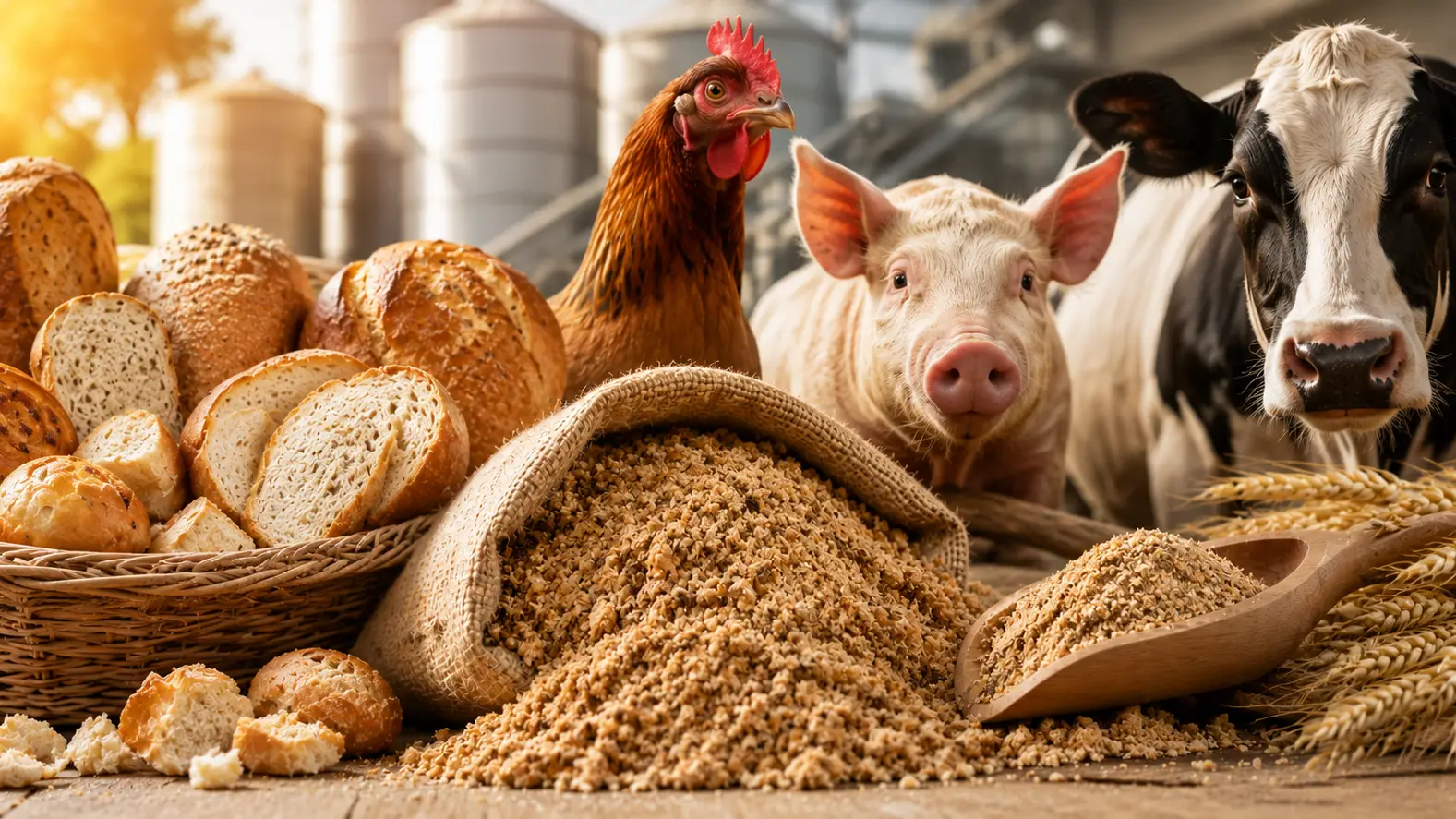
Bakery Meal is produced by collecting surplus bakery products such as bread, biscuits, cakes, crackers, and pastries that remain safe for feed use but are unsuitable for human consumption. These materials are processed, dried, and ground into a consistent ingredient suitable for commercial feed manufacturing.
Its nutritional profile generally includes highly digestible carbohydrates together with moderate fat content, making it an effective energy ingredient for many livestock diets. While exact composition varies depending on raw materials and processing methods, manufacturers typically formulate Bakery Meal within nutritional specifications suitable for different animal species.
According to the Food and Agriculture Organization (FAO), improving resource efficiency through the utilization of food processing by-products contributes to more sustainable agricultural production systems. The conversion of bakery waste into feed ingredients reflects broader efforts to reduce waste while supporting livestock productivity.
As feed producers continue to balance nutrition, sustainability, and operating costs, Bakery Meal has become an increasingly attractive ingredient for commercial feed formulations across global markets.
What Is Bakery Meal and Why Is Demand Increasing?
Drivers Behind Rising Commercial Adoption
Demand for Bakery Meal has increased as feed manufacturers seek alternatives to conventional cereal grains during periods of fluctuating commodity prices. Ingredients capable of providing consistent energy while reducing formulation costs are receiving greater attention from procurement teams worldwide.
The livestock industry's growing emphasis on sustainability has also encouraged the use of recycled food ingredients. Bakery Meal supports circular economy initiatives by transforming surplus food products into valuable agricultural inputs rather than directing them toward landfill disposal.
According to the United States Department of Agriculture (USDA), feed ingredient markets continue to adapt to changing grain availability, economic conditions, and sustainability priorities. Alternative ingredients that maintain nutritional value while improving supply flexibility are becoming increasingly relevant in commercial feed production.
These factors have positioned Bakery Meal as an ingredient that serves both economic and environmental objectives, making it attractive to manufacturers, ingredient traders, and international feed companies.
Industrial Applications Across the Feed Industry
Supporting Multiple Livestock Production Systems
Bakery Meal is incorporated into feed formulations for poultry, swine, cattle, aquaculture, and companion animals where appropriate nutritional specifications can be achieved. Its digestible energy content makes it particularly valuable in diets requiring efficient calorie delivery.
Feed manufacturers often blend Bakery Meal with grains, protein meals, vitamins, minerals, and other nutritional ingredients to optimize complete feed formulations. The ingredient's versatility allows nutritionists to adjust inclusion rates based on animal species, production stage, and targeted performance objectives.
Technical guidance published by the American Feed Industry Association (AFIA) highlights the importance of consistent ingredient quality, nutritional evaluation, and quality assurance throughout feed manufacturing. Reliable processing and quality control remain essential when incorporating alternative feed ingredients into commercial formulations.
As global livestock production continues to expand, Bakery Meal offers feed manufacturers greater formulation flexibility while supporting sustainability initiatives and helping manage raw material procurement costs.
Global Market Trends and Supply Outlook
Sustainability and Circular Economy Drive Market Growth
The global demand for sustainable feed ingredients has accelerated as livestock producers seek solutions that balance nutritional performance, cost efficiency, and environmental responsibility. Bakery Meal has gained attention because it converts surplus bakery products into valuable feed ingredients, supporting circular economy initiatives while reducing food waste. This approach aligns with the growing emphasis on sustainable resource management throughout the agricultural supply chain.
Volatility in grain markets has also encouraged feed manufacturers to diversify their ingredient portfolios. Periods of fluctuating corn and wheat prices often lead procurement teams to evaluate alternative energy sources that can maintain feed quality while improving purchasing flexibility. Bakery Meal provides an additional formulation option that can complement conventional feed ingredients when nutritional specifications are carefully managed.
According to the Food and Agriculture Organization (FAO), global livestock systems are expected to continue improving resource efficiency through greater utilization of agricultural and food-processing by-products. Similarly, market insights published by Rabobank indicate that feed producers are increasingly investing in sustainable sourcing strategies to improve resilience against supply chain disruptions and commodity price fluctuations.
As regional feed production expands across Southeast Asia, Latin America, the Middle East, and Africa, demand for alternative feed ingredients is expected to remain strong. Manufacturers, distributors, and traders capable of supplying consistent-quality Bakery Meal are well positioned to support the evolving requirements of international feed markets.
Buyer Considerations for Bakery Meal Procurement
Evaluating Quality, Consistency, and Supply Reliability
Commercial buyers evaluate Bakery Meal based on several technical and operational criteria before entering supply agreements. Nutritional composition, moisture content, fat levels, microbiological safety, particle size, and storage stability are among the specifications that influence purchasing decisions. Consistent quality is essential because formulation accuracy directly affects livestock performance.
Supply reliability is equally important for feed manufacturers operating continuous production lines. Procurement teams typically assess supplier production capacity, logistics capabilities, inventory availability, packaging options, and export documentation to minimize the risk of supply interruptions. Long-term supplier relationships often contribute to more predictable procurement planning.
Technical recommendations from the American Feed Industry Association (AFIA) emphasize robust quality assurance systems, ingredient traceability, and compliance with feed safety standards throughout the supply chain. Buyers also consider whether suppliers maintain appropriate certifications and quality management practices to support regulatory compliance in destination markets.
Organizations exploring commercial sourcing opportunities can review the Bakery Meal product page for product information, applications, and supply details that support informed procurement decisions within the global feed ingredient marketplace.
Why Reliable Sourcing Matters in the Feed Ingredient Market
Building Long-Term Supply Chain Confidence
Reliable sourcing has become a strategic priority as feed manufacturers face increasing pressure to maintain production efficiency despite changing market conditions. Ingredient consistency supports stable feed formulations, reduces operational risks, and contributes to predictable manufacturing performance across multiple production facilities.
International procurement teams frequently compare suppliers based on quality assurance, regulatory compliance, export experience, logistics capabilities, and customer support. These factors often determine whether suppliers can consistently meet commercial requirements for large-scale feed manufacturing operations across different regions.
According to the International Feed Industry Federation (IFIF), resilient feed supply chains depend on transparent sourcing practices, quality management, and cooperation between manufacturers, distributors, and regulatory authorities. Companies that invest in dependable sourcing partnerships are generally better positioned to respond to changing market demands and maintain business continuity.
Tradeasia, through its feed ingredient marketplace, supports B2B buyers by connecting them with reliable sourcing solutions for industrial feed ingredients, including Bakery Meal. This marketplace approach enables manufacturers, distributors, and procurement professionals to identify suppliers that can support long-term commercial requirements while maintaining product quality and supply consistency.
Buyer Intent
Bakery Meal is typically purchased by animal feed manufacturers, livestock nutrition companies, feed premix producers, agricultural distributors, commercial farms, and international trading companies. Procurement managers, nutritionists, sourcing specialists, and supply chain professionals evaluate the ingredient as part of broader feed formulation strategies designed to balance nutritional performance and production costs.
The product is widely applicable across poultry, swine, cattle, aquaculture, and other livestock sectors where energy-rich feed ingredients contribute to efficient animal production. Depending on formulation objectives and local regulations, Bakery Meal may be incorporated alongside grains, protein meals, vitamins, minerals, and other feed components.
Before selecting a supplier, procurement teams generally assess product specifications, consistency, quality assurance processes, production capacity, logistics support, regulatory compliance, and documentation. These considerations help reduce sourcing risks while supporting uninterrupted manufacturing operations.
The Bakery Meal product page provides buyers with relevant product information that supports supplier evaluation, sourcing discussions, and procurement planning within the international feed ingredient market.
Commercial Positioning
Bakery Meal plays an increasingly important commercial role as the feed industry seeks sustainable and cost-effective ingredient alternatives. By utilizing processed bakery by-products, the ingredient supports circular economy initiatives while offering manufacturers greater flexibility in feed formulation strategies.
Demand is influenced by continued growth in global livestock production, increasing focus on resource efficiency, and ongoing efforts to optimize feed costs. These market drivers create opportunities for manufacturers, distributors, exporters, and procurement organizations seeking dependable ingredient supply.
Reliable sourcing remains essential because feed production depends on consistent ingredient quality, timely deliveries, and transparent supplier relationships. Organizations that establish stable sourcing partnerships are generally better positioned to manage operational risks and respond to changing market conditions.
Tradeasia's marketplace supports this commercial environment by connecting buyers with industrial feed ingredient sourcing solutions, helping procurement teams identify suppliers capable of supporting long-term business requirements without overstating performance or product claims.
Conclusion
Bakery Meal has become an increasingly valuable ingredient within the global animal feed industry due to its combination of nutritional value, commercial practicality, and sustainability benefits. As manufacturers continue to diversify feed formulations and strengthen supply chain resilience, demand for reliable alternative feed ingredients is expected to remain strong.
Market trends indicate continued interest in ingredients that improve resource efficiency while supporting livestock productivity. Procurement teams are placing greater emphasis on supplier reliability, product consistency, regulatory compliance, and long-term sourcing partnerships when selecting feed ingredients for commercial production.
Organizations seeking dependable supply can explore the Bakery Meal product page to review product information, applications, and sourcing opportunities. Access to comprehensive product details supports informed purchasing decisions and strengthens procurement strategies in the global B2B feed ingredient marketplace.
Sources
- Food and Agriculture Organization of the United Nations (FAO). The State of Food and Agriculture and related resources on sustainable food systems.
https://www.fao.org
- American Feed Industry Association (AFIA). Feed industry guidance and quality assurance resources.
https://www.afia.org
- International Feed Industry Federation (IFIF). Publications and guidance on global feed safety and supply chains.
https://www.ifif.org
Leave a Comment