Understanding Bakery Meal in the Feed Supply Chain
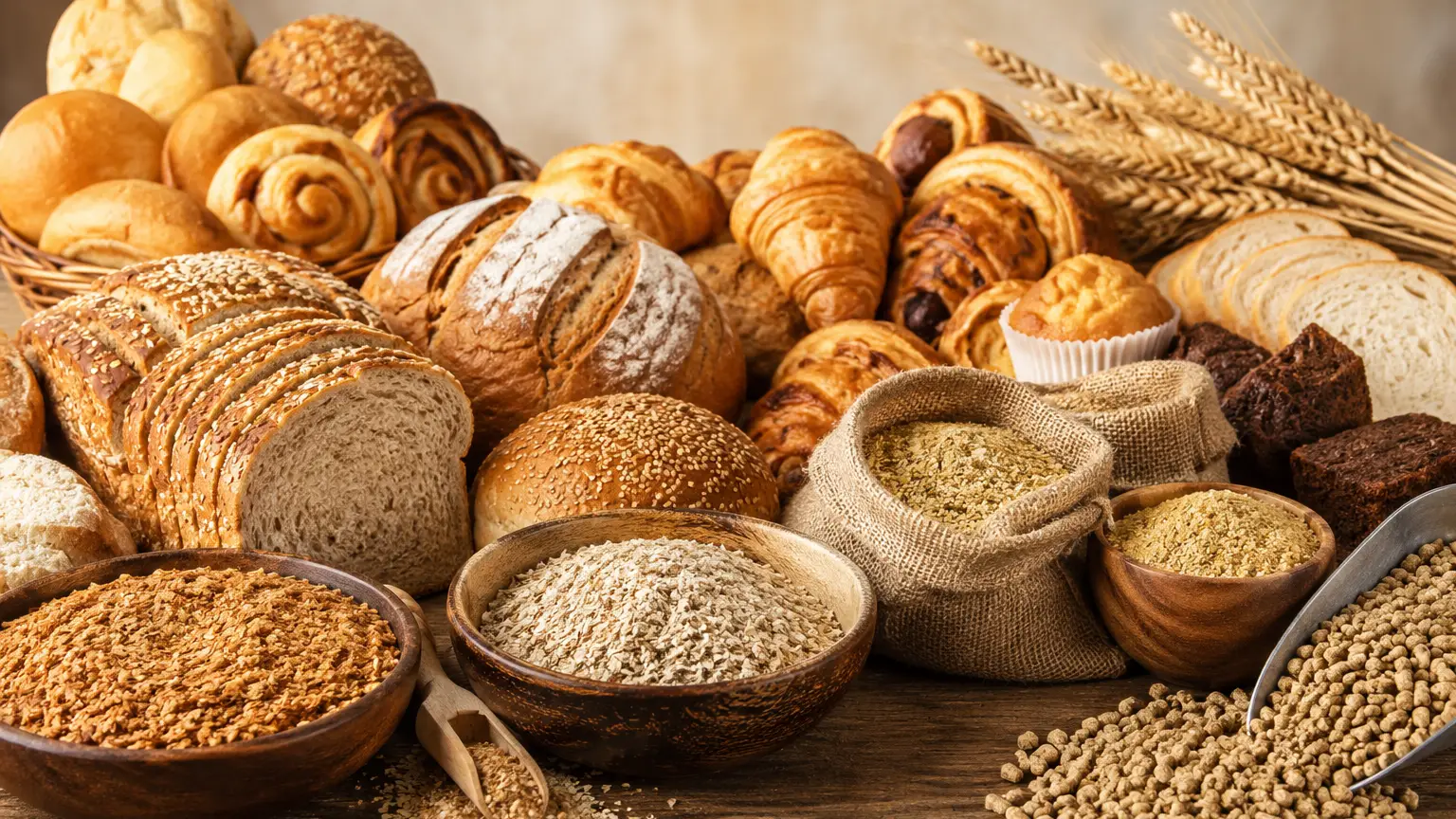
Bakery Meal is a processed feed ingredient derived from dried bakery by-products. It can include bread, chips, crackers, cookies, cereals, and other baked goods that are no longer intended for human consumption. In feed ingredient terminology, bakery by-product meal is recognized as a combination of bakery-industry materials that are dried and ground, creating a stable ingredient suitable for incorporation into animal feed formulations.
What Bakery Meal Is
From a commercial sourcing perspective, Bakery Meal should be viewed as an ingredient with a variable raw-material base rather than as a single standardized food commodity. Its composition can depend on the bakery products entering the processing stream. Tradeasia describes its Bakery Meal as a light-brown powder and identifies bread, crackers, cookies, cereals, chips, and related baked products among the source materials.
Nutritional Role in Feed
The principal commercial attraction of bakery by-product meal is its contribution of energy through starch, sugars, and fat. Published research has reported Bakery Meal sources with meaningful concentrations of crude protein and ether extract, while recent scientific work continues to examine energy digestibility and nutrient utilization in pig diets. This makes Bakery Meal particularly relevant when feed manufacturers are evaluating alternative energy-bearing ingredients.
Why Processing Matters
Processing is important because bakery-derived materials must be separated from non-feed materials, dried, and ground before they can function as a practical feed ingredient. Drying improves storage stability, while grinding supports more consistent handling and mixing in compound-feed production. For commercial buyers, therefore, the value of Bakery Meal is linked not only to its original food inputs but also to the effectiveness of the processing and quality-control system behind the finished material.
Industrial Applications of Bakery Meal
Bakery Meal has its strongest industrial relevance in animal nutrition, where its energy contribution and palatability can support compound-feed formulations. It is commonly associated with poultry and swine diets and has also been evaluated for other livestock applications. The commercial opportunity is therefore not limited to one animal category: demand can extend across feed mills, livestock producers, premix and formulation operations, and distributors serving animal nutrition markets.
Poultry Feed Applications
Poultry feed manufacturers are an important buyer group because Bakery Meal can provide energy-dense material within formulated rations. Commercial application depends on the nutritional profile of the specific supply, the requirements of the finished feed, and the formulation strategy used by the producer. Research and commercial feed-industry information indicate that bakery-derived ingredients can be incorporated into poultry diets when their nutritional contribution and quality are properly characterized.
Swine Feed Applications
Swine nutrition is another established application for bakery by-product meal. Scientific literature describes Bakery Meal as a feed ingredient containing bread, cookies, cake, crackers, and dough, with research examining its digestible and metabolizable energy characteristics in growing pigs. For procurement teams, this application makes Bakery Meal relevant when evaluating alternatives or complementary ingredients for energy supply within swine feed formulations.
Broader Livestock Feed Uses
Beyond poultry and pigs, Bakery Meal can be considered for other livestock feed formulations where its nutritional characteristics are compatible with ration requirements. Commercial suppliers report applications involving dairy and beef cattle, while research into food by-products supports broader interest in recovering nutritional value from bakery streams. The correct use rate, however, remains a formulation decision based on the complete feed specification rather than a universal property of Bakery Meal.
Market Trends Shaping Bakery Meal Demand
The market outlook for Bakery Meal is closely connected to two structural developments: demand for alternative feed resources and greater interest in food-by-product valorization. Bakery Meal converts materials that would otherwise have limited value into a usable feed ingredient, creating a commercial link between food manufacturing waste streams and animal nutrition. This circular-economy role is increasingly relevant to businesses seeking resource-efficient feed supply chains.
Food By-Product Valorization
Food manufacturers and feed producers are increasingly interested in recovering usable nutritional value from food-processing side streams. Bakery Meal fits this model because surplus and unsuitable-for-human-consumption bakery products can be processed into a dry ingredient for animal feed. Research on bakery by-products highlights their potential to contribute energy and nutrients while creating an alternative pathway for materials that might otherwise enter disposal streams.
Alternative Energy Ingredients
Another important trend is the search for feed ingredients that can complement or partially replace conventional energy sources. Bakery Meal contains substantial starch and sugars alongside fat, making it relevant to formulation discussions involving energy density. Scientific studies have consequently examined its digestibility and energy contribution, although variation between sources means that buyers should evaluate actual specifications rather than assume that every Bakery Meal supply has identical nutritional performance.
Standardization and Traceability
As Bakery Meal moves through increasingly sophisticated B2B supply chains, consistency becomes a central commercial issue. Industry literature has long identified variability as one of the major challenges associated with bakery by-products, while newer research continues to document differences between processing sources. This increases the importance of supplier documentation, defined specifications, appropriate testing, traceability, and clear communication between the producer, trader, feed mill, and end user.
Buyer Intent and Procurement Decision Factors
The buyer profile for Bakery Meal is concentrated in organizations that formulate, manufacture, distribute, or procure animal feed ingredients. Feed mills, poultry and swine feed manufacturers, livestock operations, ingredient distributors, commodity traders, and procurement teams can all have commercial reasons to investigate Bakery Meal. Their intent generally moves beyond simple product discovery toward questions about specifications, availability, consistency, packaging, logistics, documentation, and supplier reliability.
Who Buys Bakery Meal
The most relevant buyers are commercial feed manufacturers and distributors serving animal nutrition markets. Poultry and swine feed producers are particularly relevant because these sectors already use bakery-derived ingredients in feed formulations. Buyers may also include livestock-feed companies seeking additional energy sources, ingredient traders building supply portfolios, and procurement teams comparing alternative ingredients for cost and formulation flexibility.
What Procurement Teams Evaluate
A professional Bakery Meal procurement process should examine the material's physical characteristics, nutritional specifications, moisture level, microbiological profile, packaging, shelf life, storage requirements, origin, and available technical documentation. Depending on the destination market and application, buyers may also evaluate regulatory status, certifications, contaminant controls, and traceability. These factors help determine whether a particular supply is appropriate for the buyer's formulation and quality-management system.
Why Buyers Compare Suppliers
Supplier comparison is important because Bakery Meal can vary according to the mixture of bakery inputs and processing conditions. Two products carrying similar commercial names may not necessarily have identical nutrient profiles or physical characteristics. Comparing suppliers therefore helps procurement teams assess total commercial value rather than focusing only on quoted price. A reliable sourcing process considers specification consistency, documentation, supply continuity, packaging, logistics, and the supplier's ability to meet recurring requirements.
Quality and Sourcing Considerations
Quality management is one of the most important elements of Bakery Meal sourcing. Because the material originates from multiple bakery-product streams, buyers need to understand what enters the production system and how those materials are processed before becoming finished feed ingredients. The supplier's technical specification should be considered alongside the buyer's own feed-formulation, regulatory, and quality requirements.
Nutritional Specifications
Nutritional parameters such as crude protein, fat, fiber, ash, starch, sugars, and available energy can influence how Bakery Meal is incorporated into a ration. Published studies show meaningful variation between Bakery Meal sources, reinforcing the need to evaluate product-specific analytical data. A buyer should therefore use the supplier's current technical documentation and, where required, independent testing to confirm that the material fits the intended formulation.
Physical and Microbiological Quality
Physical characteristics influence storage, transport, and feed-mill handling, while microbiological quality is essential for feed safety. Tradeasia's product information identifies a light-brown powder or crumble form and provides specifications covering moisture and microbiological parameters for its listed supply. Such information gives procurement teams a practical starting point for technical qualification, although final acceptance should always be based on the buyer's applicable specifications and destination-market requirements.
Documentation and Regulatory Fit
Documentation can be as important as the material itself when sourcing internationally. Buyers may need technical data sheets, safety documentation, origin information, certifications, and regulatory declarations depending on the application and importing market. A structured sourcing process should establish these requirements before purchase so that the commercial transaction, feed-manufacturing process, and destination-market compliance expectations remain aligned.
Supply Chain and Commercial Opportunities
Bakery Meal creates a distinctive supply-chain opportunity because its raw-material base originates from the food industry while its end market is animal nutrition. This creates commercial roles for processors, manufacturers, traders, distributors, and feed companies. A marketplace model can help connect these participants by making product information and sourcing requirements easier to communicate across international B2B transactions.
Manufacturer and Trader Opportunities
Manufacturers can position Bakery Meal as a value-added feed ingredient produced through the controlled recovery and processing of bakery by-products. Traders and distributors can create additional value through sourcing, consolidation, documentation, logistics coordination, and access to regional buyers. For procurement teams, the commercial benefit comes from having access to a defined product offering and a sourcing channel that can support recurring industrial requirements.
Logistics and Storage
Because Bakery Meal is a dried feed ingredient, storage and logistics management remain important to maintaining product condition. Supplier information identifies dry, pest-free storage as a requirement and describes packaging in 50 kg PP woven bags. Buyers should evaluate transport conditions, warehouse suitability, packaging integrity, shelf life, and expected transit time as part of landed-cost and supply-continuity analysis rather than treating the quoted product price as the complete procurement cost.
Digital B2B Sourcing
Digital marketplaces can make product discovery more efficient by bringing product specifications, application information, supplier communication, and inquiry channels into one commercial environment. For buyers researching Bakery Meal sourcing, the Bakery Meal sourcing page can serve as a starting point for reviewing the product and moving from technical evaluation toward a commercial inquiry. This approach is particularly useful for procurement teams comparing suppliers across regions.
Strategic Outlook for Bakery Meal Buyers
The commercial outlook for Bakery Meal depends less on a single headline market-growth figure and more on the continuing interaction between feed formulation economics, availability of bakery by-products, quality standardization, and demand for resource-efficient ingredients. Its established use in animal nutrition gives the product a practical industrial foundation, while food-waste valorization provides an additional sustainability-oriented rationale for evaluating it.
Building a Reliable Supply Strategy
For recurring industrial users, the objective should be to build a supply strategy around defined specifications rather than opportunistic spot purchases alone. Buyers can establish acceptable nutritional ranges, physical requirements, microbiological criteria, documentation requirements, packaging formats, and delivery expectations before comparing commercial offers. This makes supplier qualification more transparent and helps procurement teams distinguish between nominally similar Bakery Meal products.
Matching Applications With Supply
Application requirements should remain central to sourcing decisions. A poultry feed producer, swine feed manufacturer, and livestock-feed distributor may have different formulation requirements even when purchasing the same broad ingredient category. Buyers should therefore assess Bakery Meal against the intended animal species, feed formulation, inclusion strategy, quality system, and regulatory environment. This application-led approach can improve purchasing decisions and reduce the risk of selecting a supply solely because of price.
Commercial Role of Tradeasia and Chemtradeasia
For B2B buyers, Tradeasia, Chemtradeasia, and Tradechem Marketplace can be positioned as sourcing channels connecting industrial demand with feed-ingredient supply. The commercial value is strongest when marketplace information helps buyers understand the product's applications, technical considerations, and procurement relevance before initiating an inquiry. For buyers evaluating Bakery Meal, the Bakery Meal product page provides a direct product-specific entry point for sourcing discussions.
Bakery Meal is therefore more than a generic bakery by-product: it is a commercially relevant feed ingredient whose value depends on application fit, nutritional characteristics, processing quality, and dependable supply. For feed manufacturers, distributors, traders, and procurement teams, the most effective sourcing strategy combines technical qualification with supplier comparison and supply-chain planning. As interest in alternative feed resources and food-by-product valorization continues, a structured B2B sourcing approach can help buyers identify suitable Bakery Meal opportunities while maintaining the quality and consistency required for industrial feed production.
Leave a Comment