Understanding Bakery Meal in the B2B Feed Market
What bakery meal is
Bakery meal is a processed feed ingredient derived from mixed bakery by-products, including products such as bread, chips, crackers, cookies, cereals, and other baked goods that are no longer intended for human consumption. The Tradeasia product specification identifies Bakery Meal as a solid, light-brown powder or crumbly material with a baked-goods odor, originating from the United States and classified under HS Code 230990. Its commercial positioning is therefore primarily within the feed-ingredient and animal-nutrition supply chain rather than the food manufacturing sector.
From a formulation perspective, the product is positioned as an energy-oriented ingredient. The supplied specification lists crude protein at 10–14%, crude fat at 7–10%, crude fiber at a maximum of 2.5%, and ash at a maximum of 4.0%. The product description also identifies starch and sugars as important contributors to its nutritional profile. These characteristics help explain why bakery meal is commercially relevant to feed manufacturers seeking ingredients that can contribute energy and palatability within formulated rations.
Why processing matters to buyers
Processing is an important part of the bakery meal value proposition because bakery by-products need to be converted into a stable feed ingredient before large-scale handling and storage. The Tradeasia product information describes separation and depackaging, shredding, and drying to approximately 90% dry matter. It also notes that processes such as extrusion and pelletization have been evaluated for preservation and storage of bakery by-products.
For B2B buyers, this means bakery meal should not be evaluated simply as recycled bakery material. The commercial product needs to be assessed according to its defined specification, processing history, microbiological profile, contaminant controls, storage requirements, and documentation. Tradeasia's listed specifications include moisture below 12%, negative Salmonella testing in 25 g, stated yeast and mould limits, an aflatoxin B1 limit, and compliance for listed heavy metals, giving procurement teams concrete parameters to review during supplier qualification.
Bakery Meal Applications Across Animal Feed
Poultry and swine feed applications
Poultry and swine are among the most commercially relevant application areas for bakery meal. The Tradeasia product information specifically identifies poultry and pigs as common users and notes that bakery meal has also been used as an alternative grain ingredient for different livestock species. This makes feed mills, livestock-feed formulators, and integrated animal-production companies important buyer groups when assessing the addressable market for the ingredient.
Scientific research supports continued interest in bakery meal within swine nutrition, while also emphasizing the importance of source-specific evaluation. A 2025 study published in Animals examined bakery meal and biscuit meal in growing pigs and reported that their nutritional value can make them relevant alternatives to conventional energy ingredients, while noting that variation in composition remains an important consideration. For procurement teams, the commercial lesson is straightforward: application suitability depends on the actual specification of the supplied material rather than the product name alone.
Broader livestock and feed-formulation opportunities
The application opportunity extends beyond poultry and pigs because bakery by-products can provide energy-containing material for other livestock diets. Feedipedia, a FAO-supported feed-resource database, describes bakery waste as a feed material used for farm animals and highlights its relatively high carbohydrate and fat content, while also emphasizing that composition can vary considerably. This variability makes laboratory analysis and formulation expertise particularly important when expanding bakery meal into additional livestock applications.
Research into ruminant nutrition also illustrates why bakery by-products continue to receive attention as alternative feed materials. Recent scientific work has investigated their digestibility, fermentation characteristics, and potential role in circular feed systems. These findings do not mean that bakery meal should automatically replace a conventional ingredient in every formulation; instead, they reinforce its position as a material that nutritionists can evaluate according to diet objectives, nutrient specifications, animal category, and local feed regulations.
Market Trends Shaping Bakery Meal Demand
Circular feed and food-by-product valorization
One of the clearest trends supporting interest in bakery meal is the broader movement toward circular use of food-system by-products. Research published in the Journal of Cleaner Production identifies bakery by-products and other former food products as potential alternative feed ingredients and links their reuse with food-waste prevention and reduced competition between food and feed resources. This provides an important market context for bakery meal: its commercial value comes not only from nutrient contribution but also from converting an existing food-industry side stream into a usable feed resource.
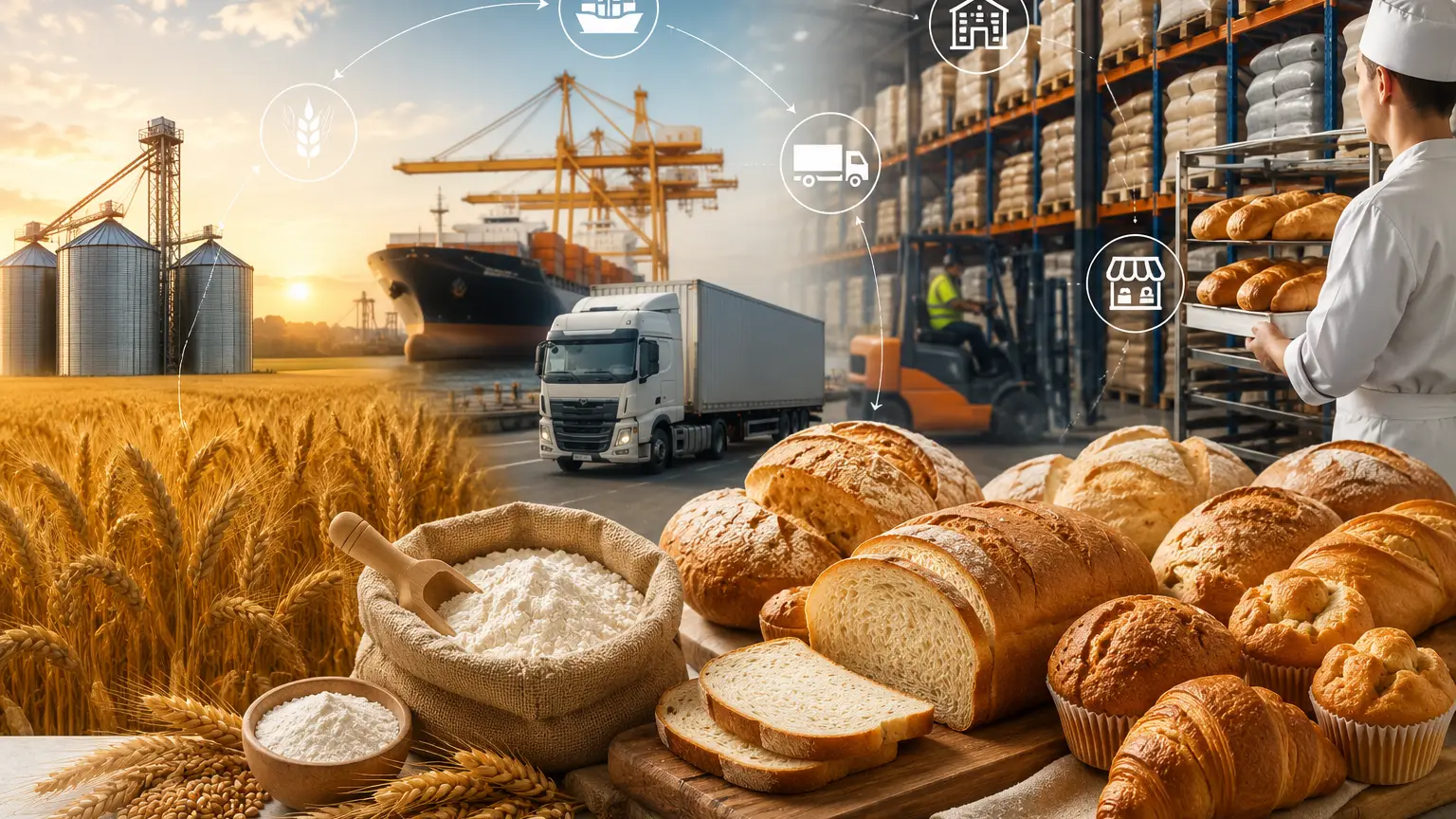
The circular-economy perspective is also reflected in more recent studies of bakery meal production and livestock feeding. Research on the Greek pig sector has examined bakery meal as part of a circular bioeconomy pathway, including collection, processing, transportation, and incorporation into pig diets. Such work indicates that demand development is closely connected to the ability of supply chains to collect, process, separate, and transport bakery-derived materials consistently and safely.
Consistency and sustainability as purchasing factors
Sustainability alone does not determine whether a feed manufacturer will purchase bakery meal. Commercial buyers also need predictable nutrient characteristics, suitable moisture, microbiological control, manageable storage, and dependable logistics. Recent research has demonstrated measurable differences in energy values among different bakery meal sources, reinforcing the importance of evaluating individual supply streams rather than assuming that every bakery meal product has the same nutritional performance.
This creates an opportunity for professional ingredient marketplaces and distributors that can connect buyers with defined specifications and relevant technical documentation. Tradeasia's listed Bakery Meal specification provides parameters covering moisture, microbiological indicators, crude protein, crude fat, fiber, ash, aflatoxin B1, heavy metals, packaging, storage, and certifications available on request. For procurement teams, such information helps move sourcing discussions from a generic commodity comparison toward a specification-based purchasing process.
What B2B Buyers Should Evaluate Before Sourcing
Quality and specification requirements
When sourcing bakery meal, buyers should begin by defining the technical parameters that matter to their feed formulation. These can include moisture, crude protein, crude fat, fiber, ash, microbiological limits, contaminant controls, physical form, packaging, and shelf life. The Tradeasia specification provides a useful commercial reference point, listing a six-month shelf life, 50 kg PP woven-bag packaging, cool and dry pest-free storage, and defined microbiological and contaminant criteria.
Nutrient consistency deserves particular attention because bakery by-products are inherently heterogeneous materials. FAO's Feedipedia notes that bakery waste composition can vary substantially depending on its constituent materials and source, while scientific studies have likewise found differences between bakery meal sources. Consequently, professional procurement should compare supplier specifications, certificates of analysis, sampling procedures, and historical consistency instead of evaluating suppliers solely on quoted price.
Documentation, safety, and logistics
Feed safety is another central sourcing consideration. The Tradeasia specification identifies Bakery Meal as feed grade and provides values for total plate count, yeast and mould, E. coli, Salmonella, aflatoxin B1, and heavy metals. It also states that ISO/HACCP systems are available and that Halal and Kosher certification can be made available on request. These details are commercially relevant because buyers may need to align incoming ingredients with internal quality systems and destination-market requirements.
Logistics should be evaluated alongside laboratory specifications because a technically suitable ingredient can still become commercially unattractive if handling and delivery do not match production requirements. Buyers should therefore consider packaging format, shelf life, storage conditions, shipment frequency, lead times, origin, and documentation before approving a supplier. For procurement teams evaluating the available specification, the Bakery Meal product page provides a direct reference for product characteristics and sourcing inquiries.
Supply Opportunities for Feed Ingredient Buyers and Traders
Opportunities for manufacturers and distributors
Bakery meal creates a sourcing opportunity for feed manufacturers that want to diversify energy-containing feed ingredients and for distributors serving livestock-nutrition customers. Its classification as a feed ingredient, combined with its documented protein, fat, carbohydrate, fiber, and ash characteristics, gives buyers a defined basis for evaluating where it may fit within their product portfolios. The opportunity is particularly relevant where customers are already evaluating alternative or recovered food-industry feed materials.
For distributors and ingredient traders, commercial differentiation is likely to depend on more than product availability. Buyers increasingly need specification transparency, quality documentation, predictable packaging, and reliable delivery. A marketplace approach can therefore help suppliers present a product around technical information and application relevance while allowing procurement teams to compare sourcing options according to their own feed-manufacturing requirements.
Opportunities for procurement teams
Procurement teams can use bakery meal as part of a broader ingredient-diversification strategy, particularly when evaluating energy-rich alternative materials. Research on bakery meal in pig diets and broader studies on former food products indicate that such ingredients can be technically relevant, but their nutritional characteristics should be assessed on a source-by-source basis. This makes supplier qualification, product testing, and communication between purchasing and nutrition teams essential components of commercial sourcing.
Tradeasia's marketplace positioning can support this process by presenting Bakery Meal with defined product information rather than treating it simply as an undifferentiated commodity. The product is identified with a United States origin, HS Code 230990, 50 kg packaging, feed-grade status, technical specifications, and inquiry functionality. Buyers seeking detailed commercial information can use the Bakery Meal sourcing page as the starting point for supplier and purchasing discussions.
Buyer Intent and Commercial Sourcing Strategy
Who buys bakery meal
The most relevant buyer groups include animal-feed manufacturers, feed mills, livestock nutrition companies, ingredient distributors, commodity traders, and procurement teams responsible for sourcing feed materials. Poultry and swine feed manufacturers are particularly relevant because the product information identifies these as established application areas, while broader livestock-feed users may evaluate bakery meal when its nutritional profile and local regulatory requirements make it appropriate.
Buyer intent typically develops in stages. An early-stage search may focus on terms such as “bakery meal uses” or “bakery meal applications,” while a commercially mature buyer is more likely to search for a bakery meal supplier, specification, packaging option, origin, or quotation. This makes bakery meal a strong B2B marketplace content topic because a single article can address technical discovery while also providing a pathway toward product-level procurement information.
How suppliers are compared
When buyers compare bakery meal suppliers, price is only one part of the decision. Procurement teams may compare nutrient specifications, moisture, microbiological controls, contaminant limits, packaging, shelf life, certifications, origin, shipment capability, documentation, and consistency between lots. Scientific literature reinforces this approach because differences between bakery meal sources can influence their energy and nutritional characteristics.
The commercial role of a B2B marketplace is therefore to reduce information friction between qualified suppliers and buyers. For Bakery Meal, the available product information gives procurement teams an initial technical framework while allowing them to progress toward pricing, customization, shipping, and other transaction-specific discussions. For buyers assessing the product as part of an industrial feed-ingredient program, the Bakery Meal supplier information is the appropriate next step for moving from market research to sourcing evaluation.
Leave a Comment