Understanding Bakery Meal and Its Commercial Position
What Bakery Meal Is
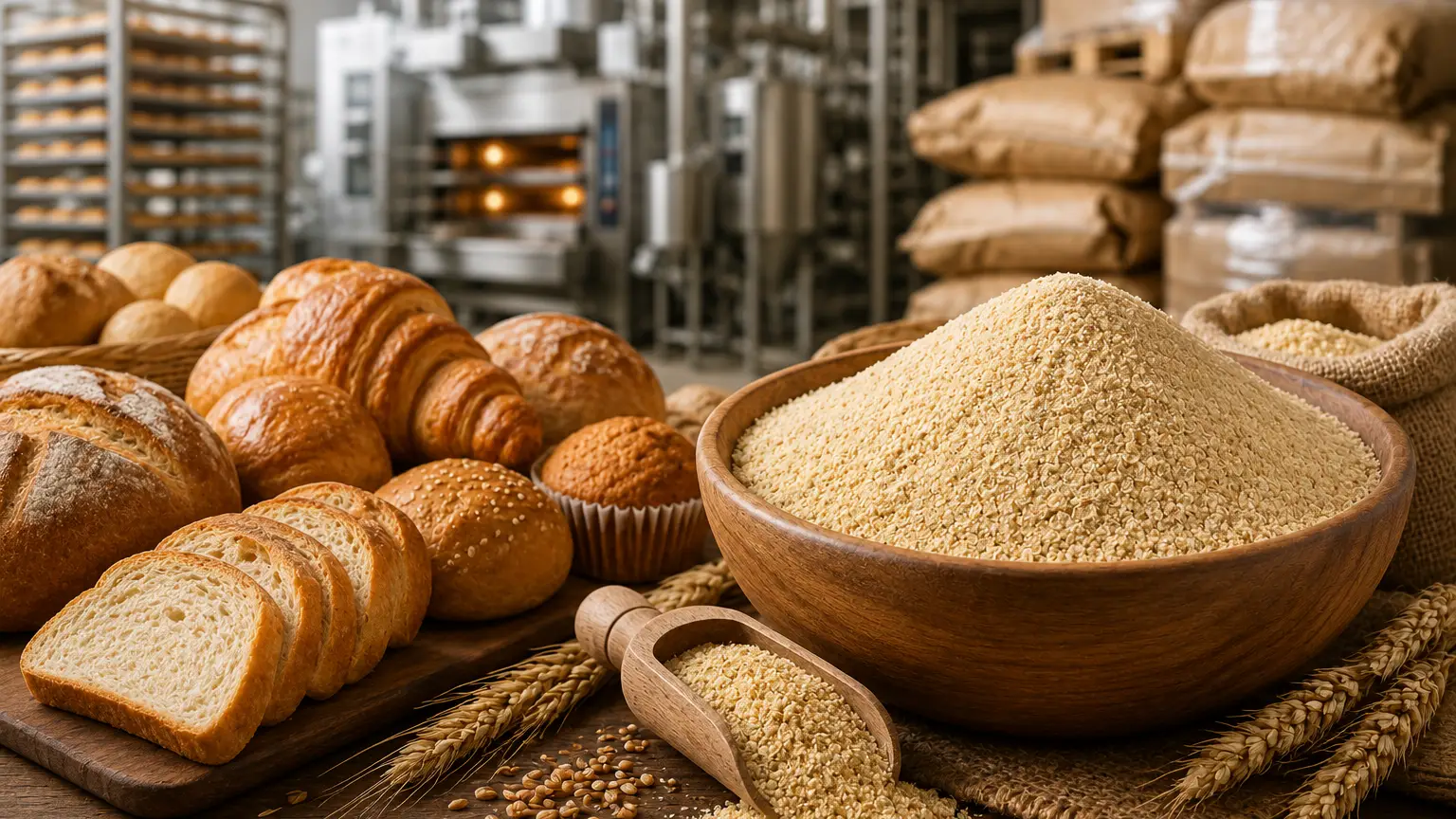
Bakery meal is a feed-grade ingredient produced from dried bakery by-products that are no longer intended for their original human-food purpose. According to the Tradeasia product specification, the material can contain a combination of bread, chips, crackers, cookies, cereals, and other baked products. The listed product is supplied as a light-brown powder or crumbles and originates from the United States, with a stated feed-grade classification. Bakery Meal product page
From a nutritional perspective, bakery meal is commercially interesting because its composition is associated with substantial carbohydrate and energy content. The product information specifies approximately 55–62% dry-matter starch plus sugars, 7–10% fat, and 10–14% crude protein. Independent scientific research likewise describes bakery meal as an ingredient commonly used in pig and poultry diets, while emphasizing that its nutritional composition can vary according to the original bakery materials.
Why Bakery Meal Matters Commercially
The commercial proposition extends beyond nutrition. Bakery meal converts food-industry residual streams into a feed ingredient, connecting animal nutrition with resource-efficiency objectives. A 2023 scientific study published in Sustainability examined bakery former food products as pig-feed ingredients and described bakery meal production as a pathway for valorizing bakery by-products within a circular bioeconomy.
For manufacturers and distributors, this creates a product category where demand can be influenced by feed formulation economics, availability of conventional grains, sustainability objectives, and the need for dependable alternative ingredients. However, bakery meal should not be treated as a uniform commodity: buyers need to assess nutrient variability, food-safety controls, origin, processing, and documentation before integrating a supply into commercial feed programs. The European Commission's animal-feed framework similarly emphasizes that feed must be safe, traceable, and produced under appropriate controls.
Bakery Meal Applications in Animal Feed
Bakery Meal for Poultry Feed
Poultry feed is one of the established applications for bakery meal. Its relatively high carbohydrate and energy contribution can make it relevant when formulators are evaluating ingredients that can contribute energy alongside conventional cereal-based raw materials. The Tradeasia specification identifies poultry as a common end-use sector, while scientific literature has historically investigated dried bakery products as components of broiler diets.
For poultry-feed manufacturers, the practical value of bakery meal depends on formulation objectives rather than simply its presence in a feed recipe. Moisture, fat, starch, sugar, ash, microbial quality, and consistency can affect how the ingredient fits into a finished formulation. A procurement team therefore needs to evaluate bakery meal against the nutritional profile of the existing feed program and determine whether its characteristics are compatible with the manufacturer's formulation and production process.
Bakery Meal for Swine Feed
Swine nutrition is another important application for bakery meal. Recent research published through the National Library of Medicine found that bakery meal can provide energy and nutrients comparable to or greater than conventional corn benchmarks in specific experimental contexts, while also noting that variation in ingredient composition remains a constraint on wider utilization.
This variability makes specification management particularly important for pig-feed buyers. Research from Wageningen University & Research has also investigated dry bakery residual streams as grain replacements in piglet feed, reflecting continued interest in circular feed systems. Such developments indicate that bakery by-products are increasingly being considered not simply as waste-management outputs but as potentially useful components of structured feed formulations.
Market Demand and Emerging Feed Trends
Circular Feed and By-Product Valorization
One of the most relevant trends influencing bakery meal market demand is the broader movement toward circular use of food-industry resources. Scientific research has specifically evaluated bakery meal as part of a circular bioeconomy approach, including traceability and controlled processing from former bakery food products into feed ingredients.
This trend matters commercially because feed manufacturers are increasingly evaluating alternative raw materials through several lenses at once: nutritional value, cost competitiveness, availability, safety, and resource efficiency. Bakery meal can fit this conversation because it gives a productive end-use pathway to suitable bakery by-products. Nevertheless, circularity does not eliminate the need for technical controls; processing, contamination prevention, storage, and traceability remain central to responsible feed sourcing.
Nutritional Efficiency and Alternative Ingredients
Another demand driver is the search for alternative feed ingredients that can contribute energy to livestock diets. A recent study of bakery and biscuit meals reported that these ingredients can offer useful nutritional and digestibility characteristics while highlighting the substantial variation that can occur between sources.
For buyers, this means the market opportunity is increasingly tied to consistent specifications rather than product availability alone. Feed manufacturers may be more interested in suppliers that can provide repeatable nutrient profiles, appropriate microbiological controls, reliable shipment schedules, and technical documentation. The European Commission's feed-marketing and hygiene framework reinforces the importance of regulatory compliance and responsible handling across the feed supply chain.
What B2B Buyers Evaluate Before Sourcing
Bakery Meal Quality Specifications
Procurement teams evaluating bakery meal typically need to examine physical, nutritional, microbiological, and contaminant specifications together. The Tradeasia product information lists moisture below 12%, crude protein at 10–14%, crude fat at 7–10%, crude fiber at a maximum of 2.5%, and ash at a maximum of 4.0%. It also lists microbial specifications including total plate count, yeast and mould, E. coli, and negative Salmonella testing at the stated sampling level. Bakery Meal supplier information
These specifications are commercially significant because moisture influences storage stability, while nutrient levels influence formulation and cost calculations. Buyers should also assess the supplier's analytical methodology, certificate-of-analysis process, batch consistency, contaminant controls, and documentation requirements. The European Commission states that feed safety controls extend across the stages of production, processing, distribution, and use, making supply-chain quality management an important part of procurement.
Why Buyers Compare Suppliers
Supplier comparison is particularly important for bakery meal because the raw material mix can differ between production batches and supply sources. Scientific research has identified variability in the nutrient composition of bakery meals, meaning that two products marketed under the same general description may not necessarily perform identically in a feed formulation.
B2B buyers therefore commonly consider more than quoted price. They may compare origin, specification ranges, testing documentation, packaging, shelf life, storage requirements, certifications, minimum order quantities, logistics, and the supplier's ability to support repeat procurement. The Tradeasia listing specifies 50 kg PP woven-bag packaging, a six-month shelf life, cool and dry storage, ISO/HACCP status, and halal and kosher certification availability on request, giving buyers concrete criteria to assess during supplier qualification. Bakery Meal sourcing page
Supply Chain and Commercial Sourcing Considerations
Storage, Handling, and Logistics
Bakery meal is supplied as a dry solid, and appropriate storage is essential for preserving product quality throughout the supply chain. The product specification identifies cool, dry, pest-free storage conditions and a six-month shelf life. Its listed manufacturing description also explains that bakery by-products are depackaged, shredded, and dried to approximately 90% dry matter to improve storage characteristics. Bakery Meal for industrial applications
From a procurement perspective, these characteristics connect technical specifications with logistics planning. Buyers need to consider warehouse conditions, packaging integrity, transport duration, humidity exposure, pest management, and inventory turnover when assessing a supplier. Feed-hygiene requirements are similarly designed to control risks throughout production and distribution, with the European Commission emphasizing good hygiene practices and HACCP principles for relevant feed businesses.
Documentation and Regulatory Fit
Documentation is another important part of commercial bakery meal sourcing. Buyers may require technical data sheets, certificates of analysis, microbiological results, contaminant information, origin documentation, certification records, and other information required by their internal quality systems or destination-market regulations.
Regulatory requirements can differ by jurisdiction, making destination-market compliance an important part of international sourcing. The European Commission, for example, establishes rules covering the marketing and use of feed materials and compound feed and provides guidance concerning food products no longer intended for human consumption. Buyers importing bakery meal should therefore confirm applicable national requirements rather than assuming that a specification suitable in one market automatically satisfies another market's rules.
Buyer Intent and Marketplace Opportunities
Who Buys Bakery Meal
The strongest commercial buyer groups include compound-feed manufacturers, poultry-feed producers, swine-feed manufacturers, livestock nutrition businesses, feed-ingredient distributors, commodity traders, and procurement teams seeking alternative energy sources for animal-feed formulations. These buyers generally have a recurring need for ingredients that can be sourced at commercial scale and evaluated against defined technical specifications.
Demand can also originate from businesses developing circular-feed strategies or seeking to diversify their raw-material portfolio. Research into bakery by-products for pig and poultry nutrition demonstrates that the application is sufficiently established to support technical evaluation, while recent work on circular feed systems shows continued interest in converting suitable food-sector residual streams into animal-feed inputs.
How a B2B Marketplace Supports Sourcing
For procurement teams, a marketplace product page can function as an initial supplier-qualification resource by consolidating information about origin, physical characteristics, nutritional specifications, microbiological limits, packaging, shelf life, certifications, and storage requirements. This reduces the gap between an initial product search and a more detailed commercial inquiry.
Tradeasia's bakery meal listing provides a direct route for buyers seeking pricing, customization, shipping information, and technical documentation. This marketplace positioning is particularly relevant when buyers are comparing alternative suppliers and need to move from general market research toward a qualified sourcing conversation. The product page can therefore serve both informational search intent and commercial procurement intent. Bakery Meal product page
Conclusion: Building a Reliable Bakery Meal Supply Strategy
Market Opportunity for Suppliers and Buyers
Bakery meal occupies an interesting position within the feed-ingredient market because it combines nutritional utility with the valorization of bakery-sector by-products. Its established relevance to poultry and swine feed, together with ongoing research into circular feed systems, supports its role as an ingredient worth evaluating when manufacturers are seeking alternative energy-bearing raw materials.
For suppliers, traders, and distributors, the commercial opportunity depends on providing more than a commodity product. Consistent specifications, traceability, appropriate processing, microbiological controls, reliable packaging, and dependable logistics can all influence whether a bakery meal source becomes part of a buyer's recurring procurement program. These requirements align with the wider feed industry's emphasis on safe and controlled supply chains.
Turning Sourcing Interest into Procurement Action
For buyers, the most effective approach is to evaluate bakery meal according to the requirements of the intended feed application and destination market. Nutrient composition, moisture, fat, ash, fiber, microbiological status, contaminant controls, origin, packaging, certifications, shelf life, and commercial logistics should be reviewed before a supply is approved for routine use.
Tradeasia / Chemtradeasia can serve as a marketplace entry point for businesses researching bakery meal suppliers and commercial supply options. Buyers can review the Bakery Meal supplier information and use the available product information as the starting point for inquiries concerning specifications, pricing, customization, shipping, and documentation. As demand for alternative and circular feed ingredients develops, structured sourcing and supplier qualification will remain central to building a resilient bakery meal supply strategy.
Sources
Leave a Comment