Introduction
As of 2026, bakery meal has emerged as a strategically important platform chemical and feed ingredient derived from surplus bakery products, processed into a cost-effective energy source for livestock and pet nutrition industries. Its growing relevance is underpinned by sustainability-driven feed formulations and circular economy initiatives across Europe, the Middle East, and Asia-Pacific. The global bakery meal market is expanding at a steady 4.8% CAGR, supported by rising demand for alternative carbohydrate-rich feed inputs. Market pricing remains competitive at USD 180–320/MT, while global production volumes are estimated at approximately 3.2 million MT, reflecting strong integration of food waste valorization systems.
Application Expansion Across Feed and Food Systems
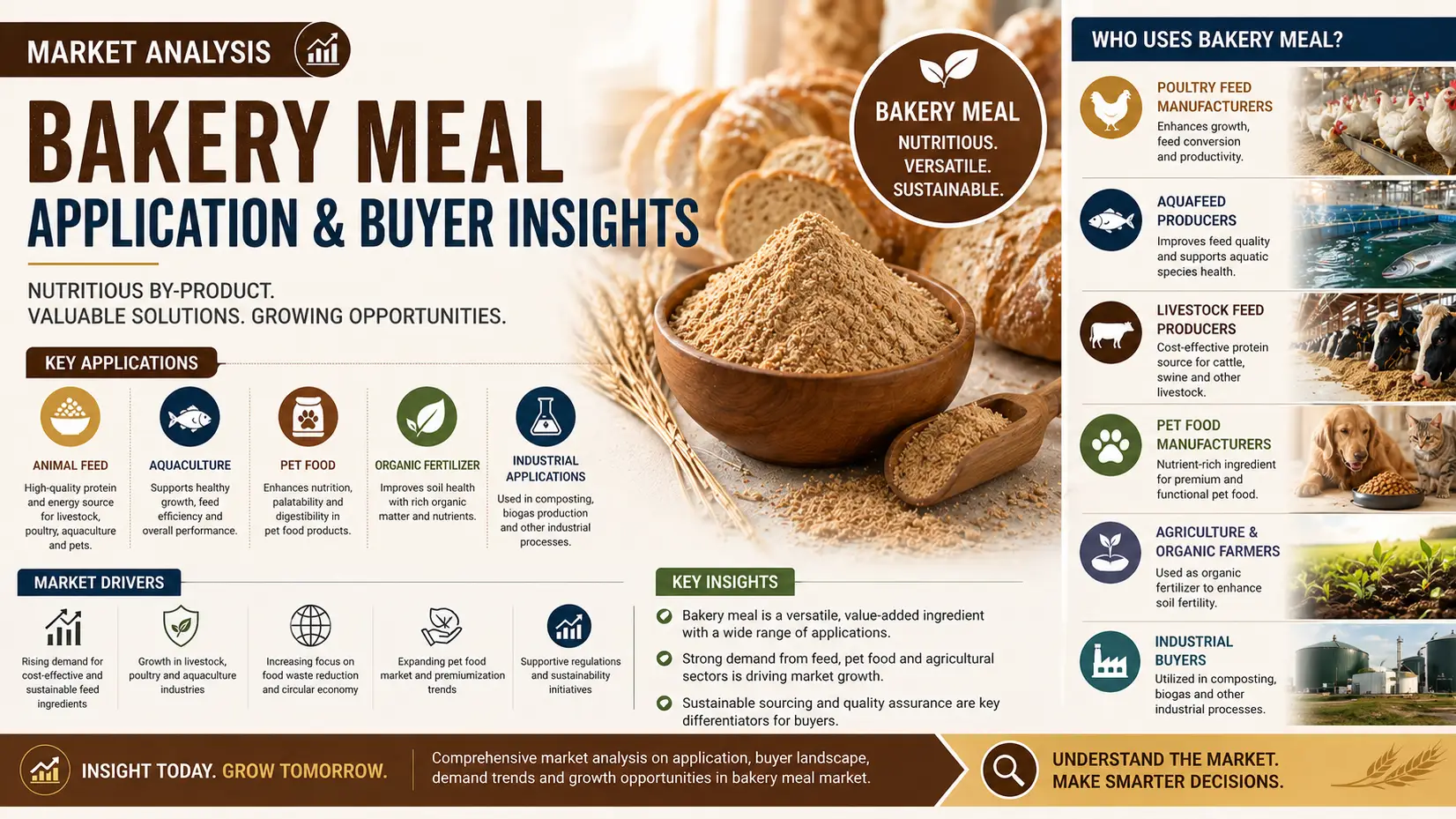
Bakery meal is primarily utilized in compound animal feed formulations for poultry, swine, and ruminants due to its high carbohydrate content and digestibility profile. Feed manufacturers are increasingly blending bakery meal with corn and wheat middlings to reduce raw material volatility. In 2026, feed-grade consumption accounts for nearly 68% of total demand, with premium formulations gaining traction in pet food applications where palatability is essential.
Industrial Buyers and Procurement Channels
Key buyers include large-scale feed mill operators, integrated poultry producers, and aquaculture feed companies seeking low-cost energy substitutes. Procurement is often structured through long-term contracts with bakery manufacturers and food processing firms to secure consistent supply. In emerging markets, traders and commodity aggregators play a crucial role in balancing seasonal supply fluctuations, particularly in regions where bakery waste recovery infrastructure is still developing.
Regional Supply Dynamics and Production Footprint
Europe remains the most mature production hub, driven by strict food waste diversion policies, while Asia-Pacific is rapidly scaling output due to expanding bakery industries. North America maintains stable production linked to large retail bakery chains. Logistics efficiency and moisture control during processing are critical factors influencing quality consistency, with export-oriented suppliers investing in pelletization technology to improve shelf life and transport economics.
Value Chain Optimization and Sustainability Trends
Market participants are increasingly focusing on upcycling bakery waste streams into standardized feed ingredients, reducing reliance on virgin grain resources. Digital traceability systems are being introduced to ensure quality compliance across supply chains. The shift toward sustainable protein production systems has positioned bakery meal as a transitional input in circular agriculture models, particularly in regions targeting carbon reduction in livestock production.
Conclusion
Bakery meal, as a platform chemical in the evolving feed economy, continues to bridge food waste valorization and cost-efficient livestock nutrition. Its integration across feed, pet food, and industrial fermentation pathways underscores its versatility and long-term relevance in global supply chains. As demand intensifies, stakeholders are prioritizing scalable sourcing and consistent quality standards to support industrial adoption. In this context, Tradeasia International emerges as a reliable global solution provider, facilitating seamless procurement, distribution, and technical support for bakery meal across diverse end-use industries, enabling buyers to navigate volatility while securing sustainable supply partnerships.
Sources
-
https://www.futuremarketinsights.com/reports/bakery-meal-market
-
https://www.feedingredientsasia.com/en/market-insights/bakery-meal-market-growth-buyers-analysis-2026
-
https://www.oleochemicals.com/palm-derivatives-market/
Leave a Comment