Industrial Applications and Growth of Bakery Meal in Global Markets
Global Market Overview of Bakery Meal
Expanding Role in Grain-Based Commodity Markets
Bakery meal is increasingly recognized as a cost-efficient grain-derived ingredient used across food processing and feed manufacturing sectors. It typically originates from bakery or milling byproducts that are repurposed into functional bulk ingredients. Its economic value lies in its ability to reduce raw material costs while maintaining nutritional and structural utility in formulations.
According to the Food and Agriculture Organization (FAO), global grain byproduct utilization has expanded due to rising demand for circular food systems and cost optimization in agro-processing industries. Bakery meal fits within this trend as a recycled input stream that supports sustainable production models.
In industrial markets, bakery meal is positioned between raw grain inputs and processed flour derivatives. This intermediate positioning allows manufacturers to balance cost and performance in large-scale production environments.
Its demand is closely linked to fluctuations in wheat and cereal processing outputs, making it a responsive commodity within global agricultural trade cycles.
Market Drivers in Food and Feed Industries
The growth of bakery meal consumption is strongly tied to expansion in animal feed manufacturing and industrial bakery production. Feed formulators increasingly rely on grain-based byproducts to stabilize costs while maintaining nutritional profiles.
The U.S. Department of Agriculture (USDA) highlights that feed ingredient diversification is a key strategy in managing volatility in global grain markets, which directly supports demand for secondary grain materials such as bakery meal.
Food manufacturers also utilize bakery meal in processed formulations where texture, binding, or bulk extension is required. This dual-use capability strengthens its position in both food and feed sectors.
As global food systems intensify, bakery meal continues to serve as a bridging material between raw agricultural production and industrial food manufacturing demand.
Industrial Applications in Food and Feed Manufacturing
Bakery meal is widely used in industrial bakery systems as a functional extender and texture-enhancing ingredient. It supports consistency in dough systems and bulk formulation strategies in large-scale production.
The European Food Safety Authority (EFSA) recognizes the importance of grain-based derivatives in maintaining formulation stability in processed foods, particularly in baked goods and cereal-based products.
Manufacturers use bakery meal to optimize ingredient costs while preserving structural integrity in final products such as biscuits, bread formulations, and snack bases.
Its adaptability allows it to be integrated into automated production lines where consistency and cost control are critical.
Use in Animal Feed Formulation Systems
In feed manufacturing, bakery meal serves as an energy-rich filler that supports livestock nutrition systems. It is commonly included in compound feed formulations for poultry, cattle, and swine.
Industry data from the International Feed Industry Federation (IFIF) indicates that grain byproducts are increasingly used to supplement energy sources in feed formulations due to global feedstock price volatility.
Bakery meal contributes digestible carbohydrates and improves feed texture, making it suitable for pelleted and mash feed production.
Its inclusion supports feed manufacturers in achieving balanced cost-to-nutrition ratios in commercial livestock operations.
Key Buyers and Procurement Drivers
Key buyers of bakery meal include feed manufacturers, industrial bakeries, food ingredient distributors, and commodity traders. These buyers typically operate at scale and prioritize bulk availability.
According to the World Bank agricultural commodity outlook reports, procurement strategies in food processing industries are increasingly focused on cost stability and supplier diversification.
Procurement teams evaluate bakery meal based on consistency, supply reliability, and compatibility with existing production systems.
This makes supplier credibility and logistics capability critical in long-term purchasing decisions.
Decision Factors in Supplier Selection
Buyers assess bakery meal suppliers based on quality consistency, moisture levels, and functional performance in industrial systems. Price competitiveness remains important but is not the only factor.
Trade organizations such as the International Grains Council emphasize that supply reliability has become a top priority in commodity sourcing due to global disruptions in agricultural logistics.
Industrial buyers also evaluate traceability and batch uniformity to ensure production stability.
These factors collectively influence long-term supplier contracts and recurring procurement agreements.
Supply Chain Structure and Sourcing Dynamics
The bakery meal supply chain is closely linked to grain milling industries, bakery production facilities, and agro-processing hubs. Byproducts are collected, processed, and redistributed into industrial markets.
FAO agricultural trade assessments indicate that byproduct recycling within grain industries supports both sustainability and cost efficiency in global food systems.
Distribution typically involves bulk traders and B2B marketplaces that connect producers with industrial end users.
This structure ensures continuous flow from production waste streams to industrial demand centers.
Logistics and Bulk Handling Systems
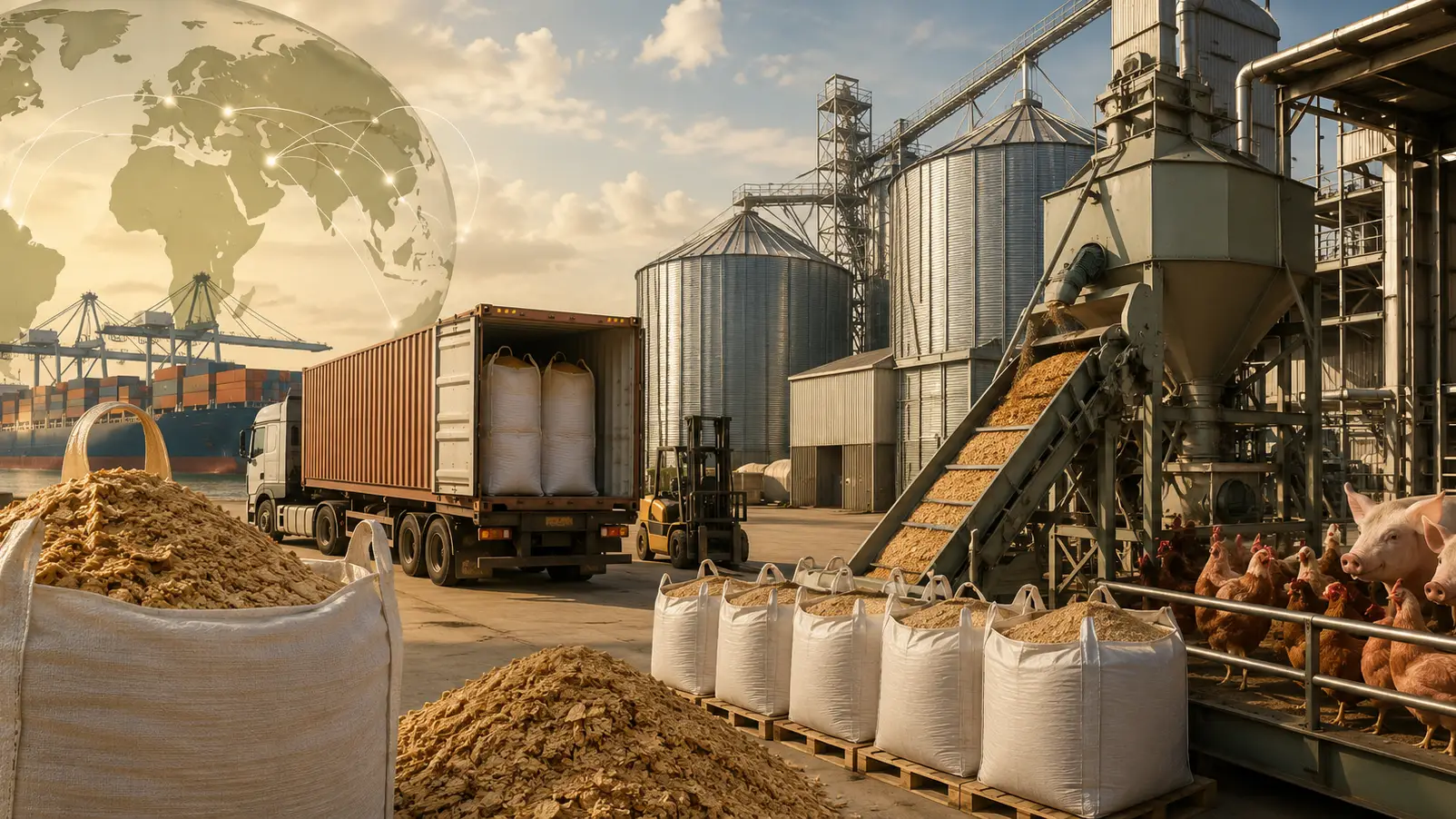
Bakery meal is transported in bulk formats such as sacks or containerized shipments depending on regional logistics infrastructure. Efficient handling is essential to preserve product quality.
The OECD agricultural logistics framework highlights that bulk commodity efficiency directly affects pricing competitiveness in global grain markets.
Storage conditions such as moisture control and contamination prevention are critical during transit and warehousing.
Efficient logistics networks significantly improve supplier competitiveness in international trade.
Regional Market Outlook and Trade Flow
Developed regions such as Europe, North America, and parts of Asia show strong demand for bakery meal due to advanced feed and food manufacturing systems.
Market analysis from the European Commission’s agricultural outlook reports indicates steady growth in grain byproduct utilization across industrial food sectors.
These regions emphasize cost optimization and sustainability, driving demand for secondary grain materials.
Bakery meal plays a key role in maintaining competitive production costs in these mature markets.
Emerging Market Expansion
Emerging economies in Asia-Pacific, Africa, and the Middle East are increasing their consumption of bakery meal due to rapid growth in livestock production and food processing industries.
According to FAO regional food security reports, rising protein consumption and urbanization are accelerating demand for feed ingredients.
These markets often rely on imported grain byproducts to supplement domestic supply gaps.
This creates significant trade opportunities for global suppliers and distributors.
Quality Standards and Regulatory Framework
Bakery meal used in food and feed industries must comply with regional safety and quality regulations. These include standards related to contamination control, moisture levels, and nutritional composition.
The Codex Alimentarius Commission provides international guidelines for feed and food ingredient safety management.
Compliance ensures that bakery meal can be safely integrated into industrial production systems.
This is especially important for exporters targeting multiple international markets.
Testing and Certification Practices
Industrial buyers often require laboratory testing and certification for each batch of bakery meal. These tests ensure consistency in composition and safety.
Regulatory bodies such as EFSA and USDA emphasize traceability and hazard control in grain-based ingredient supply chains.
Certification enhances supplier credibility and improves market access in regulated regions.
These practices reduce risk for both buyers and end-product manufacturers.
Future Growth Trends and Industry Transformation
Bakery meal is increasingly aligned with circular economy principles, where food industry byproducts are reused in industrial applications.
The Ellen MacArthur Foundation highlights that circular food systems can significantly reduce waste and improve resource efficiency.
This positions bakery meal as a strategic ingredient in sustainable manufacturing systems.
Its role is expected to expand as industries adopt greener procurement strategies.
Technology and Supply Chain Optimization
Digitalization and smart supply chain systems are improving transparency and efficiency in bakery meal trade. B2B platforms are enabling faster sourcing and better price discovery.
World Economic Forum reports indicate that digital trade platforms are reshaping global commodity procurement practices.
This transformation improves accessibility for buyers and enhances supplier competitiveness.
As technology adoption increases, bakery meal markets are expected to become more integrated and efficient.
Sources
https://www.fao.org
https://www.usda.gov
https://www.efsa.europa.eu
Leave a Comment