Ammonium Polyphosphate and Its Commercial Role
Understanding ammonium polyphosphate
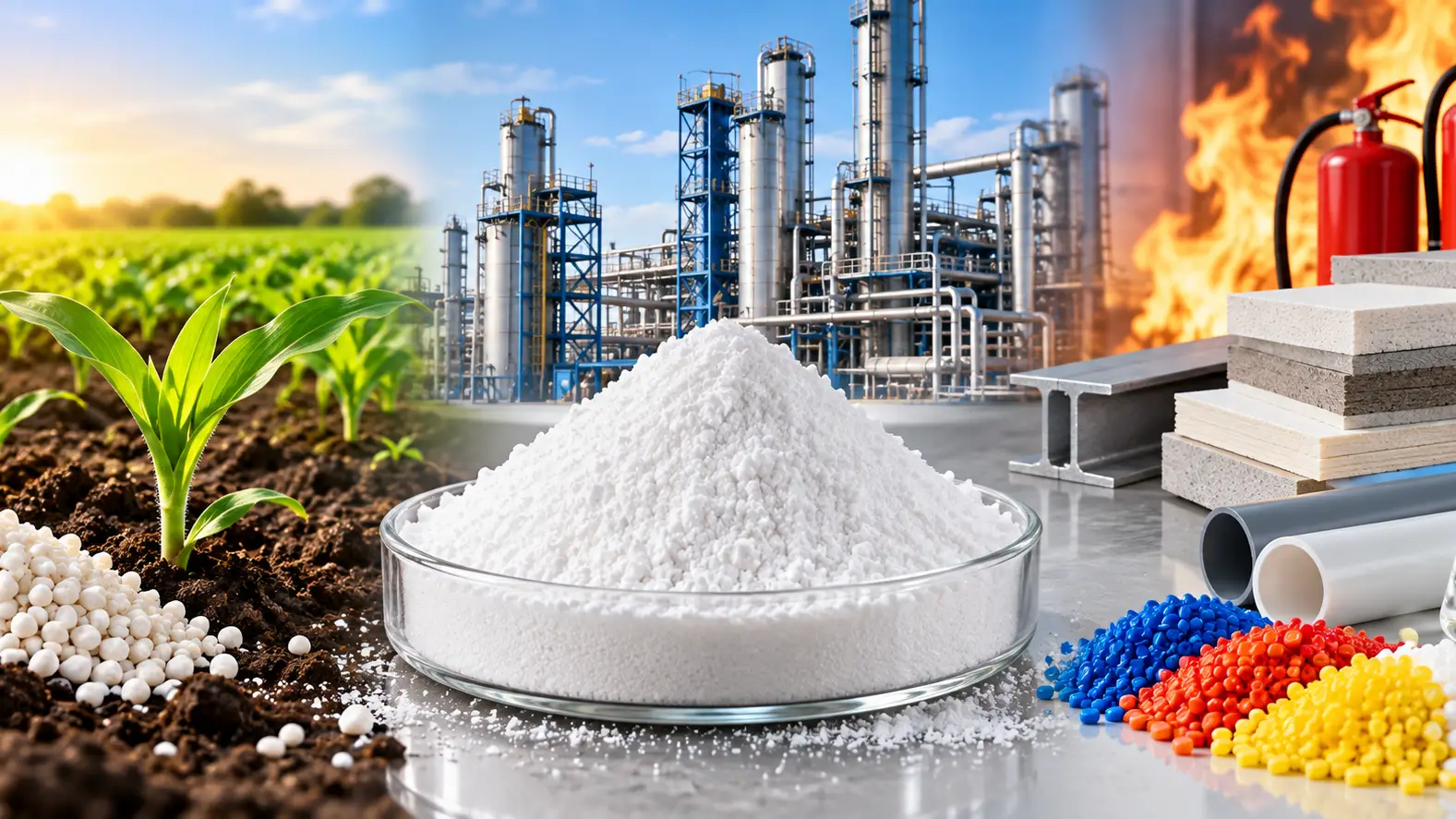
Ammonium polyphosphate (APP) is an inorganic polyphosphate material containing phosphorus and nitrogen and is commercially important because its properties allow it to serve different industrial functions depending on grade, structure, and formulation. Technical literature identifies applications including flame retardancy, fertilizers, food and feed, although the specifications and regulatory requirements differ substantially between these markets. A 2025 review in the European Polymer Journal notes that APP can exist in several structural phases, with different physical and chemical properties that influence application performance.
For industrial buyers, this means ammonium polyphosphate should not be treated as a single uniform commodity. Procurement decisions depend on the intended application, required performance, formulation compatibility, handling characteristics, and applicable specifications. In flame-retardant applications, for example, APP functions as an important phosphorus-containing component in intumescent systems, while fertilizer applications are based on its nutrient value. The same product name can therefore represent different commercial requirements depending on the buyer's industry and technical specification.
APP has become particularly relevant to polymer and materials manufacturers seeking flame-retardant systems that can meet performance requirements without relying exclusively on halogen-containing technologies. Recent research describes APP as a commonly used phosphorus-based flame retardant and highlights its use in plastics, coatings, fabrics, and wood. This creates a commercial connection between APP supply and the broader demand for engineered materials with improved fire-performance characteristics.
From a B2B marketplace perspective, the commercial value of ammonium polyphosphate lies in connecting application-specific demand with dependable chemical supply. Manufacturers, distributors, compounders, formulators, and procurement teams need more than a product name when evaluating a supplier; they need clarity around grade, specifications, consistency, documentation, packaging, logistics, and intended use. This makes APP a suitable product category for structured chemical sourcing and supplier comparison.
Industrial Applications of Ammonium Polyphosphate
Flame-retardant applications in polymers
One of the most commercially significant ammonium polyphosphate applications is flame retardancy. APP can act as an acid source in intumescent systems, promoting char formation and creating a protective barrier during thermal decomposition. Scientific reviews have examined its use in thermoplastics and other polymer systems, including combinations with complementary additives designed to improve fire performance and material properties.
APP is relevant to manufacturers working with plastics, epoxy systems, unsaturated polyester resins, polyurethane, and other polymer matrices. Recent research continues to investigate surface modification, microencapsulation, synergistic additives, and compatibility improvements because unmodified APP can present challenges such as moisture sensitivity, aggregation, and limited compatibility with some organic matrices. These technical considerations directly affect how buyers specify and source the material.
Coatings and fire-protective materials represent another application area in which APP can contribute to intumescent protection. Recent technical work continues to investigate APP-based systems for epoxy and other protective formulations, with particular attention to the relationship between APP structure, decomposition behavior, compatibility, and long-term performance.For coating manufacturers, therefore, sourcing decisions may depend on more than phosphorus content alone.
Beyond polymers and coatings, published reviews identify applications of ammonium polyphosphate in fertilizers as well as food and feed-related areas, although these uses require application-appropriate grades and regulatory controls. For chemical buyers, the key commercial lesson is that APP demand is segmented by end use. A supplier capable of supporting the buyer with appropriate specifications and documentation can therefore be more valuable than a supplier competing solely on nominal price.
Market and Application Trends Shaping Demand
Development of advanced flame-retardant systems
A major trend affecting APP demand is the continued development of higher-performance flame-retardant formulations. Recent research is increasingly focused not simply on adding APP to a polymer but on modifying APP or combining it with synergists to improve dispersion, compatibility, thermal behavior, smoke suppression, and flame-retardant efficiency. A 2026 review specifically examines modification strategies and synergistic systems involving silicon-, boron-, and metal-containing components.
This development is important for B2B demand because technical innovation can change the specifications buyers require from suppliers. Manufacturers may increasingly differentiate between standard APP and modified, coated, encapsulated, or application-optimized materials. Procurement teams therefore need to understand whether a supplier is offering a basic chemical grade or a material engineered for a particular polymer, coating, or processing environment.
Another trend is the growing research attention given to halogen-free flame-retardant technologies. APP is frequently studied as part of phosphorus-nitrogen intumescent systems, where the objective is to create a protective char and reduce heat and combustible-gas transfer. Recent reviews of phosphorus flame retardants continue to identify APP as an important material in flame-retardant treatment of plastics, coatings, fabrics, and wood.
At the same time, the market is moving toward performance optimization rather than simple volume consumption. Recent work on unsaturated polyester resins, epoxy systems, and vinyl ester materials investigates ways of reducing the limitations associated with conventional APP through chemical modification and synergistic formulation. This suggests that future B2B opportunities may increasingly depend on supplying the right APP specification for a defined formulation rather than treating APP as a one-size-fits-all additive.
Buyer Intent and Procurement Requirements
Who buys ammonium polyphosphate?
Typical ammonium polyphosphate buyers include polymer compounders, plastics manufacturers, coating formulators, flame-retardant additive companies, fertilizer manufacturers, chemical distributors, industrial traders, and procurement teams serving downstream manufacturing operations. The relevant buyer group depends heavily on grade and intended application. A plastics compounder, for example, may prioritize dispersion and thermal performance, whereas a fertilizer buyer will evaluate nutrient specifications, regulatory requirements, and agronomic suitability.
Industrial buyers generally evaluate APP according to a combination of technical, commercial, and supply-chain criteria. Depending on the application, these can include purity, phosphorus and nitrogen content, particle characteristics, solubility, thermal behavior, moisture sensitivity, compatibility with the target formulation, packaging, documentation, and consistency between batches. The structural form of APP can also influence application behavior, with research identifying multiple APP phases having distinct characteristics.
Buyers compare suppliers because differences in material consistency, technical documentation, lead times, packaging, logistics, and commercial terms can affect downstream production. For flame-retardant formulations in particular, changes in dispersion or compatibility may influence the performance of the finished compound, making reliable specifications and repeatable supply commercially important. Research on APP-based polymer systems repeatedly highlights compatibility and moisture-related limitations as areas requiring attention.
A B2B product page can support the sourcing process by presenting the product in an application-oriented format and helping buyers determine whether the material matches their preliminary requirements. For Tradeasia, Chemtradeasia, or Tradechem Marketplace, the product listing can serve as the first stage of a sourcing journey: identifying the chemical, understanding its major industrial applications, assessing supplier relevance, and progressing toward a technical and commercial inquiry without making unsupported claims about suitability.
Ammonium Polyphosphate Sourcing Considerations
Evaluating grade and specification
When sourcing ammonium polyphosphate, buyers should begin with the end-use specification rather than selecting solely on the basis of product name or lowest quoted price. Different applications can require different combinations of solubility, particle size, thermal stability, phosphorus content, moisture behavior, and compatibility. Scientific literature shows that APP structure and phase can influence its physical and chemical properties, reinforcing the importance of application-specific specification.
For flame-retardant buyers, the evaluation should also consider how APP behaves within the target polymer or resin. Dispersion, loading level, moisture sensitivity, and interaction with other formulation components can influence finished-product performance. Research on unsaturated polyester systems, for example, highlights the use of microencapsulation, surface modification, and synergists to address compatibility and efficiency challenges.
Quality documentation is another important part of chemical procurement. Buyers should establish which technical documents and compliance information are required for their destination market and end use before finalizing a supplier. Depending on the transaction, this can include a technical data sheet, safety documentation, certificate of analysis, specification sheet, batch information, packaging details, and other documents required by the buyer's internal quality or regulatory procedures.
Commercial sourcing should also consider supply continuity rather than focusing exclusively on an initial transaction price. Consistent availability, predictable lead times, suitable packaging, responsive technical communication, and transparent specifications can reduce procurement uncertainty. For manufacturers operating continuous production, the commercial cost of inconsistent supply may extend beyond the chemical purchase itself because delays or specification changes can affect formulation, production planning, and customer commitments.
Supply Chain Opportunities for B2B Chemical Buyers
Connecting manufacturers, distributors, and procurement teams
The supply chain for ammonium polyphosphate can involve manufacturers, exporters, distributors, traders, formulators, and downstream industrial users. A marketplace model can help organize these relationships by allowing buyers to identify a product category, compare sourcing options, and communicate their technical and commercial requirements. This is particularly useful for chemicals where the buyer's final specification depends on the application.
Manufacturers can use B2B marketplaces to reach buyers in industries that may not be served efficiently through traditional sales channels. Distributors and traders can also use structured product information to communicate the material's industrial relevance to prospective customers. For procurement teams, the value is the ability to begin supplier discovery from a defined chemical requirement rather than searching through fragmented sources.
Regional supply considerations can also influence APP purchasing decisions. Buyers may need to balance supplier location, freight economics, import requirements, delivery time, inventory strategy, and order volume. For markets such as the Middle East, where international chemical trade and regional distribution are important parts of industrial procurement, a marketplace can provide a useful starting point for connecting regional demand with international supply.
Tradeasia, Chemtradeasia, and Tradechem Marketplace can position ammonium polyphosphate as a sourcing entry point by presenting clear product information and facilitating buyer-supplier communication. The strongest commercial positioning is not simply that APP is available, but that buyers can use a structured marketplace environment to investigate sourcing options according to their application, quantity, specification, destination, and procurement requirements.
Market Outlook and Strategic Sourcing Priorities
Where APP demand can develop
The outlook for ammonium polyphosphate is closely connected to the industries that consume it and the technical requirements those industries face. Flame-retardant applications remain an important area of development, with recent research focused on improving APP performance through modification, synergistic formulations, and better compatibility with polymer systems. This creates continuing relevance for APP suppliers serving plastics, coatings, resins, and other engineered materials.
Application diversification is another factor supporting the commercial relevance of APP. The scientific literature identifies flame retardancy and fertilizer applications among its major uses, while also documenting other specialized applications. For suppliers and distributors, understanding these application segments is important because buyer requirements can differ substantially even when the underlying chemical name is the same.
For procurement teams, the most effective sourcing strategy is therefore likely to emphasize specification control, supplier reliability, application fit, documentation, and supply continuity. Buyers should evaluate whether a supplier can consistently provide the required grade and whether the supplier understands the technical context in which the material will be used. This is especially important where APP is incorporated into formulated products whose performance depends on interactions among several components.
Overall, ammonium polyphosphate remains a commercially relevant industrial chemical with established applications and ongoing technical development. For B2B buyers, the opportunity is not simply to find an APP supplier, but to identify a supply partner capable of supporting the correct specification, application, volume, logistics, and documentation requirements. A marketplace such as Tradeasia, Chemtradeasia, or Tradechem Marketplace can provide a practical entry point for that sourcing process by connecting product discovery with industrial procurement needs.
Leave a Comment