Explore our network of country and industry based websites to access localized information, product offerings, and business services across our group.
Log in to start sending quotation requests for any product.
Don't have an account? Sign Up Here
Log in now to access technical product documents from our product range.
Don't have an account? Sign Up Here
Home All Products Titanium Dioxide (NR950 Rutile) - China
|
IUPAC Name |
: Dioxotitanium |
|
Cas Number |
: 13463-67-7 |
|
HS Code |
: 3206.11.10 |
|
Formula |
: TiO2 |
|
Appearance Name |
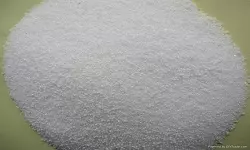
: White Powder |
|
Common Names |
: Titania; Rutile; Anatase |
|
Packaging |
: 25, 500, 1000 KG |
For more detailed information including pricing, customization, and shipping:
Brief Overview
Titanium dioxide, or Titania, is an inorganic compound recognized for its white powder form, denoted by the chemical formula TiO2. It predominantly presents itself in two crystal structures: rutile and anatase. Anatase, known for its cost-effectiveness, easy dispersal in water-based systems, and effective opacifying properties, features untreated titanium dioxide with a refractive index of 2.55. However, its application is infrequent in exterior paint, excluding highway paints.
Manufacturing Process
The sulfur process facilitates the production of titanium dioxide (TiO2) in both anatase and rutile forms through distinct step:
Paint and Coating Industry
Due to its brightness and remarkably high refractive index (n=2.7), titanium dioxide is extensively employed as a white pigment, surpassing only a select few materials.
Paper Industry
In the paper industry, titanium dioxide serves as a potent opacifier in powder form, enhancing the whiteness and opacity of paper products. Optimal sizing of titanium dioxide particles contributes to improved opacity. Additionally, specific formulations may result in a limited color change based on the angle and illumination of the finished product, influenced by the thickness of the oxide layer in the pigment particle.
Cosmetics Industry
Titanium dioxide functions dually as a pigment and thickener in cosmetic and skincare products. It is a common ingredient in sunscreens with physical blockers, owing to its high refractive index, robust UV light absorption, and resistance to discoloration under ultraviolet light. This characteristic ensures stability and effective protection against ultraviolet light, making it a preferred choice in sunscreens designed for infants or individuals with sensitive skin, often utilizing titanium dioxide and/or zinc oxide as mineral UV blockers to minimize skin irritation compared to chemical UV absorbers like avobenzone.
Food Industry
Titanium dioxide is employed as a food colorant in the food industry, offering an economical option widely used to enhance the whiteness of dairy-based products. Additionally, it is used to improve the color of candy, frosting, and donuts' powder.
Plastic Industry
This pigment finds extensive use in plastics and various applications due to its UV-resistant properties, serving as a UV absorber that efficiently transforms detrimental UV light energy into heat.
Other Applications
TiO2 serves as an efficient opacifier in powder form, functioning as a pigment to provide whiteness and opacity to various products, including paints, coatings, plastics, papers, inks, foods, medicines, and most toothpaste.



 English

 Indonesian
 简体字
简体字
 العربية
 Español
 Français
 Português
 日本語
日本語
 한국어
한국어
 Tiếng Việt



















---taiwan.webp)
---china.webp)