Explore our network of country and industry based websites to access localized information, product offerings, and business services across our group.
Log in to start sending quotation requests for any product.
Don't have an account? Sign Up Here
Log in now to access technical product documents from our product range.
Don't have an account? Sign Up Here
Home All Products Swing Soap Noodles TFM ≥ 67% (85:15)
|
IUPAC Name |
: N/A |
|
Cas Number |
: 143-07-7 |
|
HS Code |
: 3401.20.20 |
|
Formula |
: N/A |
|
Appearance Name |
: White Solid |
|
Common Names |
: Soap Chips |
|
Packaging |
: 21 MT/FCL in 25 Kgs Paper Bag (840 Bags/20'ft FCL) |
For more detailed information including pricing, customization, and shipping:
Brief Overview
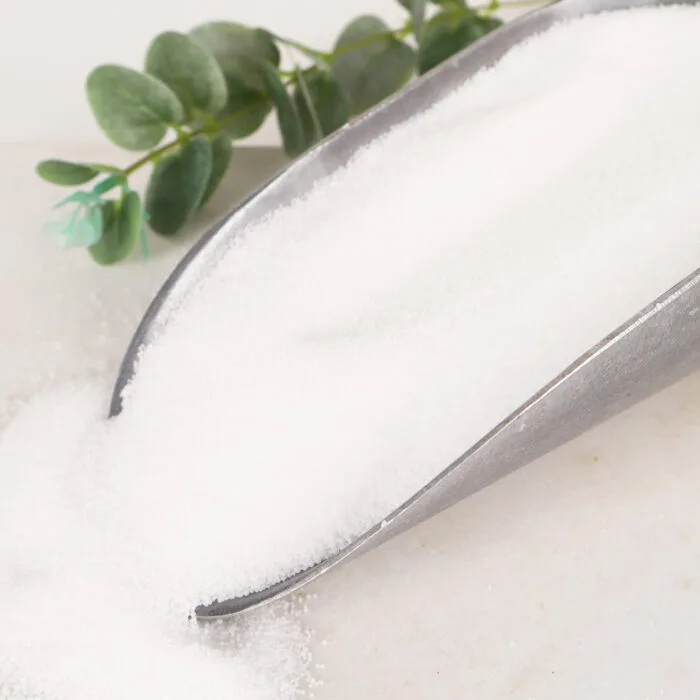
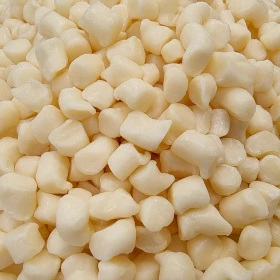
Soap noodles are created through the saponification process of vegetable oils like palm oil, coconut oil, olive oil, and/or animal fat (tallow) using sodium hydroxide. Regarded as fundamental soap precursors, soap noodles are widely employed by both soap manufacturers and hobbyists. Their appeal lies in the ease with which they can be personalized using pigments, fragrances, and various additives to craft unique soaps. Further customization of the soap is achieved through molding, pressing, and stamping, culminating in the production of the final product.
Manufacturing Process
The most popular process for producing soaps is called direct saponification, in which sodium hydroxide and triglyceride molecules combine to produce soap. Fatty acids and glycerol are the byproducts of the hydrolysis of fats and oils. Sodium hydroxide is subsequently used to neutralize the fatty acids. Methyl esters are created by trans-esterifying the fat or oil with methanol. Sodium hydroxide was used to saponify the methyl ester, yielding a soap and methanol as a byproduct.
Detergent Industry
Either a big worm screw or a sequence of rollers are used to homogenize the mixture and create a thin layer of soap. To create many layers of soap, the liquid was agitated throughout the screw's length and extruded through a perforated endplate while operating at high pressure. To create a single, huge, continuous soap bar, the homogenized soap is compressed using a massive worm screw extruder, also known as a ploughder. Soap noodles of different specifications can be used to manufacture a variety of soaps, including medicinal, high-lather, transparent, toilet, laundry, and more.



 English

 Indonesian
 简体字
简体字
 العربية
 Español
 Français
 Português
 日本語
日本語
 한국어
한국어
 Tiếng Việt