Explore our network of country and industry based websites to access localized information, product offerings, and business services across our group.
Log in to start sending quotation requests for any product.
Don't have an account? Sign Up Here
Log in now to access technical product documents from our product range.
Don't have an account? Sign Up Here
Home All Products Disproportionated Rosin
|
IUPAC Name |
: - |
|
Cas Number |
: 8050-09-7 |
|
HS Code |
: 38069090 |
|
Formula |
: C20H30O2 |
|
Appearance Name |
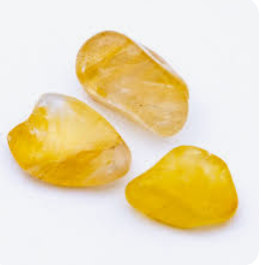
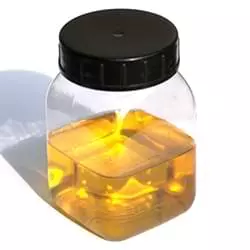
: Light Yellow Transparent Solid |
|
Common Names |
: DPR |
|
Packaging |
: Galvanized Iron Drum, 220kg net each, 22MT |
For more detailed information including pricing, customization, and shipping:
Brief Overview:
Disproportionated rosin (DPR) is a compound consisting of dehydrogenated resin acids (dehydro-abietic acid) and hydrogenated resin acids (dihydro-abietic acid). It is produced from gum rosin by heating or acid treatment. DPR is commonly used in the form of a soap as an emulsifier in various products such as styrene-butadiene rubber, chloroprene rubber or acrylonitrile-butadiene-styrene rubber.
Manufacturing Process:
Disproportionated rosin is obtained by heating rosin mixtures at temperatures of 180-350 C for a sufficient time to reduce the abietic acid content to below 15%. The disproportionation process displaces the hydrogen in the abietic acid of the rosin to convert them into isomeric acids, particularly dehydroabietic acid, which lack nonbenzenoid double bond conjugation and are therefore more stable to oxidation than abietic acid.
Rubber Industry:
Used as an emulsifier, rubber products have greater cohesion and heat endurance. Compared to ordinary styrene-butadiene rubber, the rubber with DPR content has greater abrasion and laceration endurance.
Other industry:
DPR has other functions, such as being an important component of potassium soaps which serve as emulsifiers to enhance the quality of synthetic rubbers. It is also a raw material for making adhesives, water-based PSA, pigment and chewing gum.



 English

 Indonesian
 简体字
简体字
 العربية
 Español
 Français
 Português
 日本語
日本語
 한국어
한국어
 Tiếng Việt



















.webp)