
The global chemical industry is entering a difficult phase where profitability is weakening even as production capacity continues to expand. More than four out of five chemical companies failed to earn their cost of capital in 2025, according to Roland Berger, highlighting how difficult it has become for producers to generate adequate returns.
At the same time, capacity continues moving toward China. China accounted for 46% of global chemical sales in 2025 and has supplied more than 60% of global ethylene capacity additions since 2020. This combination is reshaping global supply chains, pricing dynamics and investment decisions.
Chemical Profitability Is Under Severe Pressure
The latest financial data show how deep the downturn has become. ICIS reported that combined operating profits for the world's Top 100 chemical companies fell 47.3% in 2025, while net profits plunged 81.9%. Sales also declined 4.6%, showing that weaker profitability was not simply the result of isolated cost increases.
C&EN's Global Top 50 provides another measure of the pressure. Chemical sales among the 50 largest producers fell 5.8% in 2025, while operating profits among companies reporting those figures dropped 19.5%. Seven companies in the group recorded losses.
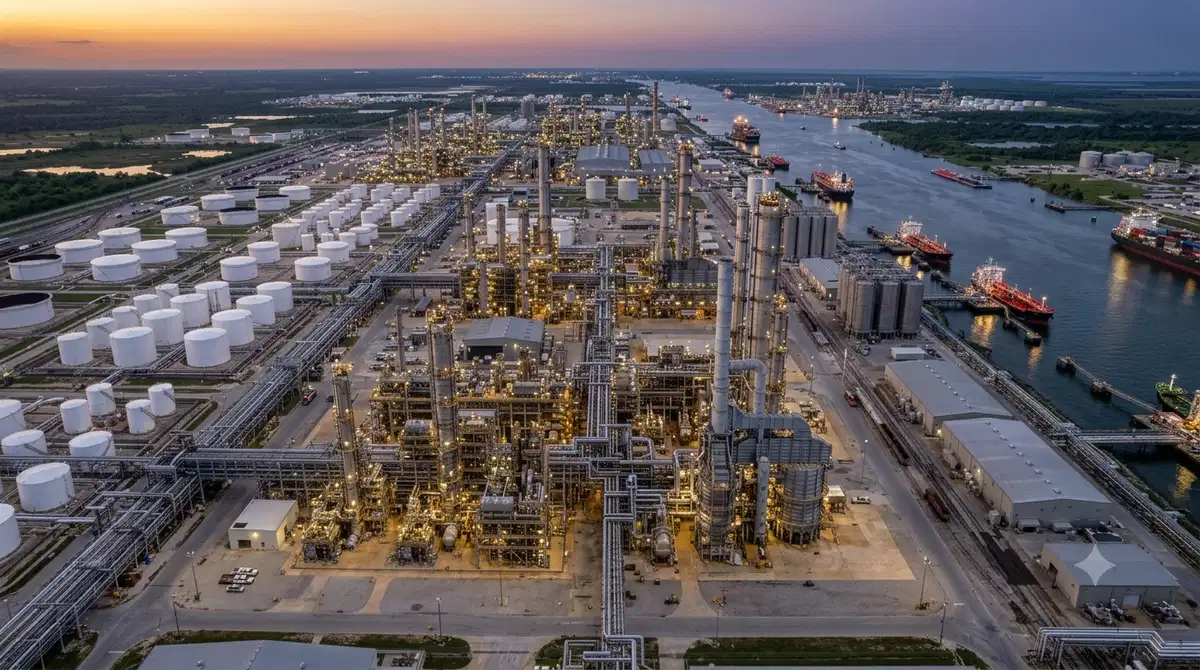
The main problem remains petrochemical overcapacity. New plants have increased supply faster than demand in several major markets, pushing producers to operate below efficient utilization levels while competing aggressively for customers.
Weak construction, automotive and durable-goods demand has made the imbalance worse. Higher European energy costs and geopolitical disruptions have added another layer of pressure for producers operating outside the lowest-cost regions.
China Keeps Adding Capacity Despite Lower Returns
China illustrates the industry's central contradiction. Its chemical sector has become the largest in the world by sales, yet profitability has weakened as new capacity comes online faster than demand in several commodity chains.
China's petroleum and chemical sector profits fell 9.6% in 2025 after an 8.8% decline the previous year. S&P Global also reported that Chinese petrochemical profits reached a 10-year low despite continued capacity growth.
This does not mean China's chemical industry is simply losing competitiveness. Large integrated complexes continue to benefit from scale, infrastructure, domestic demand and increasingly sophisticated downstream manufacturing networks.
The more important change is that China is moving from being primarily a major chemical consumer toward becoming an increasingly influential global supplier. That shift puts additional pressure on producers in regions where production costs are higher.
Europe and Northeast Asia Face a Different Capacity Problem
The capacity shift is particularly challenging for Europe, Japan and South Korea. Producers in these markets face aging assets, expensive energy, weaker domestic demand and growing competition from newer plants.
C&EN describes the current chemical downturn as the worst in a generation, with petrochemical overcapacity at the center of the problem. European producers have already started closing or restructuring plants, while Japan and South Korea are also reducing capacity.
Deloitte's analysis of more than 120 announced chemical plant closures and mothballings since 2022 shows that the restructuring is global. Overcapacity, weak end-market demand and structural feedstock and energy disadvantages are driving many of these decisions.
The result is a two-speed chemical industry. Newer, integrated and cost-efficient assets in China and selected Middle Eastern markets can continue operating through weak cycles, while older facilities elsewhere face increasing pressure to close, consolidate or specialize.

Why the Capacity Shift Matters for Chemical Buyers
For procurement teams, this restructuring changes more than the location of production. It can influence price formation, supplier competition, lead times and long-term availability.
Commodity buyers may see more competitive offers from Chinese producers as additional capacity seeks export markets. This can create attractive sourcing opportunities for polymers, intermediates and other high-volume chemicals.
However, lower prices can also signal structural oversupply rather than a temporary market correction. Buyers should therefore distinguish between a supplier offering a genuinely lower production cost and a producer attempting to maintain utilization during a weak market.
Supplier concentration also becomes more important. If production becomes increasingly concentrated in a smaller number of large Chinese complexes, buyers could gain access to scale but become more exposed to Chinese trade policy, export restrictions, logistics disruptions and regional geopolitical risks.
Commodity Chemicals Face the Greatest Pressure
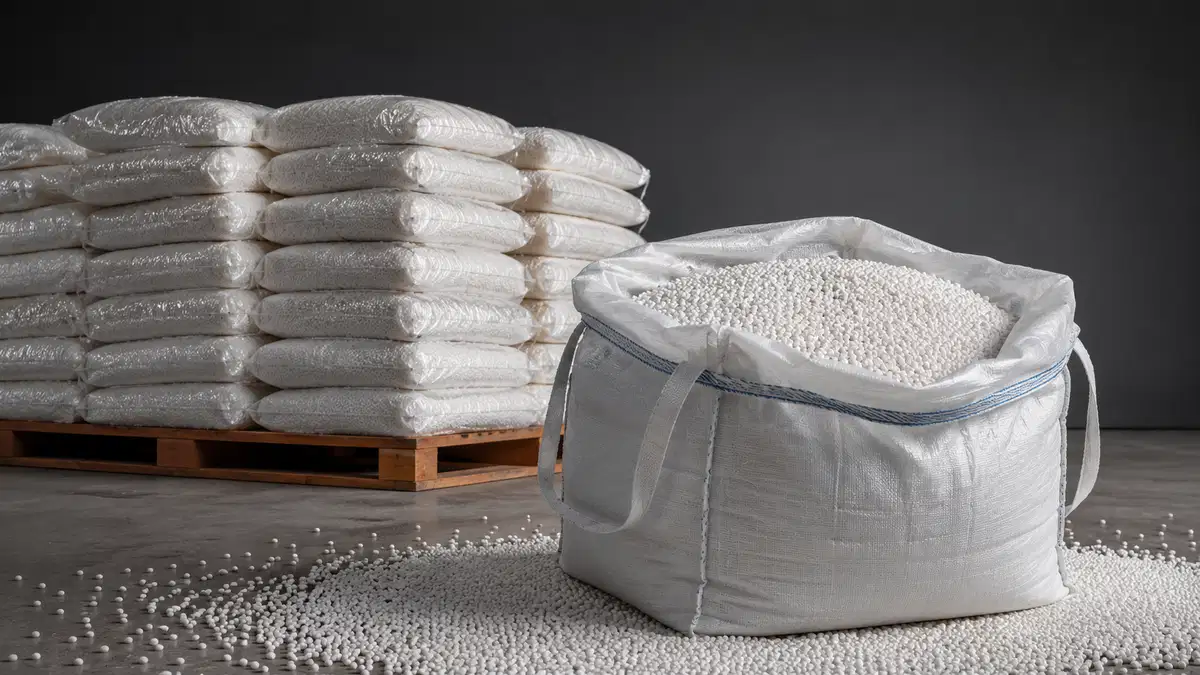
The impact will be strongest in chemical chains where products are standardized and buyers can easily switch suppliers. Polyethylene, polypropylene, ethylene derivatives and other commodity petrochemicals are particularly exposed because producers compete largely on cost and availability.
China's capacity expansion has already contributed to lower margins across several petrochemical markets. S&P Global noted that more than 60% of global ethylene capacity additions between 2020 and 2025 came from China, demonstrating the scale of the country's investment cycle.
This creates a difficult environment for producers elsewhere. Even when a European or Northeast Asian plant remains technically competitive, its economics can deteriorate if lower-cost Chinese material enters the same regional market.
Specialty chemicals may offer more protection because technical specifications, customer qualification and formulation requirements create higher barriers to switching. However, specialty producers are not immune if Chinese manufacturers move further into higher-value grades.
Investment Is Following Market Scale
The industry's investment geography is also changing. Companies continue to invest in China because it remains one of the world's largest chemical markets and offers extensive downstream manufacturing ecosystems.
BASF, for example, has continued substantial investment in China, including an integrated complex with 1 million tonnes per year of ethylene capacity. S&P Global reported that the company views China as the largest and highest-growth petrochemical market globally.
This creates an important distinction between capacity growth and profitable capacity growth. Producers may continue investing because they want strategic access to customers, feedstocks and downstream industries even when industry-wide returns remain weak.
China's government is also attempting to address excessive competition through its anti-involution policy. Yet capacity already under construction or recently commissioned cannot disappear immediately, meaning the correction will likely require operating-rate reductions, closures and consolidation over time.
What Buyers Should Do Now
Chemical procurement teams should treat the current downturn as both a pricing opportunity and a supply-chain restructuring event.
Buyers should focus on:
Comparing Chinese suppliers with European, Middle Eastern and other Asian producers rather than relying on traditional sourcing regions.
Monitoring plant operating rates and announced closures alongside headline market prices.
Avoiding excessive dependence on one low-cost supplier.
Checking whether competitive offers are supported by sustainable production economics.
Qualifying alternative suppliers before capacity rationalization creates unexpected shortages.
Tracking Chinese export policies and trade investigations that could quickly change regional availability.
Separating temporary price weakness from structural changes in production costs.
The biggest opportunity may come from using China's capacity expansion to improve purchasing leverage while maintaining a diversified supplier base. Buyers that combine price intelligence with capacity monitoring will be better positioned to identify when the market is genuinely oversupplied and when a low-price environment is approaching a correction.
The Bottom Line for Global Chemical Procurement
The global chemical industry is not simply experiencing another normal downturn. Profitability has weakened sharply, while investment and capacity have increasingly concentrated in China and other cost-competitive regions.
That shift will continue to pressure older assets in Europe and Northeast Asia and could accelerate plant closures, consolidation and portfolio specialization. For buyers, the result is a market with more competitive sourcing options but also greater exposure to regional concentration and trade-policy risks.
The winning procurement strategy will be to look beyond today's lowest quotation. Companies that track capacity, utilization, production economics and supplier resilience will have a stronger position as the global chemical industry moves through its next phase of restructuring.
Titanium Dioxide CAS: 13463-67-7