
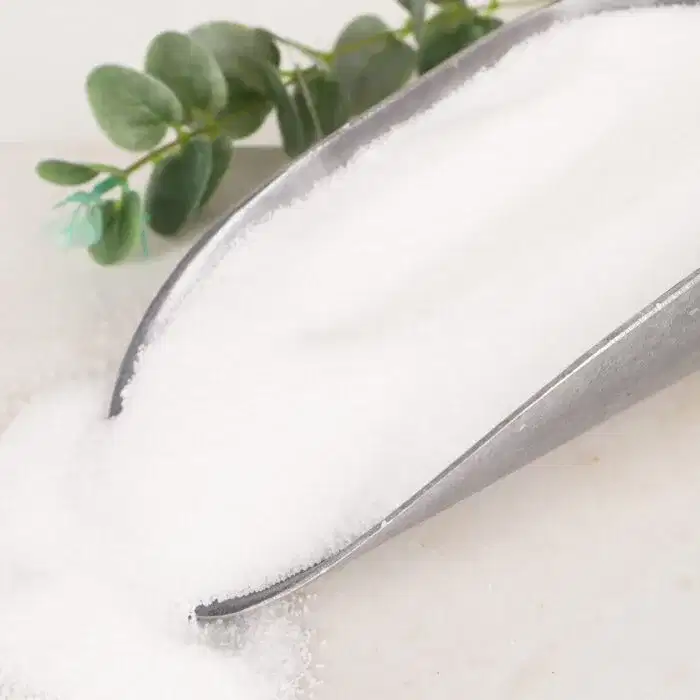
Stearic Acid Rubber Grade With C18
- IUPAC Name
- octadecanoic acid
- Molecular Formula
- C18H36O2
- Molecular Weight (g/mol)
- 284.5000
- InChIKey
- QIQXTHQIDYTFRH-UHFFFAOYSA-N
- InChI
- InChI=1S/C18H36O2/c1-2-3-4-5-6-7-8-9-10-11-12-13-14-15-16-17-18(19)20/h2-17H2,1H3,(H,19,20)
- Synonyms & Trade Names
- stearic acid; Octadecanoic acid; 57-11-4; n-Octadecanoic acid; Stearophanic acid; Stearex Beads; Pearl stearic; 1-Heptadecanecarboxylic acid; Cetylacetic acid; Industrene R; Octadecansaeure; Stearinsaeure; Vanicol; Hydrofol Acid 150; Century 1240; Glycon DP; Glycon TP; Humko Industrene R; Formula 300; Hydrofol 1895
Categories
Technical Document
Brief Overview
One common and advantageous kind of saturated fatty acid found in both animal and vegetable fats is stearic acid, also known as octadecanoic acid. It is a waxy white solid with the chemical formula of CH3(CH2)16CO2H and molar mass of 284.48 g/mol. These fats are made up of oleic, palmitic, and stearic acids in their natural state; industrial stearic acid is made from almost equal parts oleic and palmitic acids. Stearic acid occurs naturally as an ester of fatty alcohol or in mixed triglycerides with other long-chain acids. It's important to remember that, on general, animal fats contain more stearic acid than vegetarian fats.
Manufacturing Process
Stearic acid is manufactured using fatty acids, with the manufacturing process being contingent upon the chosen raw material and the desired stearic acid quality. Various procedures are employed based on these criteria. Tallow and grease are the most commonly utilized raw materials for synthesizing stearic acid. The production process involves two primary steps:
a. Initially, the raw materials (oil or fat) undergo hydrolysis to generate glycerin and fatty acids. The subsequent step involves separating the two resulting products.
b. The second stage encompasses the purification and separation of the fatty acid mixture.