
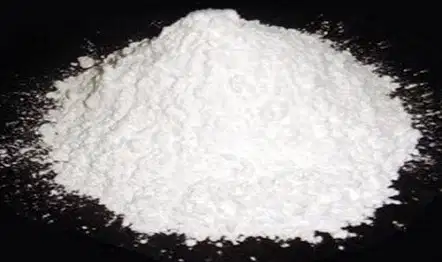
Magnesium Oxide
- Origin: China
- CAS Number: 1309-48-4
- HS Code: 25199040
- IUPAC Name
- magnesium oxide
- Molecular Formula
- MgO
- Synonyms & Trade Names
- Magnesium oxide; Periclase; Magnesia; E530
- Purity / Assay (%)
- 96% min
- Grade / Quality Level
- Technical Grade
- Physical Form
- Solid
- Concentration
- Pure substance
- Appearance / Color
- White to off-white solid
- Odor
- Odorless
- Melting Point (°C)
- 2852.0000
- Boiling Point (°C)
- 3600
- Density (g/cm³)
- 3.5800
- pH
- pH = 10.3 (saturated aqueous solution)
- Solubility in Water
- Insoluble (0.00062g/100mL at 30°C)
- Signal Word
- Warning
- UN Number
- Not applicable
- GHS Hazard Class
- Serious eye damage/eye irritation, Specific target organ toxicity, single exposure; Respiratory tract irritation
- H-Statements
- None
- P-Statements
- P260
- REACH Status
- Registered
- Drug Precursor Status
- Non-precursor
- Storage Class (GHS)
- 13
- Storage Conditions
- Cool, dry place; hygroscopic
- Industry Usage Tags
- Flux agent
Application
Technical Document
Brief Overview
Magnesium oxide is a white solid, often found as a powder. When fine particles of magnesium oxide are dispersed into the air, whether directly or when generated by the burning or cutting of magnesium metal, the resulting magnesium oxide fume is an inhalation hazard.
In aqueous media, it combines quickly with water to form magnesium hydroxide. Magnesium oxide is used as an antacid and mild laxative and has many nonmedicinal uses.
Manufacturing Process
Method 1: Limestone is calcined at a high temperature under controlled conditions to produce calcined dolomite or dolime which upon reaction with magnesium chloride-rich brine produces magnesium hydroxide and calcium chloride. The insoluble magnesium hydroxide is then separated from the liquid calcium chloride carrier and calcined under controlled conditions.
Method 2: Light or heavy magnesium carbonate is exposed to red heat. After which, CO2 and H2O are expelled, and magnesium oxide is collected.