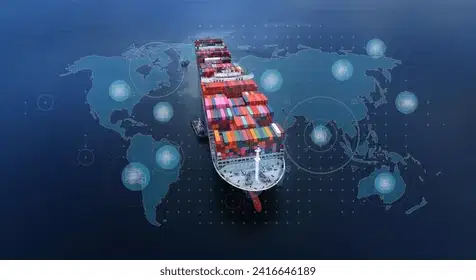
Chemical import and export markets connect manufacturers, distributors and industrial buyers across global supply chains. Countries trade chemicals to secure raw materials, supply domestic manufacturing and access products that may be unavailable or uneconomical to produce locally. These flows support industries ranging from plastics and fertilizers to pharmaceuticals, food processing, coatings and water treatment.
For chemical traders, procurement managers, importers and exporters, understanding international trade patterns helps identify competitive suppliers, evaluate destination markets and manage supply risks. Trade data can reveal which countries supply particular products, where import demand is concentrated and how changes in production capacity affect cross-border shipments.
Recent data highlights the scale of this market. According to Eurostat, the European Union exported €605 billion worth of chemicals and related products in 2025 and imported €348 billion, resulting in a trade surplus of €257 billion. These figures cover a broad category that includes organic and inorganic chemicals, pharmaceuticals, fertilizers and plastics. They demonstrate the importance of international chemical trade, although individual products follow different commercial patterns.
For businesses planning international transactions, the priority is to connect these broad trends with product-level demand, supplier capability, logistics costs and destination-market requirements.
1. Global Chemical Trade: Understanding the Main Patterns
International chemical trade reflects differences in production capacity, raw material access, technology, energy costs and domestic consumption. Some countries export large volumes of basic chemicals, while others specialise in pharmaceutical ingredients, high-performance materials or formulated products.
Export-Oriented Manufacturing Hubs
Countries with extensive petrochemical infrastructure often supply large quantities of industrial chemicals to international buyers. China, the United States, Germany, Japan and South Korea are important participants in various chemical product categories, although their relative positions differ by product and trade classification.
China benefits from a large manufacturing base and broad chemical production capabilities. The United States has strong positions in several petrochemical value chains, supported by access to natural gas liquids. Germany and other European manufacturing centres supply a wide range of industrial and specialty chemicals, while Japan and South Korea participate in specialised materials and advanced manufacturing supply chains.
Export leadership does not necessarily mean a country is the lowest-cost source for every chemical. Buyers must assess the specific product grade, production route, available quantities and delivery costs before selecting a supplier.
Import Demand and Industrial Consumption
Import markets often develop around large manufacturing sectors that require raw materials and intermediates. A country may import feedstocks or basic chemicals for domestic processing and then export higher-value finished products.
Trade flows also reflect product specialisation. A market may import industrial solvents while exporting pharmaceuticals, formulated chemicals or specialised materials. This creates opportunities for distributors and manufacturers that understand the requirements of both sides of a supply chain.
2. Major Chemical Exporters and Supplier Regions
Identifying major suppliers helps buyers establish sourcing benchmarks and compare alternative origins. However, rankings depend on the chemical category, reporting year and whether the statistics measure individual countries or trading blocs.
China
China is a major global supplier across numerous chemical categories, including organic chemicals, inorganic chemicals, intermediates and polymer-related products. Its manufacturing scale and broad supplier network can provide buyers with multiple sourcing options across different grades and applications.
For importers, the main considerations include product consistency, factory verification, export documentation, lead times and compliance with destination-market requirements. Buyers should also assess whether an attractive quotation reflects the full delivered cost rather than the factory price alone.
European Union and Germany
The European Union is a major exporter of chemicals and related products. Eurostat reported €605 billion in exports for 2025, with Germany recording the largest extra-EU export value among EU member states at €130 billion. Ireland, Belgium, Italy and France were also leading exporters.
European suppliers offer a broad range of products, including industrial chemicals, pharmaceutical products, specialty ingredients and formulated materials. Buyers should evaluate product specifications, technical support, regulatory documentation and delivery terms when comparing European offers with alternatives from Asia or North America.
United States
The United States participates in international chemical trade through petrochemicals, industrial intermediates, specialty materials and other chemical products. Its access to natural gas liquids supports selected petrochemical value chains, while its domestic industrial base generates demand for imported materials as well.
North American trade relationships can be particularly relevant to buyers sourcing across the United States, Canada and Mexico. For overseas purchasers, the competitiveness of a US supplier depends on the product, export availability, shipping costs and destination requirements.
Japan and South Korea
Japan and South Korea play important roles in several advanced materials and industrial chemical markets. Their supplier bases include products serving electronics, automotive manufacturing, coatings, polymers and other technical applications.
Buyers evaluating suppliers from these markets should examine technical specifications, quality assurance systems, minimum order quantities and the availability of application support. For specialised products, consistency and technical performance may matter more than the lowest initial quotation.
3. Import and Export Data: What Recent Statistics Reveal
Reliable trade analysis requires consistent product definitions. The United Nations Comtrade database provides detailed annual and monthly statistics by product and trading partner, allowing businesses to examine trade values, quantities and destination markets.
A useful illustration comes from World Bank World Integrated Trade Solution data for HS code 382390, which covers a specific category of chemical products and residual products of the chemical or allied industries. It is not a measure of all chemical trade.
In 2025, reported exports in this category included approximately US$16.30 billion from China, US$10.25 billion from Germany, US$9.22 billion from the Netherlands and US$6.76 billion from the United States. The data provides a product-specific example of the different countries supplying international chemical markets.
Buyers and traders can use similar datasets to answer practical commercial questions:
Which countries currently supply the target chemical?
Which destinations purchase the largest quantities?
Is export value rising because of higher prices, greater volume or a change in product mix?
Are suppliers becoming more concentrated in one country or region?
Which alternative markets could provide more resilient sourcing?
Trade values alone do not reveal profitability or available capacity. Businesses should compare values with quantities where reported and verify recent supplier quotations before drawing conclusions about current market prices.

4. Emerging Import Markets and Trade Opportunities
Emerging markets can offer opportunities as industrial production expands, infrastructure investment increases and local manufacturers require more chemical inputs. However, demand growth varies by product and country, so buyers should validate opportunities against actual import data and customer requirements.
India
India's manufacturing, pharmaceutical, agriculture and infrastructure sectors create demand for a broad range of chemicals. Importers and distributors may find opportunities in industrial intermediates, specialty ingredients, water treatment chemicals and selected raw materials.
Exporters should assess local competition, registration requirements, product standards and the economics of serving different regions within the country. Trade data at the individual product level can help identify categories where imports are substantial and local supply may not fully meet demand.
Southeast Asia
Markets such as Vietnam, Indonesia, Thailand and Malaysia participate in regional manufacturing and chemical supply chains. Demand can arise from packaging, electronics, automotive components, textiles, construction and consumer goods production.
Regional sourcing may also help companies diversify away from dependence on a single supplier origin. However, buyers need to compare local distributors with direct imports, particularly when shipment size, port access and inventory requirements influence total cost.
Middle East
The Middle East has an important role in hydrocarbon-based chemical production and international exports. At the same time, industrial diversification and investment in manufacturing create demand for selected specialty chemicals, treatment products and industrial inputs.
Companies exploring this market should distinguish between countries that primarily export chemicals and those that import particular grades for domestic processing or industrial use. This distinction helps traders avoid treating the entire region as one uniform market.
Africa and Latin America
Selected African markets offer potential demand linked to agriculture, mining, water treatment, construction and manufacturing. Latin American markets also purchase chemicals for agricultural production, food processing, industrial applications and consumer goods manufacturing.
Commercial success depends on local distribution, credit risk, import procedures and logistics. Exporters should assess customer concentration and payment conditions before committing to new markets, while importers should compare landed costs and the availability of technical support.
5. Key Factors Shaping International Chemical Trade
Chemical import and export activity responds to several interconnected commercial and regulatory factors. Understanding them helps businesses explain changes in trade flows and anticipate potential disruptions.
Production Costs and Competitive Pricing
Energy, feedstock and utility costs influence the economics of chemical manufacturing. Countries with access to competitively priced raw materials may gain advantages in selected products, while high production costs can affect export competitiveness.
However, low production costs alone do not guarantee the best purchasing outcome. Quality consistency, delivery reliability, financing terms and logistics can change the overall value of an offer.
Freight and Supply Chain Reliability
Chemical shipments may require specialised packaging, temperature control, hazardous-goods handling or dedicated storage facilities. Shipping disruptions, port congestion and higher insurance charges can raise delivered costs and extend lead times.
Buyers should compare routes and suppliers using consistent delivery terms. They should also verify that carriers and logistics partners can handle the product safely and meet applicable transport requirements.
Tariffs, Trade Rules and Compliance
Import duties, customs procedures, product registration and chemical safety regulations can affect the cost and feasibility of cross-border transactions. Requirements differ by destination and product classification.
Before placing an order, importers should verify the correct HS code, applicable duties, permits, labelling rules and required technical documents. Safety data sheets, certificates of analysis and other product records should match the material being shipped.
Exchange Rates and Payment Risk
Currency movements can change the cost of imported chemicals between quotation and payment. Longer payment cycles can increase exposure, particularly when prices are volatile or shipments take several weeks to arrive.
Companies should evaluate payment terms, credit limits and currency exposure as part of the procurement decision. Clear contract terms help reduce misunderstandings around price validity, delivery delays and changes in order quantities.
6. How Buyers Can Use Trade Intelligence to Improve Sourcing
Trade intelligence becomes commercially valuable when companies turn market data into specific sourcing decisions. Import and export statistics should support supplier selection, price benchmarking and market entry rather than serve as isolated reporting metrics.
Build a product-level supplier shortlist. Identify countries that export the required chemical and compare verified suppliers within those markets. Check product grade, technical documentation, available capacity and export experience.
Compare total landed cost. Include product price, freight, insurance, duties, port charges and inland transport. A lower ex-works quotation may not result in the lowest delivered cost.
Monitor trading partners over time. Review several years of import and export data to identify changes in supplier concentration, destination demand and trade volumes. Use the latest available monthly data when timing is important.
Validate market demand. Compare import growth with domestic production, downstream industrial activity and customer requirements. A temporary increase in imports may reflect inventory restocking rather than sustained consumption growth.
Qualify alternative origins. Develop backup suppliers where technically and commercially feasible. Confirm that substitute products meet required specifications and applicable regulatory standards before changing supply sources.
Review commercial and regulatory risks. Assess payment conditions, shipment routes, product classification and destination-market rules before entering a new trading relationship.
7. Building a Stronger Global Chemical Trade Strategy
A competitive chemical import and export strategy requires more than identifying the countries with the largest trade values. Businesses need to understand product-level supply, demand trends, supplier reliability and the cost of delivering compliant materials to the final destination.
Importers can use trade statistics to broaden their supplier base and identify potential alternatives when prices or delivery conditions change. Exporters can use the same information to prioritise destinations, understand competing supply origins and focus sales efforts on markets with demonstrated import demand.
The most effective approach combines trade data with supplier verification, current quotations, logistics analysis and direct market knowledge. By reviewing these factors together, chemical businesses can identify more relevant opportunities, reduce avoidable sourcing risks and make better-informed international trade decisions.
2-Ethyl Hexanol CAS: 104-76-7