Explore our network of country and industry based websites to access localized information, product offerings, and business services across our group.
Log in to start sending quotation requests for any product.
Don't have an account? Sign Up Here
Log in now to access technical product documents from our product range.
Don't have an account? Sign Up Here
Home All Products Black Gum Rosin
|
IUPAC Name |
: C20H30O2 |
|
Cas Number |
: 8050-09-07 |
|
HS Code |
: 3806.10.10 |
|
Formula |
: C20H30O2 |
|
Appearance Name |
: Dark Cristal |
|
Common Names |
: Black Gum Rosin |
|
Packaging |
: (230 KG/ 80 DRUM) 22.54 MTS |
For more detailed information including pricing, customization, and shipping:
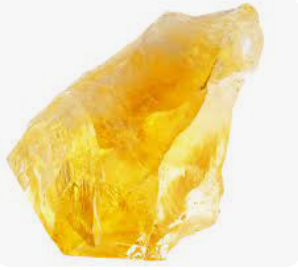
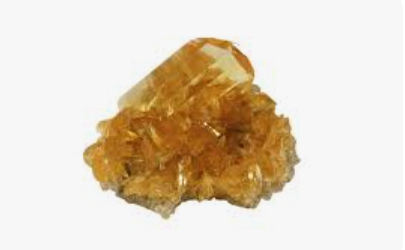
Gum Rosin (GR) is product consisting essentially of a mixture of gum and resin usually obtained by making an incision in a plant and allowing the juice which exudes to solidify. GR also is a nonvolatile component of crude gum which is included largely in plants belonging to pine family (Pinaceae). It mainly consists of a various isomer technically called resin acids.
Gum Rosin is produced from the crude pine resin collected from pine trees. The resin is subjected to distillation and the distillation process is carried out in large copper stills. The volatile liquid terpene components would separate from the mixture as it vaporizes at a temperature between 100 to 160°C, leaving behind fluid rosin as the distillate. This fluid rosin is collected and purified by passing it through straining wadding. The condensate left behind is called turpentine oil.
Cosmetics Industry
The residue left after the distillation of the volatile oil of oleoresin obtained from Pinus palustris and other species of Pinaceae. It is less and less used in cosmetics for the benefit of its esters, in cosmetics. It is authorized in Bio.
Adhesive Agent
Rosin, or more correctly rosin acid, is one of the oldest raw materials for the adhesives industry, either as such or converted to derivatives. Three sources of rosin are used for resin manufacture, gum rosin, wood rosin and tall oil rosin, all generated from the pine tree.
Pulp and Paper Industry
Rosin is added to paper pulp to increase resistance to water and other liquids. Alum (short for aluminum sulfate) is added to help the rosin
Soap Industry
It can also be used as a lather-enhancer in soaps and can be added in modest quantities to melted oils and fats when making natural soaps.



 English

 Indonesian
 简体字
简体字
 العربية
 Español
 Français
 Português
 日本語
日本語
 한국어
한국어
 Tiếng Việt