Global Soybean Meal Applications and Buyer Landscape in 2026
Introduction to Soybean Meal as a Strategic Feed Ingredient
Soybean meal continues to strengthen its role as one of the most essential platform feed ingredients in the global agricultural supply chain in 2026. Produced as a by-product of soybean oil extraction, soybean meal is valued for its high protein concentration, digestibility, and amino acid profile, making it indispensable for livestock and aquaculture nutrition. The global soybean meal market is projected to grow at a CAGR of 5.8% through 2030, supported by rising meat consumption, expanding feed manufacturing capacity, and increasing protein demand across emerging economies. Average global soybean meal prices in 2026 are fluctuating between USD 430–510/MT, while worldwide production volumes are expected to exceed 285 million metric tons.
Poultry Industry Driving Large-Scale Soybean Meal Consumption
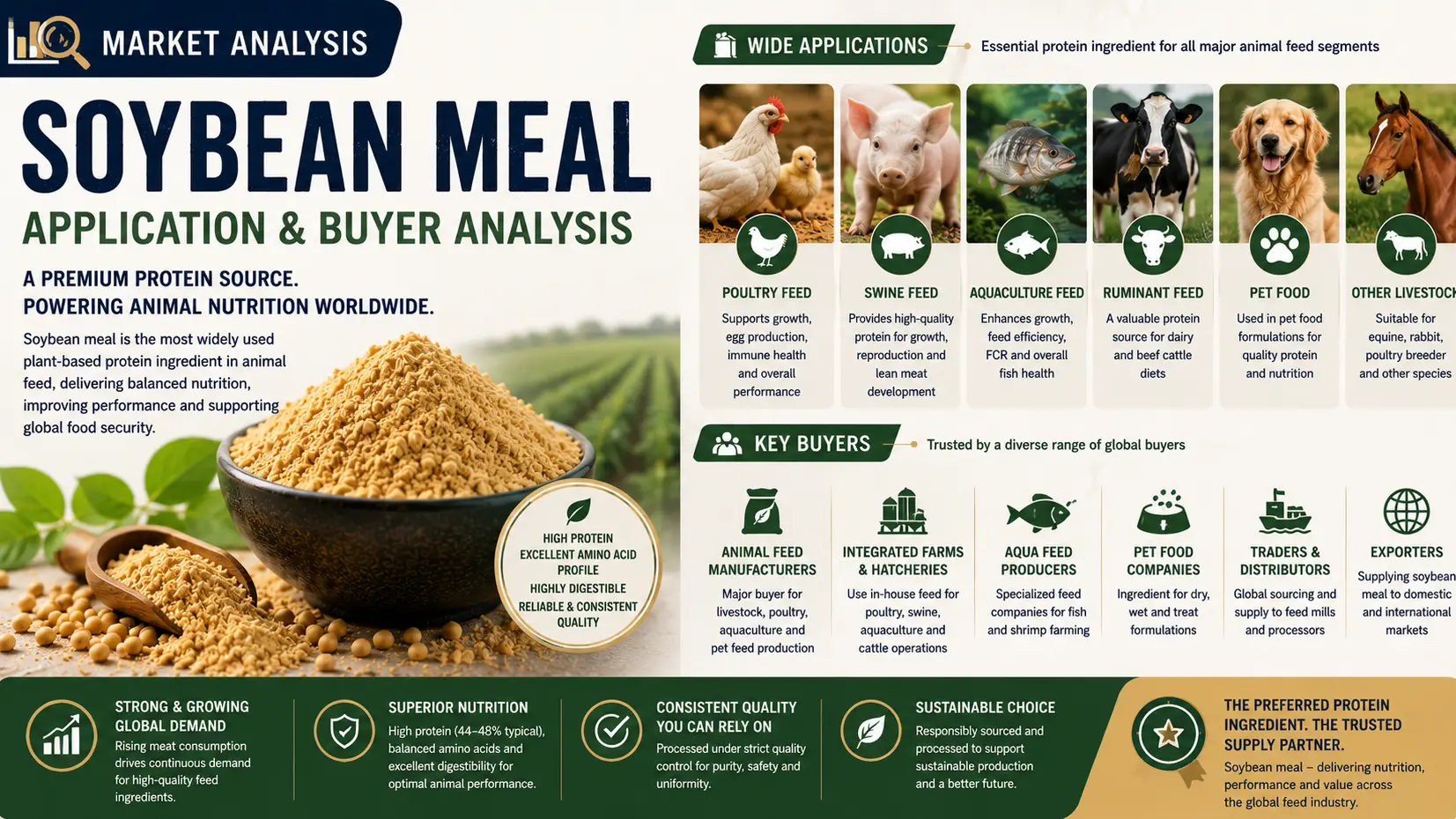
The poultry industry remains the dominant buyer segment for soybean meal, accounting for nearly 46% of global consumption in 2026. Commercial poultry integrators across Asia-Pacific, Latin America, and the Middle East continue to prioritize soybean meal due to its efficient feed conversion performance and stable protein content of around 44–48%. Countries such as China, Brazil, and India are expanding poultry production aggressively, with feed mills increasing soybean meal procurement contracts to secure supply stability. In Southeast Asia alone, poultry feed demand is projected to surpass 165 million metric tons, reinforcing soybean meal’s strategic importance in commercial broiler and layer operations.
Aquaculture and Swine Feed Expanding Buyer Networks
Aquaculture producers are becoming increasingly influential soybean meal buyers as fishmeal substitution trends accelerate globally. The aquafeed segment is forecast to grow at a CAGR of 6.4%, particularly in shrimp and tilapia farming sectors. Soybean meal inclusion rates in aquaculture feed formulations now range between 15–35%, depending on species and production intensity. Simultaneously, swine feed manufacturers in Europe and North America are increasing soybean meal usage to optimize weight gain efficiency and improve feed economics. Premium low-fiber soybean meal grades are trading at approximately USD 520/MT in specialized feed applications where higher digestibility is required.
Industrial Feed Producers and Regional Import Dynamics
Large industrial feed producers continue to dominate purchasing volumes through long-term sourcing agreements and international supply contracts. China remains the world’s largest soybean meal importer and processor, handling more than 110 million metric tons of soybeans annually to support domestic feed demand. Meanwhile, the European Union is increasingly dependent on imported soybean meal from South America due to limited local protein crop availability. Brazil and Argentina collectively contribute over 55% of global soybean meal exports, benefiting from large-scale crushing infrastructure and favorable agricultural output.
Price Volatility and Procurement Strategies Among Global Buyers
Global soybean meal buyers are facing intensified pricing volatility in 2026 due to fluctuating soybean harvests, freight costs, currency instability, and climate-related supply disruptions. Feed manufacturers are increasingly adopting diversified procurement strategies, including multi-origin sourcing and forward purchasing contracts, to manage cost risks. Spot soybean meal prices in Asia have periodically exceeded USD 500/MT during supply tightening periods, pressuring feed margins for poultry and aquaculture operators. As sustainability expectations rise, buyers are also demanding traceable and responsibly sourced soybean meal to align with environmental compliance standards and retailer requirements.
Conclusion
As a platform feed chemical and high-protein agricultural commodity, soybean meal remains deeply integrated into the global livestock, poultry, and aquaculture economy. Its broad application range, reliable nutritional profile, and scalability continue to position it as a cornerstone ingredient for industrial feed production worldwide. With expanding buyer networks and evolving procurement strategies shaping market dynamics, global participants are increasingly seeking dependable supply partners capable of ensuring quality consistency and international logistics support. In this evolving environment, companies such as Tradeasia International continue to support buyers and manufacturers through diversified sourcing solutions, regional market access, and reliable commodity distribution services across international markets.
Sources
Leave a Comment