L-Lysine HCl Sourcing Guide for Feed Manufacturers and Global Buyers
Understanding L-Lysine HCl and Its Commercial Importance
L-Lysine HCl is an essential amino acid commonly used as a nutritional additive in animal feed formulations. Because animals cannot synthesize sufficient lysine naturally, supplementation plays a critical role in supporting growth performance and feed efficiency.
The product is primarily produced through microbial fermentation processes and supplied in powder or granular forms suitable for industrial feed manufacturing. Its widespread adoption has made it one of the most traded amino acids in the global feed sector.
Role in Modern Feed Formulation
According to technical information published by the Food and Agriculture Organization (FAO), amino acid balancing has become a key strategy for improving feed utilization while reducing excess protein inclusion in livestock diets.
L-Lysine HCl helps nutritionists formulate cost-effective feed by optimizing amino acid profiles. This capability supports both economic and sustainability objectives for commercial livestock operations worldwide.
Key Industrial Applications of L-Lysine HCl
L-Lysine HCl is predominantly utilized in animal nutrition industries, including poultry, swine, aquaculture, and cattle production. Its ability to improve protein utilization makes it a valuable ingredient in feed formulations.
Commercial feed manufacturers rely on lysine supplementation to enhance growth rates, improve feed conversion ratios, and support healthy muscle development in animals raised for food production.
Applications Across Livestock Segments
According to research published by the National Research Council (NRC), lysine remains one of the most limiting amino acids in many grain-based livestock diets, particularly for poultry and swine production.
Beyond traditional livestock sectors, aquaculture producers increasingly use amino acid supplementation to support efficient fish growth. The growing demand for high-performance feed formulations continues to expand the product's application base globally.
Market Demand and Industry Growth Trends
Global demand for L-Lysine HCl is closely linked to rising meat consumption, increasing livestock production, and the modernization of feed industries across emerging economies. These trends continue to drive consumption volumes worldwide.
The expansion of commercial poultry and swine operations in Asia, Latin America, and Africa has strengthened demand for amino acid-enriched feed products capable of improving productivity and profitability.
Growth Drivers Supporting Market Expansion
According to market analysis published by the Organisation for Economic Co-operation and Development (OECD) and FAO agricultural outlook reports, global animal protein consumption is expected to remain a long-term growth driver for feed ingredient markets.
Feed producers are also adopting precision nutrition approaches that emphasize balanced amino acid supplementation. This shift is increasing the strategic importance of lysine products in commercial feed manufacturing systems.
Buyer Intent and Procurement Considerations
L-Lysine HCl buyers typically include feed manufacturers, premix producers, livestock integrators, agricultural distributors, and animal nutrition companies seeking consistent raw material supply.
Procurement teams evaluate multiple factors before purchasing, including purity levels, production consistency, supply reliability, documentation, regulatory compliance, and logistics capabilities.
What Buyers Compare Before Purchasing
According to guidance from international feed industry associations, ingredient consistency and traceability have become increasingly important procurement criteria for large-scale feed operations.
Buyers frequently compare suppliers based on quality assurance systems, manufacturing standards, shipment reliability, and pricing competitiveness. Product pages on B2B marketplaces support sourcing decisions by providing specifications, documentation, and supplier visibility.
Global Supply Chain and Sourcing Opportunities
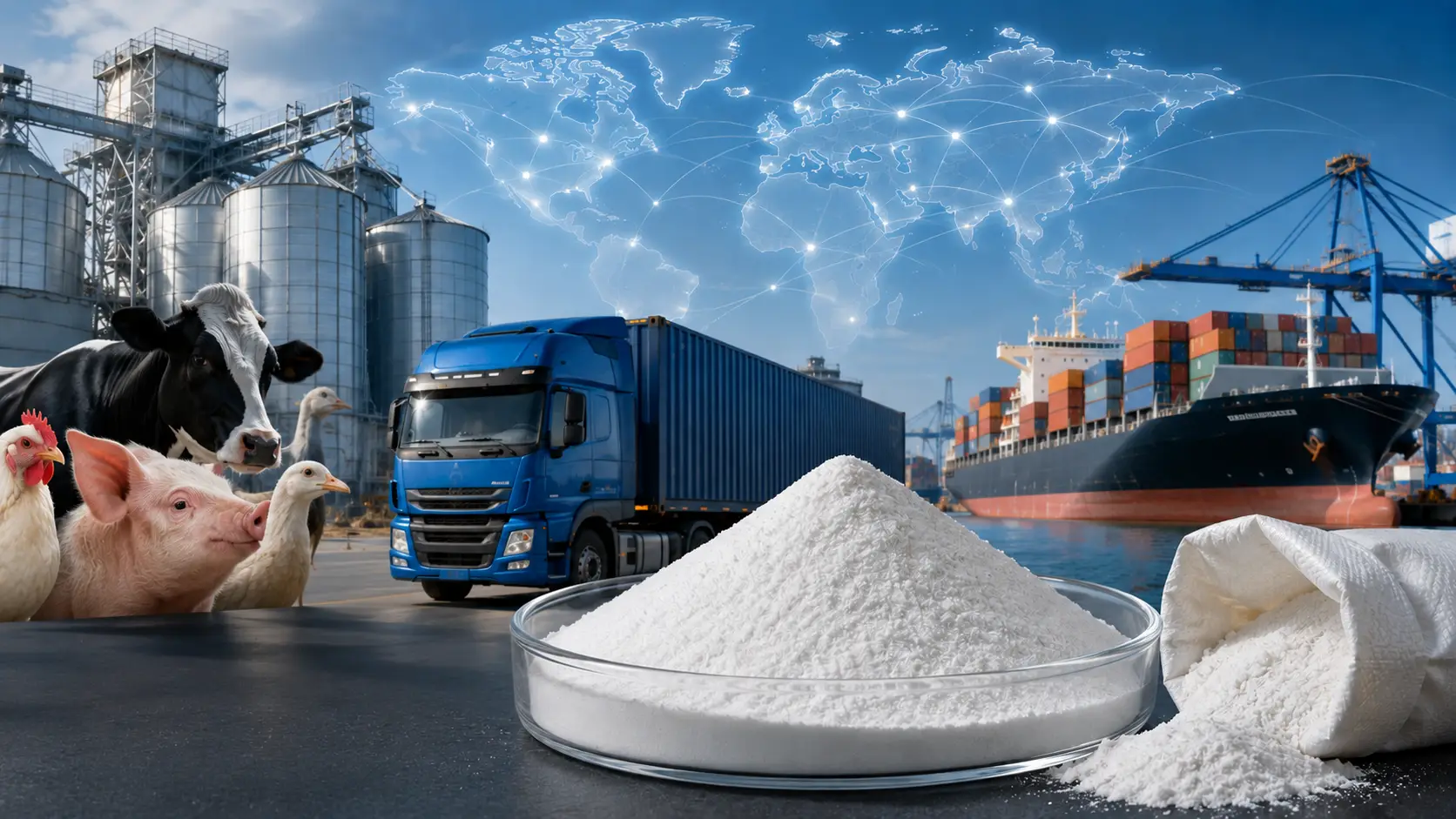
The L-Lysine HCl supply chain is heavily influenced by fermentation capacity, agricultural feedstock availability, transportation infrastructure, and regional livestock demand patterns. Major production hubs are concentrated in Asia due to large-scale manufacturing capabilities.
International trade continues to play an important role in connecting producers with feed manufacturers across multiple continents. This creates opportunities for distributors, traders, and procurement teams seeking diversified sourcing channels.
Opportunities for Global Buyers
According to industry reports from feed market analysts, global buyers increasingly pursue supplier diversification strategies to reduce procurement risks and improve supply continuity.
B2B chemical marketplaces help buyers identify qualified suppliers, compare sourcing options, and access products from multiple regions. These platforms contribute to greater transparency and efficiency in international chemical trade.
Evaluating Suppliers and Product Quality
Selecting the right L-Lysine HCl supplier requires a comprehensive assessment of product quality, production standards, and commercial reliability. Buyers often prioritize suppliers with proven manufacturing capabilities and established export experience.
Quality verification may include reviewing certificates of analysis, production processes, batch consistency records, and compliance documentation relevant to feed industry requirements.
Quality Indicators Buyers Should Review
According to feed ingredient quality guidelines published by industry organizations, amino acid products should meet specified purity and performance standards to ensure formulation accuracy.
Reliable suppliers support procurement teams through technical documentation, responsive communication, stable production capacity, and effective logistics management. These factors contribute significantly to long-term sourcing success.
Future Outlook for L-Lysine HCl Markets
The outlook for L-Lysine HCl remains positive due to continued growth in livestock production, rising demand for efficient feed solutions, and increased focus on sustainable nutrition practices. These trends are expected to support long-term market expansion.
Feed producers are increasingly seeking technologies and ingredients that maximize nutrient utilization while reducing environmental impacts associated with livestock production.
Emerging Trends Influencing Future Demand
According to ongoing agricultural sustainability initiatives and feed industry research, precision nutrition is expected to remain a major driver for amino acid consumption in coming years.
As global protein demand continues to increase, L-Lysine HCl is likely to maintain its position as a strategic feed additive for manufacturers, distributors, and procurement professionals seeking performance-driven nutrition solutions.
Conclusion
L-Lysine HCl plays a critical role in modern animal nutrition and remains one of the most important amino acids used in commercial feed production. Its ability to improve feed efficiency and support livestock performance has created sustained global demand across multiple agricultural sectors.
For feed manufacturers, distributors, traders, and procurement teams, understanding market dynamics, supplier capabilities, and sourcing considerations is essential for securing reliable supply. As precision nutrition and livestock productivity continue to shape industry priorities, L-Lysine HCl is expected to remain a key ingredient within global feed value chains.
Sources
https://www.fao.org
https://www.oecd.org
https://www.nationalacademies.org

Leave a Comment