Global Supply Chain Dynamics in the Formic Feed Grade Market
Introduction: Formic Feed Grade Strengthens Its Role in Global Feed Preservation
Formic feed grade has emerged as one of the most strategically important organic acids within the global animal nutrition sector in 2026. Widely used as a preservative, antibacterial agent, and silage enhancer, formic acid supports feed hygiene and livestock productivity while helping producers reduce antibiotic dependency. As feed manufacturers increasingly prioritize biosecurity and shelf-life stability, the global formic feed grade market is projected to expand at a CAGR of 5.8% through 2030. The product’s role as a platform chemical also extends into leather, textiles, and industrial applications, creating a complex supply environment influenced by both agricultural and chemical industry dynamics.
Raw Material Integration Reshaping Cost Structures
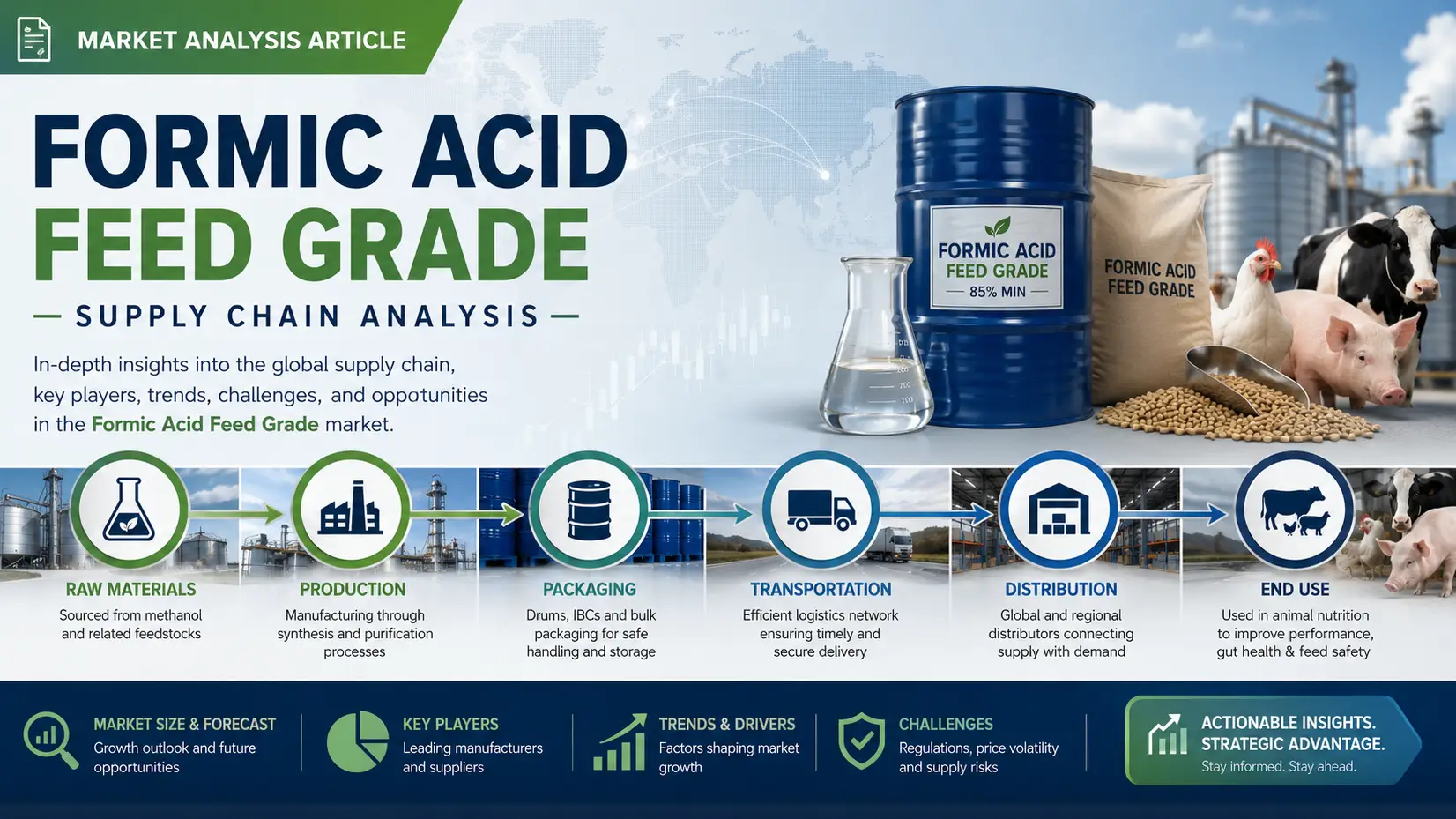
The upstream supply chain for formic feed grade remains heavily dependent on methanol and carbon monoxide availability. In 2026, fluctuations in methanol pricing across Asia and Europe continue to influence production economics, particularly for integrated manufacturers operating large-scale chemical complexes. Average global formic feed grade prices are currently ranging between USD 680–920/MT, depending on purity levels and export origin. Chinese producers with backward methanol integration have maintained stronger cost competitiveness, while European suppliers face elevated energy costs that continue to pressure margins. The increasing adoption of catalytic efficiency technologies is helping manufacturers stabilize operating expenses and reduce carbon intensity across production facilities.
Asian Production Expansion Strengthens Global Supply
Asia-Pacific continues to dominate global output, accounting for more than 62% of worldwide formic feed grade production volume in 2026. China alone is estimated to produce over 520,000 MT annually, supported by extensive chemical manufacturing infrastructure and rising domestic feed consumption. Meanwhile, India and Southeast Asia are rapidly increasing imports as poultry and aquaculture sectors expand. Several producers are investing in additional storage terminals near major ports to improve export responsiveness and reduce delivery lead times. The growing concentration of production in Asia is also reshaping freight dynamics, particularly for buyers in Latin America and the Middle East seeking competitively priced cargoes.
Logistics and Storage Challenges Impact Trade Flow
Transportation and storage remain critical supply chain concerns due to the corrosive nature of formic acid. Specialized containers, coated tanks, and temperature-controlled handling systems are increasingly required to maintain product stability during long-distance shipment. In 2026, average ocean freight costs for bulk chemical shipments from East Asia to Europe remain approximately 18–22% above pre-2023 levels, affecting procurement strategies for feed manufacturers. Port congestion in selected Asian trade corridors has also encouraged buyers to diversify sourcing contracts and maintain higher inventory buffers. As regulatory scrutiny on hazardous chemical transport intensifies, suppliers with established compliance systems are gaining stronger market positioning.
Feed Industry Demand Accelerates Regional Procurement
The downstream feed industry is driving sustained procurement growth, particularly within poultry, swine, and silage preservation applications. Global feed-grade organic acid consumption surpassed 1.4 million MT in 2026, with formic acid representing a significant share due to its antimicrobial performance and favorable cost-to-efficiency ratio. Large feed mills are increasingly adopting long-term procurement agreements to reduce exposure to price volatility and shipping disruptions. Demand growth is especially strong in regions pursuing antibiotic-free livestock production standards, including Europe and parts of the Middle East. This trend continues to reinforce the strategic role of formic feed grade within modern feed safety systems.
Conclusion
As a versatile platform chemical, formic feed grade continues to gain strategic relevance across both chemical manufacturing and animal nutrition industries in 2026. Market expansion is being supported by rising feed biosecurity standards, expanding livestock production, and ongoing investments in Asian chemical infrastructure. At the same time, pricing volatility, logistics complexity, and raw material dependency remain central supply chain considerations for global buyers. In this evolving environment, companies increasingly seek reliable sourcing partners capable of ensuring consistent quality, regulatory compliance, and efficient international distribution. Tradeasia International continues to strengthen its position as a global chemical solution provider by supporting industrial and feed-sector customers with integrated sourcing networks and responsive supply chain services.
Sources
Leave a Comment