Introduction
In 2026, fish meal continues to reinforce its position as a critical high-protein input across global feed and nutrition industries. Derived from processed fish and marine byproducts, it remains a strategic platform ingredient in aquaculture, livestock, and specialty nutrition formulations. The market is expanding steadily, supported by a projected CAGR of 6.8%, driven by rising protein demand and feed efficiency requirements. Global fish meal production is estimated at approximately 5.4 million MT, while average pricing has stabilized in the range of USD 1,650–2,200/MT, reflecting both supply constraints and premium demand cycles.
Aquaculture Feed as the Core Demand Driver
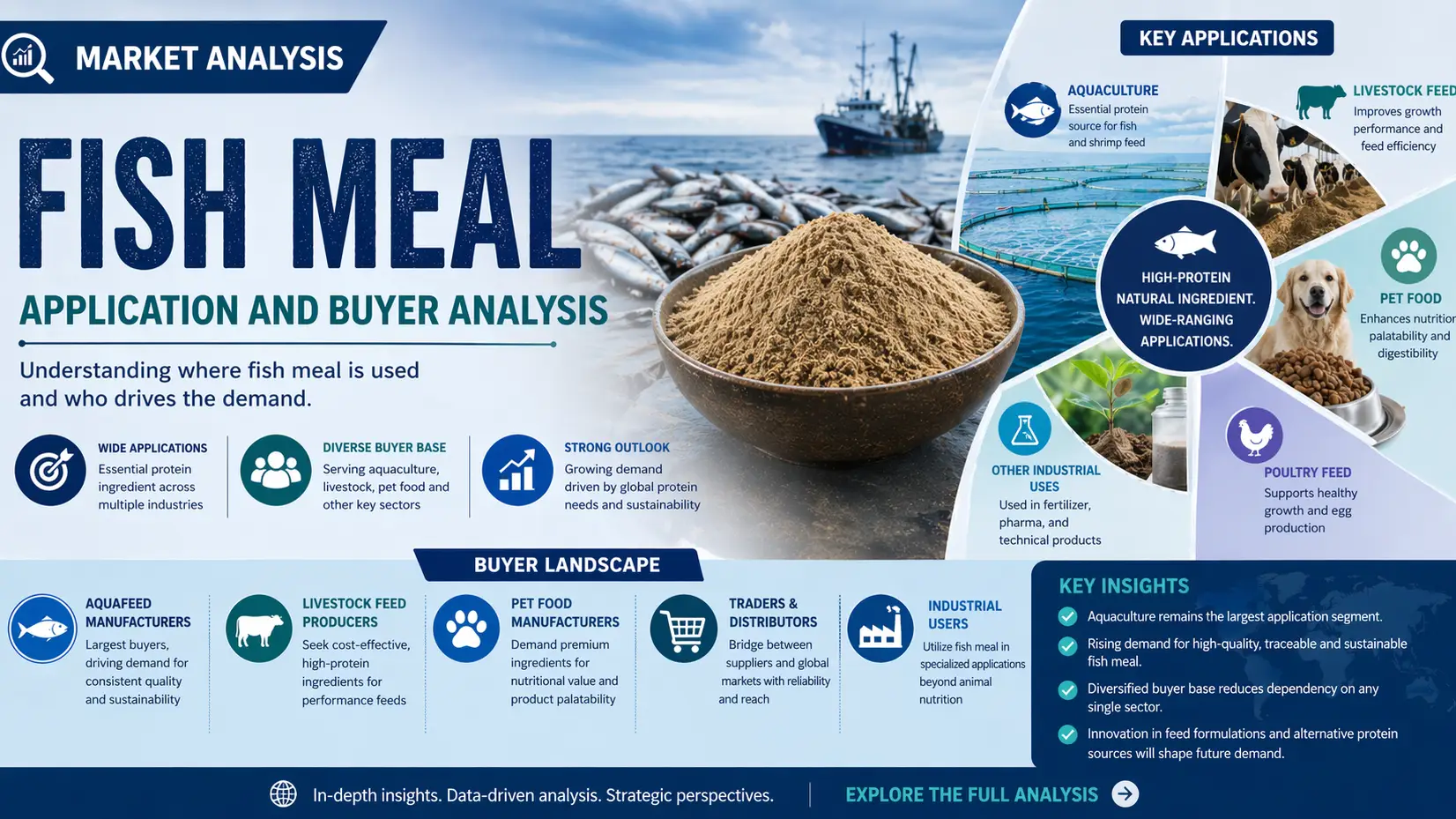
Aquaculture remains the dominant application segment, consuming more than half of global fish meal output. Salmon, shrimp, and marine fish farming industries rely on its amino acid density and digestibility advantages. Feed formulators increasingly blend fish meal with plant-based proteins, but its inclusion remains essential for growth performance optimization. Demand is particularly strong in Asia-Pacific, where intensive aquaculture systems continue to expand. The segment’s resilience is supported by rising seafood consumption and efficiency-focused feed conversion strategies across commercial farms.
Livestock Integration and Protein Optimization Buyers
Beyond aquaculture, poultry and swine producers represent significant buyers, especially in high-performance feed formulations. Fish meal is used selectively to enhance early-stage animal growth and immunity. While inclusion rates are lower compared to aquafeed, its functional benefits justify premium pricing. Feed manufacturers in Europe and Latin America are increasingly incorporating fish meal in specialty livestock diets, particularly where antibiotic-free production systems are prioritized. This diversified demand base strengthens market stability even during marine raw material supply fluctuations.
Pet Food Premiumization and Nutritional Branding
The global pet food industry has emerged as a fast-growing buyer segment, driven by premiumization trends and humanized pet nutrition. Fish meal is valued for its digestibility and omega-rich protein profile. High-end pet food brands in North America and Europe utilize fish meal to support skin health and coat quality claims. This segment, though smaller in volume, commands higher margins and contributes significantly to value growth in the overall fish meal ecosystem.
Industrial Trade Flows and Export-Oriented Buyers
International trading companies and feed conglomerates play a crucial role in balancing regional supply-demand gaps. Major exporters in Peru, Thailand, and Norway supply to import-heavy regions such as China and the Middle East. Strategic procurement is increasingly influenced by sustainability certifications and traceability requirements. With tightening marine resource regulations, buyers are locking in long-term contracts to secure stable supply amid volatile production cycles.
Conclusion
As global protein demand intensifies, fish meal continues to evolve as a strategic input across aquaculture, livestock, and premium pet nutrition markets. Its role as a high-value functional feed ingredient ensures sustained relevance despite alternative protein innovations. For buyers navigating volatile pricing and fragmented supply chains, integrated sourcing and logistics capabilities are becoming essential.
In this context, Tradeasia International serves as a reliable global partner, offering streamlined procurement solutions and consistent supply access across key producing regions, helping industries maintain stability in an increasingly competitive feed ingredients landscape.
Sources
-
https://www.fao.org/fishery
-
https://www.iffo.com
-
https://www.worldbank.org/en/research/commodity-markets
Leave a Comment