Understanding DL-Methionine in Global Supply Chains
DL-Methionine is a synthetic essential amino acid widely used in animal nutrition to improve feed efficiency, support protein synthesis, and optimize livestock performance. It is considered one of the most important amino acid additives in modern feed formulations.
The product is primarily consumed by feed manufacturers serving poultry, swine, aquaculture, and other livestock sectors. As global meat consumption continues to increase, demand for efficient nutritional solutions remains strong.
Role of DL-Methionine in Feed Production
DL-Methionine helps nutritionists formulate balanced diets while reducing overall protein requirements in feed. This improves feed conversion ratios and supports sustainable livestock production.
According to technical information published by the Food and Agriculture Organization (FAO), amino acid supplementation plays a significant role in improving feed utilization and livestock productivity worldwide.
Market Demand Driving DL-Methionine Consumption
The growth of commercial livestock production remains one of the primary drivers of DL-Methionine demand. Increasing consumer demand for poultry, pork, eggs, and aquaculture products has encouraged feed manufacturers to optimize nutrition programs.
Modern livestock operations increasingly focus on maximizing productivity while reducing environmental impacts. This has led to greater adoption of amino acid-based feed formulations.
Expanding Animal Protein Consumption
Rising populations and urbanization continue to support higher consumption of animal protein products in both developed and emerging economies. This trend creates sustained demand for feed additives that improve production efficiency.
According to market analysis from the Organisation for Economic Co-operation and Development (OECD) and FAO agricultural outlook reports, livestock production growth remains a key contributor to feed additive demand across multiple regions.
Sustainability and Feed Efficiency Trends
Feed producers are increasingly adopting precision nutrition strategies to reduce waste and improve nutrient utilization. DL-Methionine supports these goals by helping balance amino acid profiles more accurately.
Industry research published by the International Feed Industry Federation highlights how amino acid supplementation contributes to more efficient feed formulations and sustainable livestock systems.
Supply Chain Structure and Manufacturing Landscape
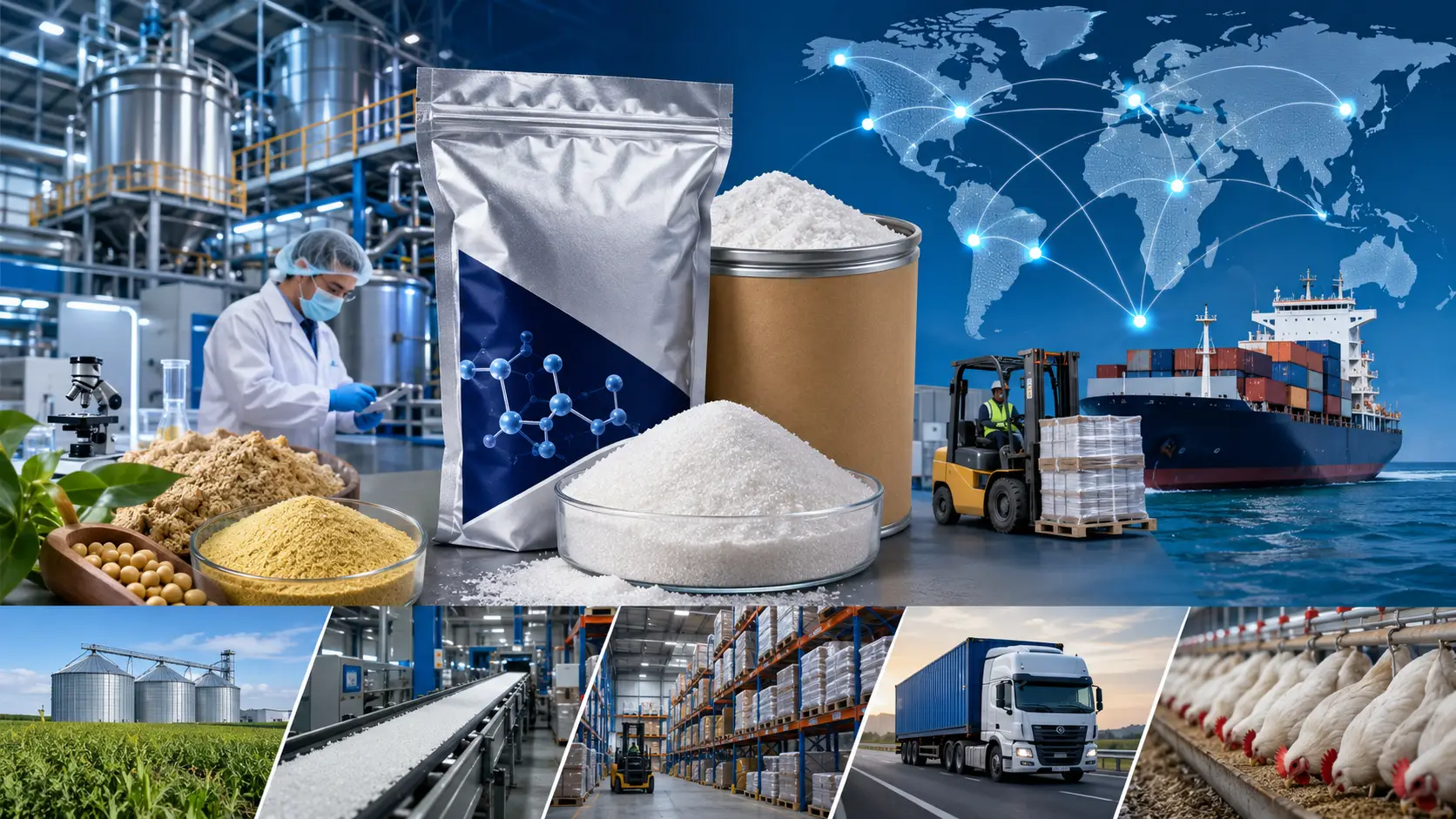
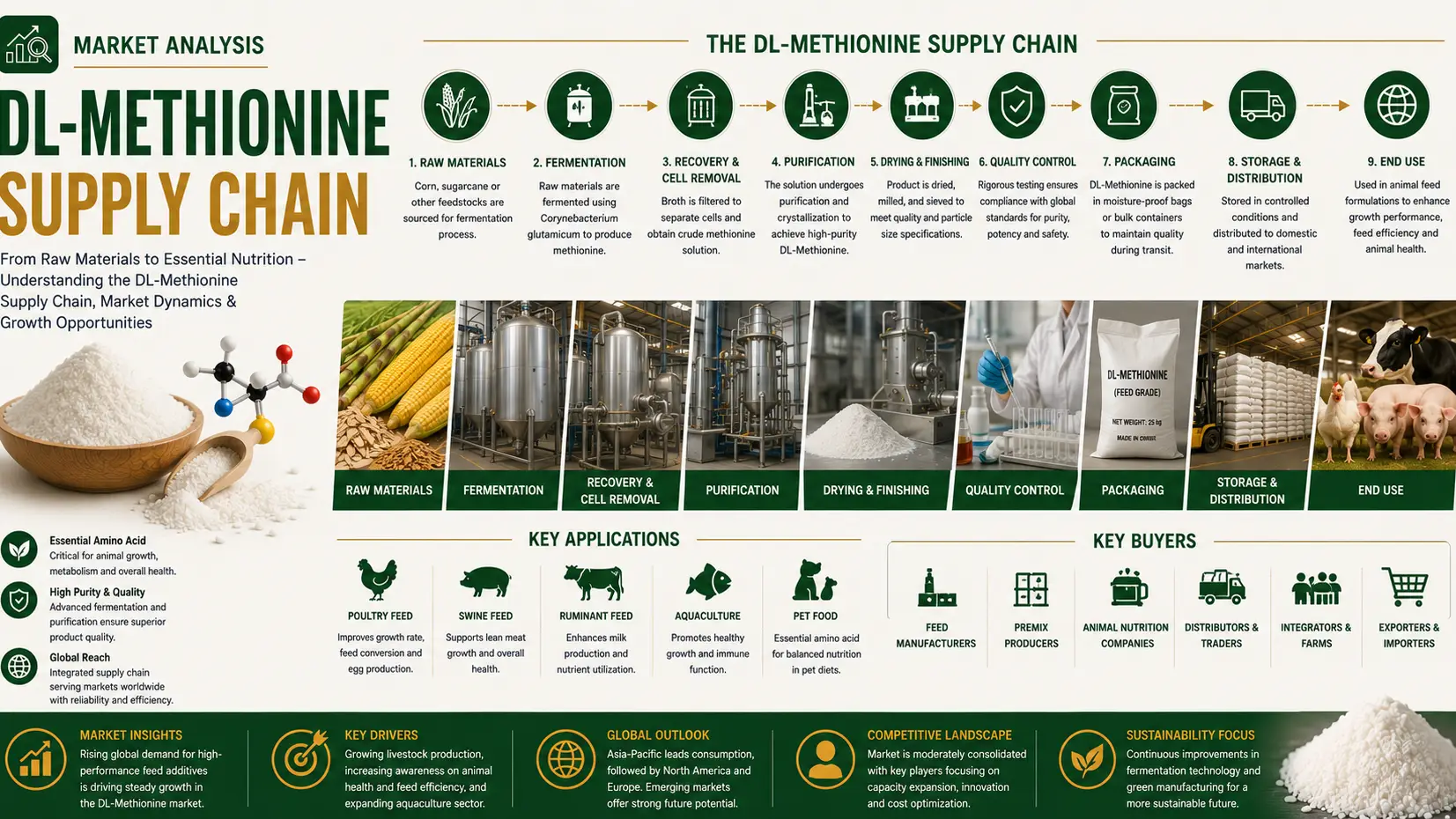
The DL-Methionine supply chain involves raw material sourcing, chemical synthesis, manufacturing, distribution, storage, and delivery to feed producers. Production is concentrated among several major global manufacturers with integrated manufacturing capabilities.
Supply chain stability remains important because feed manufacturers often require consistent quality, traceability, and reliable delivery schedules for large-scale production operations.
Manufacturing and Global Production Capacity
Leading producers continue investing in production capacity expansion to meet growing global demand. Manufacturing facilities are strategically located near key agricultural and industrial hubs to improve logistics efficiency.
According to industry publications from feed and chemical market analysts, capacity investments in Asia and Europe continue to influence global supply availability and pricing dynamics.
Logistics and Distribution Considerations
Transportation costs, inventory management, and regional regulations can significantly affect procurement decisions. Buyers often seek suppliers capable of providing reliable delivery and long-term supply agreements.
Market reports from agricultural commodity analysts indicate that logistics resilience has become a critical factor in feed additive procurement strategies.
Regional Trade Flows and Procurement Opportunities
Global DL-Methionine trade is influenced by livestock production patterns, feed manufacturing capacity, and regional agricultural development. Asia-Pacific remains one of the largest consuming regions due to its extensive poultry and swine industries.
Growing feed sectors in Latin America, the Middle East, and Africa are also creating new sourcing opportunities for international suppliers and distributors.
Asia-Pacific Market Leadership
Countries with significant livestock industries continue to account for substantial DL-Methionine consumption. Feed producers in these markets often prioritize supply reliability and cost competitiveness.
According to agricultural trade data published by international trade organizations, Asia remains a key destination for amino acid imports and feed ingredient procurement.
Emerging Procurement Markets
Rapid development of commercial farming operations in emerging economies is expanding the customer base for feed additives. Buyers increasingly seek international sourcing partners that can provide technical support and product consistency.
Industry reports from agricultural development agencies suggest that modernization of livestock sectors will continue supporting amino acid demand growth in developing regions.
Buyer Intent and Supplier Evaluation Criteria
DL-Methionine buyers typically include feed manufacturers, livestock integrators, feed premix producers, agricultural distributors, and animal nutrition companies. These organizations purchase the product to support efficient feed production and improve animal performance.
Procurement teams evaluate suppliers based on product quality, regulatory compliance, production capacity, logistics reliability, and pricing competitiveness.
Factors Buyers Assess Before Purchasing
Buyers frequently request technical specifications, quality certifications, supply consistency records, and documentation supporting regulatory compliance. These factors help reduce procurement risks and ensure manufacturing continuity.
According to feed industry procurement practices documented by international feed associations, supplier transparency and quality assurance remain key purchasing considerations.
Why Buyers Compare Multiple Suppliers
Supplier diversification helps reduce supply chain disruptions and improves negotiating leverage. Many organizations compare multiple manufacturers and distributors before entering long-term purchasing agreements.
A B2B chemical marketplace supports sourcing decisions by enabling buyers to evaluate supplier capabilities, compare product availability, and identify suitable procurement partners efficiently.
Future Outlook for DL-Methionine Sourcing
The outlook for DL-Methionine remains positive due to ongoing growth in global livestock production and increasing emphasis on feed efficiency. Demand is expected to remain closely linked to trends in animal protein consumption and agricultural productivity.
Technological improvements in feed formulation are also expected to support continued use of amino acid supplementation across various livestock sectors.
Investment and Capacity Expansion Trends
Manufacturers continue investing in production technologies and capacity expansion projects to address future demand growth. These investments may improve supply stability and create additional sourcing options for buyers.
Industry forecasts from agricultural and feed market analysts indicate continued long-term growth potential for amino acid additives.
Digital Procurement and Marketplace Growth
Digital sourcing platforms are becoming increasingly important in industrial procurement processes. Buyers now rely on online marketplaces to compare suppliers, streamline purchasing activities, and improve supply chain visibility.
Market intelligence providers report growing adoption of digital procurement tools throughout the chemical and feed ingredient industries, creating new opportunities for global trade and supplier discovery.
Conclusion
DL-Methionine remains an essential component of modern animal nutrition and global feed manufacturing. Growing livestock production, increasing feed efficiency requirements, and expanding agricultural markets continue to support long-term demand.
For manufacturers, distributors, traders, and procurement teams, understanding supply chain dynamics, regional trade patterns, and sourcing requirements is critical for securing reliable supply. As digital procurement channels continue to evolve, B2B marketplaces provide valuable opportunities to connect buyers and suppliers within the global DL-Methionine market.
Sources
https://www.fao.org
https://www.ifif.org
https://www.oecd.org
Leave a Comment