Global DL-Methionine Supply Chain Structure, Trade Dynamics & Market Economics 2026
Introduction: DL-Methionine as a Strategic Amino Acid Platform in Modern Feed Systems
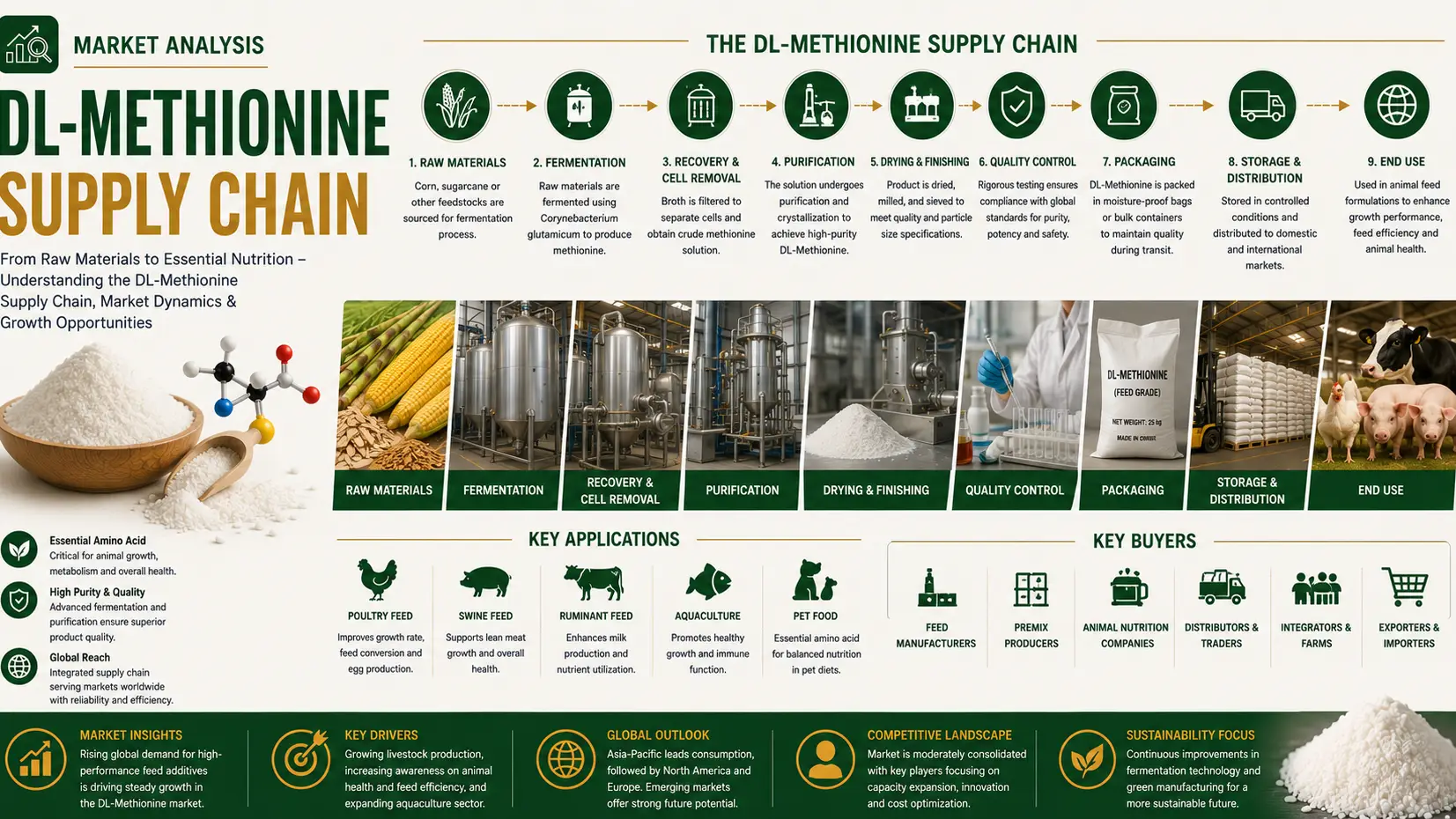
DL-methionine continues to strengthen its role as a core platform chemical in animal nutrition, particularly within poultry and aquaculture feed systems. As of 2026, the global market reflects a tightly structured supply chain where production concentration, trade dependencies, and feed demand growth collectively define availability and pricing stability. Global demand is estimated at over 1.4 million metric tons, supported by a steady 4.8% CAGR driven by protein consumption growth in emerging economies. Prices remain elevated within a structured range of USD 2,300–2,850/MT, reinforcing its strategic importance in feed formulation economics.
Concentrated Global Production Base
The DL-methionine supply chain is heavily centralized, with China, the United States, and Western Europe accounting for nearly 78% of global output. Total installed production capacity in 2026 is estimated at 1.6 million metric tons, led by vertically integrated chemical producers. This concentration creates both efficiency and vulnerability, where any operational disruption can rapidly tighten global availability and amplify price volatility across import-dependent regions.
Feed Industry Demand Intensification
Demand is primarily driven by poultry nutrition, which consumes over 65% of total DL-methionine volumes globally. Expanding industrial livestock systems in Asia-Pacific and Latin America continue to increase import reliance. Feed formulators are increasingly optimizing amino acid balance, reinforcing DL-methionine’s position as an essential additive rather than a discretionary input, especially in high-density protein production systems.
Trade Routes & Regional Dependency Shifts
Global trade flows remain highly structured, with Southeast Asia and the Middle East importing over 55% of their requirements. Europe retains partial self-sufficiency, while Africa remains fully import-dependent. Shipping constraints and container rate fluctuations in 2026 have added a cost layer of approximately 8–12% to landed product prices, reshaping procurement strategies toward long-term contracts and diversified sourcing.
Pricing Structure & Volatility Drivers
DL-methionine pricing remains influenced by raw material costs, energy inputs, and production outages. In 2026, the average spot price fluctuates between USD 2,300–2,850/MT, with occasional spikes above USD 3,000/MT during supply tightness. Limited producer diversification amplifies sensitivity to ammonia and methanol cost swings, making upstream integration a critical competitive advantage.
Conclusion
As DL-methionine continues to function as a critical platform chemical in global feed systems, its supply chain is expected to remain structurally tight but highly efficient. Strategic sourcing, inventory buffering, and supplier diversification will define resilience in the coming years. In this evolving environment, global procurement partners such as Tradeasia International play an important role by offering integrated sourcing solutions, ensuring consistent access, optimized pricing structures, and streamlined logistics for industrial buyers navigating a complex amino acid supply landscape.
Sources
Leave a Comment